
This is the a draft of an article for the April issue of Socialist Resistance. If anyone wants to criticise, correct or make suggestions please feel free.
The only real evidence religious believers can offer for the truth of their ideas is the voice or voices in their heads. That is what faith is. Yet religion is now being discussed on the left in a way that was unimaginable even a decade ago. Britain, the United States and even Russia have their most flagrantly pious leaders in almost a century. The language of Islam is used to express a hatred of imperialism both in Europe and what is called the Muslim world. In Europe Islamophobia is used as a not too subtle cover for racism. Respect has helped lead the battle against Islamophobia in Britain and it is right that it should. However, while defending the right of religious believers to practise their religion is necessary, Marxists also have a responsibility to make clear in their own publications that a philosophical chasm exists between Marxism and religion. Some recent writing on the subject has blurred this distinction. Anindya Bhattacharyya’s article in Socialist Worker (March 4 2006) is an extreme example.
Vale of tears
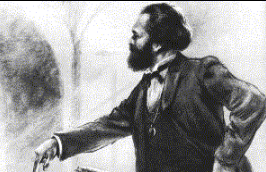
“Religion is the sigh of the oppressed creature, the heart of a heartless world, and the soul of soulless conditions. It is the opium of the people.” That is the start of Marx’s most famous quote on the subject. But he continues:
“The abolition of religion as the illusory happiness of the people is the demand for their real happiness. To call on them to give up their illusions about their condition is to call on them to give up a condition that requires illusions. The criticism of religion is, therefore, in embryo, the criticism of that vale of tears of which religion is the halo.” (Introduction to A Contribution to the Critique of Hegel’s Philosophy of Right – Karl Marx 1843)
The essential Marxist critique of all forms of religious ideas is very straightforward and can be reduced to three elements.
· People have long felt that they have no control over the circumstances that affect their lives. For much of the history of our species people had no idea why the sun rose or the wind blew or why they fell sick and died. These events were attributed to gods who were usually given human characteristics. People make gods not vice versa.
· Religion is a ‘false consciousness of the world’ but one that survives into advanced societies because people’s ideas change less quickly than the world in which they live. Religions give people a set of texts, ideas and generalisations which help explain their society and their own place in it.
· Religious misery is, at one and the same time, the expression of real misery and a protest against real misery. This is the meaning of the phrase “opium of the people” and it requires no imagination to understand why hundreds of millions of people who know that their earthly life will consist of unrelenting poverty, squalor and desperation cling to the hope of something better afterwards.
Tub-thumping atheist
Holding these views has never been an obstacle for socialists who work with and make propaganda among religious believers. In many parts of the world no socialist organisation could exist for long if it insisted that every believer who joined it became a tub-thumping atheist overnight. But part of the education of a member of a socialist organisation is an introduction to the ideas of materialism and it’s difficult to hold these views if you believe in spirits and angels.
Even a cursory reading of Marx on religion shows that he considered it absurd to insist on a ban on religious belief. The ideas exist because people find them helpful in their day-to-day existence. The banning of religious belief does not bring about social emancipation. Rather socialists aim to change the world and in doing so people begin to find their religious beliefs increasingly daft and irrelevant. The Stalinists in Poland, the Soviet Union and Albania who thought that the secret police could abolish religion did nothing but give it a legitimacy in the eyes of believers who know that the propaganda about their workers’ paradises were lies.
Socialists relate to religious groups depending on what is actually happening in the class struggle at a national and international level. Between 1950 and 1970 Islamic fundamentalist groups led the reactionary opposition to progressive movements in the Middle East, the best known of which was Nasserism in Egypt. In these circumstances the only suitable position is that of an implacable hostility to the fundamentalists.
In parts of the Muslim world backward looking, sometimes literal interpretations of Islam are used to keep millions of people in political and economic submission, something that hits women hardest. In these circumstances the fight for emancipation needs an ideological struggle against the use of religion as a means of submission
In other times and places varieties of Islamic fundamentalism represent completely different things. Hamas’ victory in the Palestinian elections was a mandate for their struggle against the Israeli state and US imperialism as well as being a rejection of the PLO’s corruption. In Palestine, Iraq, Afghanistan and Lebanon where the left either has failed or no longer exists the struggle against imperialism is being led by fighters who take their inspiration from their religion. The revolutionary soldiers of Oliver Cromwell’s New Model Army would have had no trouble understanding this.
Rage
Something similar is happening in parts of Europe. Young Muslims in immigrant communities use their religion to rebel against the situation which faces them and to express their rage about what is happening to the countries from which their families originated. It would be entirely proper for socialists to work with Islamist groups either against a common enemy, such as against the war, or for common demands, such as more affordable housing or youth services. But socialists must never abandon our own political demands or conceal divergences of interest. Such allies are only temporary and the important thing is to use the situations that are created by struggle.
The evangelical churches are the fastest growing Christian groups in Britain. Their membership is overwhelmingly drawn from the African and Caribbean communities and they are socially very conservative. As well as providing centres for worship they are also at the heart of social and support networks. They also are something of a buffer between their communities and the worst effects of the poverty and racism that many in their congregations suffer. The black cleaners and security staff we see working in the cities of Britain feel that these churches are more important to them than the unions or political parties that are available to them.
Marxists are engaged in a struggle for the minds of religious believers and at the moment are not winning it. The major Christian denominations are losing their adherents. At the same time every other form of mysticism from horoscopes to evangelical Christianity is gaining ground. In some parts of the world religious language is used to express aims that are progressive and anti-imperialist. This is only possible because for many millions of people there is no sense that class struggle or working class organisations are the solution to their misery. It is only when socialists are in a position to do that will they be able win the struggle of ideas in a real way.




 Liam redux
Leave a comment