This piece on the limits of Keynsianism has been sent to me by Will Brown in Bristol.
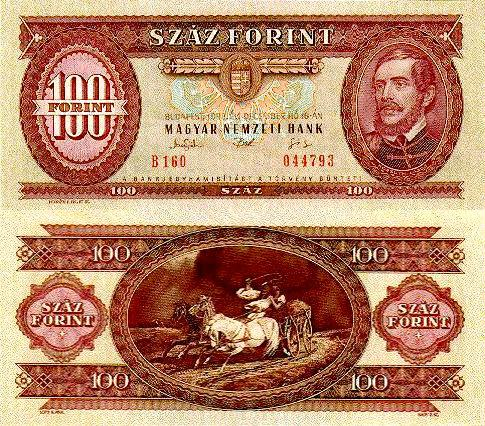
image As the world heads into deep recession, commodity prices are collapsing, hedge funds are forced into panic selling, Keynes is raised from the dead and weak currencies crumble. The world economy is dominated by de-leveraging and a flight to quality. From households to multi national companies, every borrower is struggling to cut levels of debt and find somewhere safe for their money.

Mr Keynes

In a spectacular change of tack, the Financial Times reports that J.M.Keynes, celebrated economist of social democracy, is back in fashion. Last week, Samuel Brittain, Thatcher’s moneatrist, wrote a column that started with a lengthy quote from Keynes. He went on to call for public works and increased state spending. This from a man who spent the 1980’s explaining why public money shouldn’t be used to save the pits or steel works. Its Ian Paisley kneeling on the steps of the Vatican.

Rediscovering the virtues of Keynes is an indication of the gravity of the economic crisis. The free market strategy behind the Raegan/Thatcher revolution has been abandoned – we are now in a new world. However, Keynes was never able to translate his solutions from national level to international action. And it was the 2nd World War rather than the adoption of Keynesian policies by President Roosevelt that led the world out of depression.

With the crisis of finance raging, the world again faces the breakdown of international economic relationships. In the 30’s this stemmed from the introduction of American tariffs to protect domestic industry. The trade war unleashed saw world exports fall by 2/3rds in 8 months. Similar tariffs may be avoided this time, but collapses in commodity prices, a halt to capital flows and political tension may damage the world economy just the same.

Commodities

Commodity prices have continues their dramatic fall. Copper, iron ore and oil have halved in price over the last few months. The cost per day of hiring the largest bulk container, typically used to ship iron ore from South America to China, has fallen from $220,000 to just $12,000. The fall in commodity prices reflects a sudden slowdown in demand as the collapse of the construction industry, retail and car sales feeds through to producers. These price falls have been exaggerated by the speculation of the hedge funds. They placed enormous bets on oil and commodity prices, chasing them ever higher. They have now bailed out en masse.

Hedge funds

The French finance ministry is among many who have pointed at hedge funds as a major destabilising influence in the world economy. They grew rapidly over the last 20 years – offering lucrative investment opportunities for the rich. Globalisation helped them escape central bank supervision, they avoided regulations that had been in place since the 1929 crash when it was widely believed that unlimited leverage had destroyed the market. Investors had used their shares as collateral to borrow from banks to buy more shares. They could then borrow again against the new shares. This allowed them to buy many times the shares that they could otherwise afford. The borrowing is called leverage. They made fortunes as the prices rose. This dangerous spiral acted the opposite way when prices fell – the investor had less collateral against which to borrow and had to sell to raise the cash to pay back some of the bank loans. Prices fell leading to further selling. An avalanche of selling swamped the market leading to bankruptcies.

Hedge funds now stand accused of playing this destabilising role – using leverage to drive prices of oil and commodities high followed by a desperate sell off. Hedge funds borrow their money from investment banks like Lehman Bros or Goldman Sachs. Lehman went bust last month. The other banks are loath or unable to lend. The hedge funds have been starved of funds. Their bets on rising oil and commodity prices have gone to pieces as world demand has fallen. They have become desperate forced sellers into a collapsing market

Iceland and Britain – sovereign hedge funds?

A few months ago the Financial Times ran a story on Iceland, sarcastically comparing it to a hedge fund. The writers argued that, like a hedge fund, Iceland had modest wealth of its own but had borrowed heavily, often for short term, and invested the money in various overseas enterprises – from House of Fraser to West Ham United. The article has proved far-sighted, Iceland’s economy has now collapsed. Faced with frozen banks and a collapsing currency, Icelanders now have to show air tickets as proof of travel to change Krona for hard currency. Their government only has 9 months of hard currency left and the money is fleeing fast.

A few days after the FT ran its sarcastic review of Iceland it ran a second article making the same case against the British economy. If Iceland could be compared to a hedge fund – then surely Britain could as well. Again, a modestly sized economy producing few goods essential to the rest of the world had become dominated by a grossly swollen banking sector that had burdened the country with enormous debt. Much of the debt had been used to build hedge funds and invest in sectors like mining that boomed during the expansion of the 80’s but now face bleak times. Shares of the giant mining houses like Rio Tinto Zinc and BHP have fallen by 70% as prices of iron ore, copper and coal have collapsed. Unlike Iceland, the UK economy has yet to collapse like the hedge fund that the FT suggested it resembled. But whether Sterling can remain as strong as the Euro, dollar and Swiss franc is another matter.

Currency problems

Around the world attention has now focused on currencies. The banking sectors of the major industrial countries have been underwritten by their domestic governments. Private risk has been substituted by public risk. Areas of the world that have expanded massively in recent years using borrowed money are particularly vulnerable. Massive volumes of foreign money have poured into Central and Eastern Europe chasing the rapidly growing economies. Large commodity exporters such as Brazil and Russia have also received enormous foreign investment and borrowed against their resources. The banks are desperate to cut risky lending. With grain and metal prices falling by half and demand levels threatened by recession, no one wants to lend money to dig mines or by future wheat crops.

Oleg Deripaska is woth $28 billion on paper. Russia’s richest man owns the world’s largest nickel mines and has borrowed $4 billion from a group of western banks to build his business empire. The nickel price has now collapsed. The terms of the deal means Deripaska has to pay the banks back $1 billion dollars by the end of October or they get ¼ of the nickel mines. He hasn’t got the cash. The Russian stock market has fallen 70% in a months. So Deripaska has to either sell a huge number of shares into a chaotic market or Western ban
ks get a big strategic stake in Russia’s nickel industry. Or the Russian government seizes the mines.

Around the world international tensions are emerging from the crisis. The EU has bailed out Hungary where the florint is falling, can it bail out the Ukraine as well? The cost of insuring government debt has risen viscously for countries at risk. Pakistan, mired in political chaos, is now considered 90% likely to be unable to make its bond repayments. China is offering loans in a politically controversial move. Meanwhile, the guru of American investors, tycoon Warren Buffet, has announced that he has moved all his money into US stocks. While this may be partly a politically motivated expression of confidence in Uncle Sam, it also underlines the threat that, as in the 1930’s, a retreat to national perspectives provokes a catastrophic collapse of trade.

Back to Keynes?

National Keynesian initiatives may only have a limited effect in limiting recession if world trade collapses and weaker economies are sent to the wall. Keynes of course was a champion of world capitalism – he just believed government intervention was needed to save capitalism from itself. As Thatcher pointed out, the danger of Keynesian solutions is that they might mislead the workers into feeling that the economy could be organised for their benefit, that profits don’t matter. Mandelson’s attack on postal workers will remind British workers where the loyalties a Labour government spouting Keynes really lie. A global initiative that prioritises economic justice and the mobilisation of resources to build a sustainable economy is not currently on the agenda. Resurrecting J.M.Keynes will not be enough.

Will Brown

Totterdown

14 responses to “Buy Keynes – Sell Florints”

  1. Good article.
    People may be interested to know that George has again come out to back New Labour in Scotlands forthcoming by election. Also leading Respect member Andy Newman is arguing the left share many of the BNP’s views on immigration and opposes immigration from non EEC countires. Is this Respect policy? If not shouldn’t Respect members challenge this pandering to racist filth? Just a mention because it seems that there is next to no debate within RR . Time to wake up and smell the coffee!!!

    Like

  2. Artful – this comment more properly belongs to the post “Three years of this stuff already”.

    You are exactly the sort of person I had in mind when I wrote:

    “My disdain for the gutless wonders who hide their identities and locations behind pseudonyms to dole out abuse and distort what other people say is without limit.”

    If you want to have a row with Andy, a real person with a clear record of socialist activity who makes no secret of where he lives or what he does then you could do it on the SUN site. Another option is that you offer to go down to Swindon and debate with him in public.

    Should you prefer to continue with your preferred method of cowardly personal abuse please feel free to pursue it on a site where it might be more welcome. It’s not wanted here.

    Like

  3. well, i wanted to discuss “public works” and under whose control this might be, but
    don’t we all use pseudonyms, and isn’t artful dodger asking questions that can easily be answered?
    this is a weblog, for dog’s sake
    so why should any participant need to go to Swindon for a public debate?
    ..or did i miss something?

    Like

  4. Please don’t laugh at my complete ignorance but what exactly is a hedge fund ?
    I can just about get my head round some of the stuff that’s going on but I find it hard to be keep up sometimes.
    Shame artful dodger didn’t post a link to Galloway’s alleged support for new labour.Daily Record column again?

    Like

  5. I’m not sure everyone uses a pseudonym- my name really is Jason even in real life. Never mind Keynes The Times had a piece on how Marx was right yesterday though it was really rather slapdash.

    But if The Times can promote Marx even if somewhat sloppily then that does say something about the times we live in.

    Like

  6. SteveR

    yes it can all be answered, but the “questions” are in bad faith.

    Artful dodger says: “Andy Newman is arguing the left share many of the BNP’s views on immigration and opposes immigration from non EEC countires. ”

    Neither of these statements has any basis in truth whatsoever.

    Artful Dodger is one of a few persona adopted by a former SWP full timer (I know who it is from their IP address, which gave their geograpphical location, and some other strong clues) who goes around the blogosphere libelling me in an obsessive way.

    As Liam says, I am an identifiable person with a record of activism, and indeed I am race and equality officer from my union branch.

    Libellous misrepresentations of the views of identifiable activists that seek to reduce their reputation in the movement is scandallous behaviour; especially as this latest lie could undermine work I am doing to mobilise trade unionists against the BNP.

    But some SWP members have sunk so low, that they are indifferent to whether or not they damage real practical owrk by socialists in the trad eunions and the anti-racist movement – all that matters to them is to try to discredit me becasue I criticise their organisation.

    If they were able to discredit me by things that i actually said or did, then I would have no complaint, but this individual knows that the only way to do it is to scandallous lie about what I say and do.

    is it right that I have to constantly watch my back and refute downright lies and libels aganst me that purport that I hold political positions that are actually completly repugnant to me?

    Like

  7. What is a hedge fund?
    Wikkopedia gives a good description, here’s my version. Hedging is the financial term given to offsetting risk.Its been around for a couple of centuries. For example, a manufacturer that relied on a principal raw material – say a tyre manufacturer using rubber – would annually risk a poor rubber harvest ramping input prices. The risk could be minimised by paying for the rubber three months before the harvest – at a bit more than the current market price but this would be gauranteed a fixed price in three months whatever the harvest was like. Thus the input price would be hedged.

    Over the last couple of centuries all manner of contract have developed in the commodity,money and share markets allowing investors to offset risk – for a price.

    Hedge funds took advantage of the relaxation of financial rules by thatcher/reagan in the early 80’s. They offered to invest rich people’s money in return for 2% of the investment and 20% of any profits made (or similar). They were called hedge funds because they frequently used these hedging contracts and instruments – forward buying, buy and sell options, short selling etc. Hedge funds aimed to make money in falling as well as rising markets.

    Two other characteristics marked hedge funds out: firstly they used their investments as collateral to borrow many hugely from investment banks. This is called leverage – so profits were multiplied. Leverage was widely held as responsible for the crash of 1929 and was seriously discouraged before the 1980’s. Secondly hedge funds prevented their investors withdrawing money if things went bad – but only for limited periods. Hedge funds managers often made hundreds of millions of dollars annually. Most funds are in deep trouble and dumping stock. When they go down the managers and their investors lose their whole investment – hurrah.

    Like

  8. Thank you,Will , That’s very clear. I’ll check out the wikipedia article as well.

    Much more interesting than the Andy Newman vs. artful dodger nonsense.

    As someone in the SWP I’m not interested in “libelling” or “discreditng” Andy Newman. I’ve never even met him and I wish him luck with his future activities . There’s no need to tar us all with the same brush because of the comments by some individuals on some blogs.

    Like

  9. I’d like to see a bit more criticism of Keynsianism as a solution to the current recession.

    There’s a idea gaining a certain degree of left-wing credence that we could spend our way out of the crisis.

    e.g. Graham Turner’s call for interest rate cuts, echoed by George Galloway.

    Ann Pettifor in today’s “New Statesman”:-

    “…there is a simple, cheap policy that would address property deflation. It is based on Keynes’s monetary theory, which has always been sidelined, but which he considered even more essential for breathing life into the corpse that was the global economy in the 1930s than his proposed fiscal policies.”

    or various strains of “more militant” reformism along the lines that spending more on working class consumption would solve the problem, while not tackling the issues of ownership and control.

    Here are a couple of provocative points against these ideas:

    1) It’s quite probable that , objectively, the US and UK banks will need to be ENTIRELY nationalised before this crisis is out. This is because, so far, only the mortgage debts have been dealt with. There is still a large tranche of personal credit debt and business lending that’s not been touched yet. These are likely to be just as toxic in a developing recession.

    2) As Robert Peston pointed out in his blog today, the level of debt that the UK government has taken on so far is already 3 times the annual production of the United Kingdom. So the bailout, as conducted so far has put everyone in hock to the tune of 20k per capita!

    This means that all the proposals put forward by the Labour Left, SWP and Respect hitherto are being either overtaken by events, or are merely pissing in the wind (or hurricane)

    Bolder demands are required. Passing a call for the nationalisation of banking and finance and a state bank is something that could quite reasonably be proposed in large national unions and at the TUC.

    Because it’s likely to HAPPEN ANYWAY! In which case the TUC should demand a board composed of 30% Government, 30% Unions and 30% Bankers.

    Hint: who are the governments biggest donors???

    Like

  10. That of course would solve the problem of interbank lending (on a UK wide basis) at a stroke.

    It would also be a great way to abolish commercial secrecy and fraud at a stroke.

    It would also mean the government (under the inspection of the Unions) wouldn’t need to *persuade* the bankers not to take fat bonuses. It could simply directly regulate them at a stroke.

    It would also be able to sack most of the senior managers who created the credit crisis in the first place and begin the necessary task of writing down the property values (de-leveraging) that they’d allow to inflate to unaffordable levels.

    Instead of repossessing people, it could conver their morgages to council lets at affordable rates.

    The list is endless……

    Like

  11. I agree that a critique of Keynsianism is required and it will be a feature of the next issue of Socialist Resistance. It will also be an interesting element of the debates at Respect conference.

    Like

  12. Keynesianism is actually to blame for this crisis which is why Brown’s pledge to spend his way out of this is completelly bonkers. Keynesianism is a revisionist theory of capitalist crisis as a product of underconsumption as opposed to over production. The massive credit splurge was an attempt to correct that `under consumption’. To add more money to the trillions of pounds worth of capital searching fruitlessly for a return will be like dropping a match in a bucket of meths. There is no way of avoiding a huge economic contraction, the question is who does it mainly fall on: the billionaires or the working and middle classes? The only way forward is to repudiate the toxic debts which in itself will be a massive destruction of capital but trying to make them good will swallow up any amount of money Gordon Brown proposes to throw at it. Nationalise the banks and demand they release government money to small and medium enterprises and write off the Debt Swap Certificates and also what Prianikoff said.

    Like

  13. Jim L. (real name!) Avatar
    Jim L. (real name!)

    prianikoff – I agree with your points, the only one I would query is the composition of the board of the proposed State Bank – surely the general public should elect a proportion also? Say 25% government, 25% unions (all unions, as obviously all workers and sectors are affected by the actions of the State Bank), 25% bank workers, 25% general public?

    Like

  14. Is that Jim L. Fixit?

    Like

Leave a comment

Trending