
Boris Johnson is back on TV with a two part series on BBC2 After Rome: Holy War and Conquest in which he looks at the early history of Islam. It may be an act of class treachery to say so but he does make very good TV programmes even if you don’t agree with some of his theses – a point to which I might return after having seen episode two. It looked as is Boris had read the same guide books as me for his trip to Syria and the first episode opens with him in Palmyra (I’m on the left in the photo) rhapsodising about the Roman Empire.
“The land of 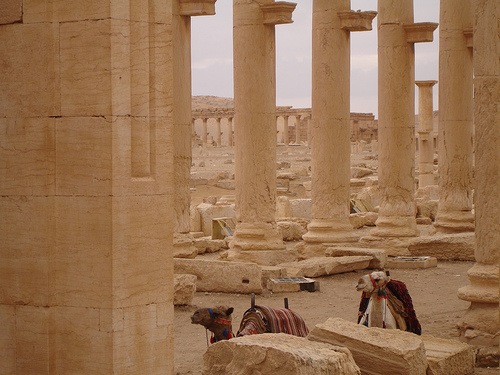 the Caesars stretched from Arabia to Portugal, from Scotland to Libya. Across this vast pacified Roman Empire people spoke the same languages. Everyone had the same chance to become a Roman citizen. Everyone had freedom of worship under a vast and accommodating polytheism and everyone could marry whoever they chose irrespective of religion or race.”
He manages to get in a couple of jokes and does a fine impression of a priest ranting in Latin about the need to repent. Good stuff.
For Boris Johnson the Roman Empire appears to be the apogee of human civilisation. Like Johnson I too have O levels in Latin and Ancient History and every day I find them indispensable. Apart from the bits about the land reforms of the Gracchi the study of Ancient History mostly consisted of trying to remember which battle happened in which year as the Portuguese, Scots, Libyans and everyone else were not immediately thrilled by the prospect of learning Latin or having the chance to become a Roman citizen. Trajan’s Column in Rome (pictured) commemorates the Roman pacification of Dacia (modern Romania and Moldova) in 117. It’s little more than a monument to a series of war crimes committed to allow the Romans to get their hands on the gold mines which had made the Dacian kingdom hugely wealthy. The reason we call the area “Romania” today is because the Romans destroyed not just the Dacian kingdom but the civilisation as well. The surviving inhabitants were dispossessed and their land given to Roman settlers. The Roman army’s pension plan involved giving a plot of land on retirement – land which tended to have belonged to someone else before.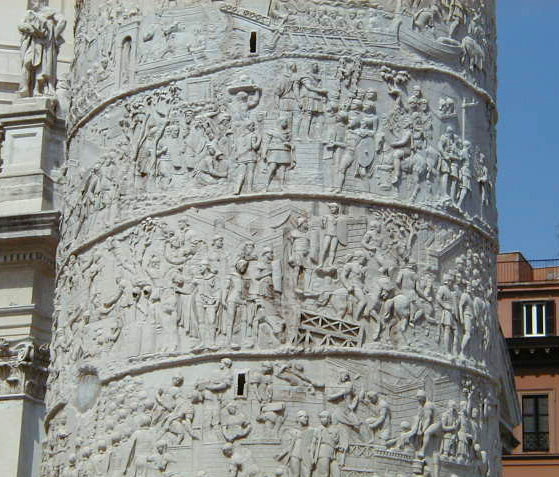
An Eton and Oxford education seems to give its beneficiaries a boundless admiration for the Roman Empire. British imperialists’ self images were deeply influenced by the Roman model that they had been taught. The Romans did a masterful job in advertising their empire at the time and by the fluke of Christianity becoming the state religion much of their literature was transmitted down the centuries because Latin survived as the international language. But their empire was the bloodiest of the lot until the nineteenth and twentieth centuries. The perfect antidote to the prevailing Romanophilia is Barbarians a terrific documentary series made a few years ago by Terry Jones. He looks at the cultures which the Romans fought and tried to destroy and persuasively argues that in many respects the Romans were more brutal and backward than the societies they tried to conquer. As an introduction I’ve posted one episode and you can rummage around for the others.
If Johnson is so accepting of the conventional wisdom that asks no questions about what the Roman Empire was really like it’s a bit of a stretch to expect that he’ll come up with any radical new ideas on the history of Islam. On the other hand if you fancy a well written, entertainingly presented introduction to the subject it’s a good place to start.




 Liam redux
Leave a comment