

It is normally quite an achievement in the year your party wins a huge parliamentary majority to manage to persuade 28,146 people who voted for you in the previous election not to do it.
Labour’s candidate in Bethnal Green and Stepney managed precisely that. The party’s vote share fell from 72.7% to 34%. They narrowly fended off an independent candidate partly by virtue of the Greens increasing their vote share from 4% to 13.7% by doing absolutely nothing. 6,391 votes without a leaflet, a door knocked, a tweet. Zero, zilch. That was an ideological vote.

The principal reason for the haemorrhage of votes was that the Labour candidate opted to remain in a shadow cabinet which was giving unconditional support to the Israeli eradication of Gaza. She is now at the bottom of the ministerial food chain doing the same thing. If the election were held today, her support for maintaining the two-child cap on benefits would probably tip the scales to complete the humiliation. Several current Labour MPs have equally tenuous grasps on their salaries.
Anyone inclined to do a bit of stratigraphy on this site will discover that it has quite a lot of material on Respect and the attempts to create a new party to the left of Labour, a moment in political history in which Bethnal Green has a special place.
The first point I would make about that is that in their own very different ways Galloway and the SWP can only wreck such a project, but that is a subject for another time. The infinitely more important point is that as the general election showed there is now a mass rejection of the two party system in England. Starmer managed to win despite shedding half a million Labour votes. There can be no doubt that those people who didn’t vote Labour were actively rejecting the party’s political and military support for the IDF, its dropping of its commitment to take serious action against climate change and its determination, as evidenced this week, to preserve the essential elements of the Tory class war against the poor.
Niche no more
We now have a parliament with four Green MPs and six independents who have now been joined by the seven Labour MPs who’ve been suspended from the parliamentary group because they think children should have enough to eat. For all practical purposes the Greens stood on a Corbynite manifesto and little separates them from the former Labour MPs on Gaza. Given the influence of Galloway on some of the independents, we can but speculate about their individual world views on all sorts of things. However, looking at their constituencies, they’d most likely be offering some variant of leftish Labourism.
The big stumbling block to earlier versions of a left of Labour party was the anti-democratic nature of the British electoral system. In a negative way the 4,117,620 votes won by Reform show both the power of free publicity and the fact that people are now willing to vote along more ideological lines. “I know they’re not going to win but I’m going to vote for them” is no longer a niche point of view. The more positive case is made by the 1,842, 436 won by the Greens with no campaigns in most areas and homeopathic quantities of press coverage compared to Farage’s crew.

The only route back into Labour for the suspended MPs will be the sort of self-abasement favoured by Byzantine emperors for their errant subjects. It will require an utter personal and political self-humiliation which should be impossible for anyone with a scintilla of self-respect. Starmer and his loyalists despise them for their principles, and since Labour Party rules don’t yet permit the use of the firing squad for mutineers (with the emphasis on “yet”) withdrawing the whip is their way of showing off their inner Stalin to deter future malcontents.
There is no doubt that the bulk of labour MPs are similar to the Bethnal Green incumbent, mainly loyal to a career and with no discernible principles on which they are willing to take a stand if it would affect them in a material way. But the remaining Labour left is shortly faced with a strategic choice in a party in which dissent is seen as treason.
Momentum
The Corbyn movement brought into contact with each other tens of thousands of activists living separated by a few streets from each other and who’d not previously met before. They’ve almost all walked away from Labour but now have the experience of being in a party and fighting politically. Some are still in contact, meeting up at demonstrations and local events.
Even Momentum hasn’t gone away, you know. Admittedly it is fighting the most obviously forlorn battle in British political history (and I include TUSC election candidates in that description).
The obvious next step is for the ex-Labour independents, the Greens and any of the other independents who are in the same political framework is to start collaborating on the environmental, civil liberties, international and economic questions on which they agree. Starmer is offering little more than a couple of years of competent Cameron / Osborne policy and there is a huge appetite for a political expression of pro-working class, internationalist politics.
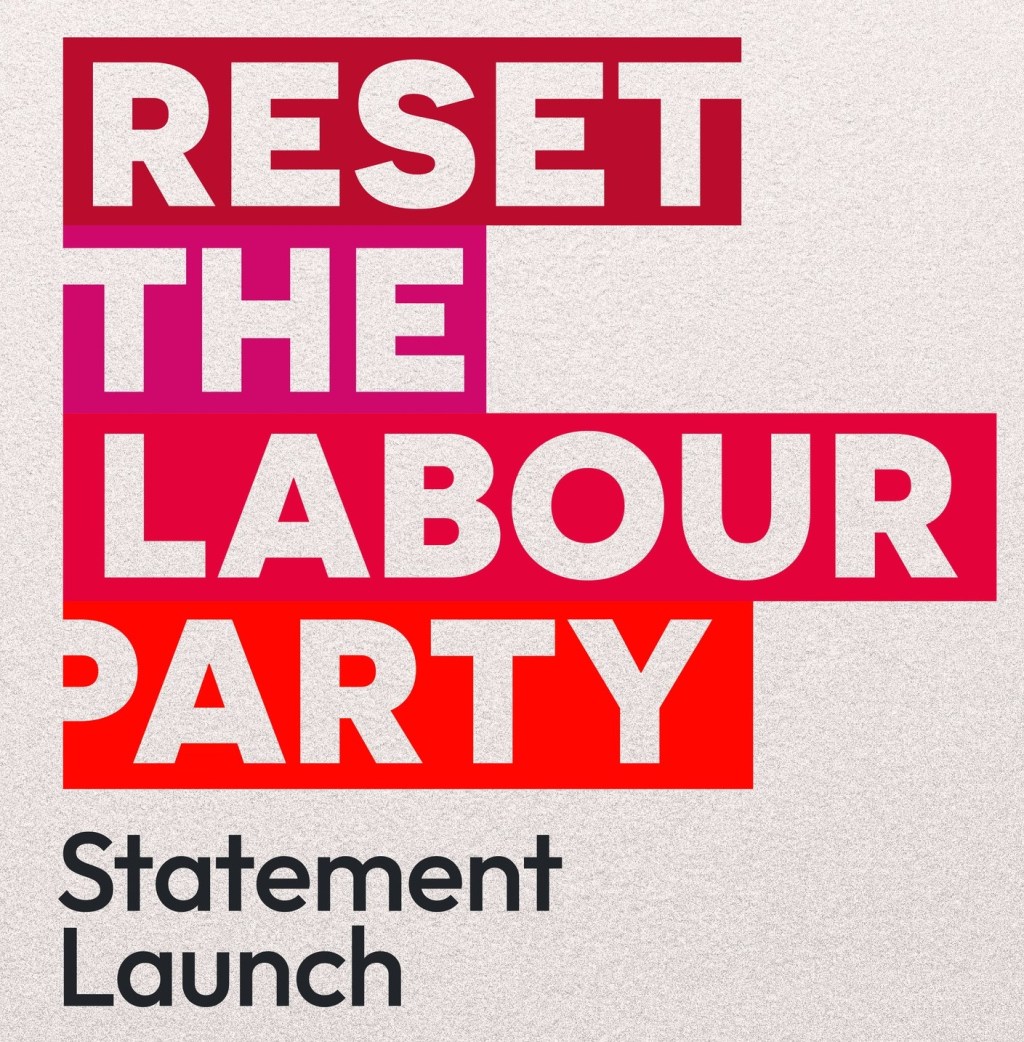
A formation with existing parliamentary representation is a more appealing and significant force than something called into existence by a few hundred lefties sitting in a hall huddled together for warmth. It’s a bit early to be prescriptive about what organised form this should take outside parliament, but there is a lot of material on this site saying what it shouldn’t be like for anyone wanting to avoid the mistakes of the past.

 Liam redux
Leave a comment