
I’ve long said that when I get to the talking to the Virgin Mary in the living room stage that there’s a thousand pounds for whoever puts us out of our misery, though I haven’t quite worked out the mechanics of how to make the payment. A youthful reading of Sartre persuaded me that “man is nothing else but what he makes of himself”. We choose what gives our lives meaning and it is our consciousness of who we are that makes us truly human. Once that has gone, we have ceased to be ourselves.
A rummage through most of the left sites to find out what the correct proletarian position on Kim Leadbeater’s assisted dying bill doesn’t turn out to be that helpful. Most of them don’t mention it at all, and the one that does refers to the Nazi euthanasia programme by the third paragraph.
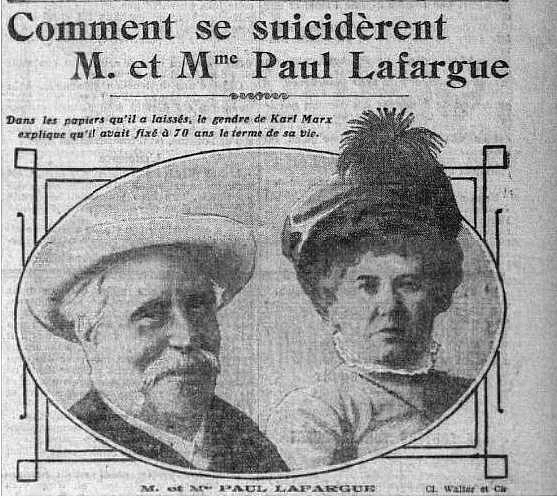
This silence seems odd. This is a debate which is being compared in its social significance to the legalisation of abortion and much, though by no means all, of the opposition to it is based on thinly disguised religious objections. There is a long socialist tradition of seeing one’s own life as something which could be used for political purposes. Adolph Joffe took his own life in protest against Stalin’s treatment of Trotsky. Joffe cited the example of Laura Marx, daughter of Karl and her husband Paul Lafargue who wrote in 1911:
“Healthy in body and mind, we end our lives before pitiless old age which has been depriving us of the pleasures and joys one after another, and which has been stripping us of our physical and mental powers, paralyses our energy and breaks our will, making us a burden to ourselves and to others. For some years we had promised ourselves not to live beyond 70, and we fixed the exact year for our departure from life.
We die with the supreme joy of being certain that in the near future the cause for which we devoted 45 years will triumph.
Long live Communism, long live international socialism!”
You have to admire their revolutionary optimism, but it is also apparent that it wasn’t an act of despair. It was a clearly thought out decision to allow them to take control of their own lives even if, like Joffe, you might want to quibble with their cut off point.
Diane Abbott has written the most high profile challenge to the proposed new legislation along with Edward Leigh, a Tory. Some of their case is procedural. There hasn’t been enough time to have it properly scrutinised, this despite the fact that the issue has been a live public debate for years. More substantive is the risk of coercion. While this can never be entirely ruled out, it does seem that the requirement to have two doctors and a judge examine each case provides as much of a guarantee as is reasonably possible.
The main area of common ground is that everyone agrees that well-resourced palliative care should be a right for everyone who needs it. It’s absurd that a hospice has to raise £7 million a year from charitable donations. Nor is there any disagreement on the need for huge increases in the support for people with disabilities or needing geriatric care.
Lots of left-leaning people have strong reservations about the proposed change in the legislation. I know people who work in old people’s homes who minister to the terminally ill who find assisted dying objectionable and make the point that it’s very often possible to give almost everyone a good death. Sometimes you just have to respectfully disagree with people and make your own wishes clear well ahead of time.

 Liam redux
Leave a comment