
“Those were different times.” Lou Reed
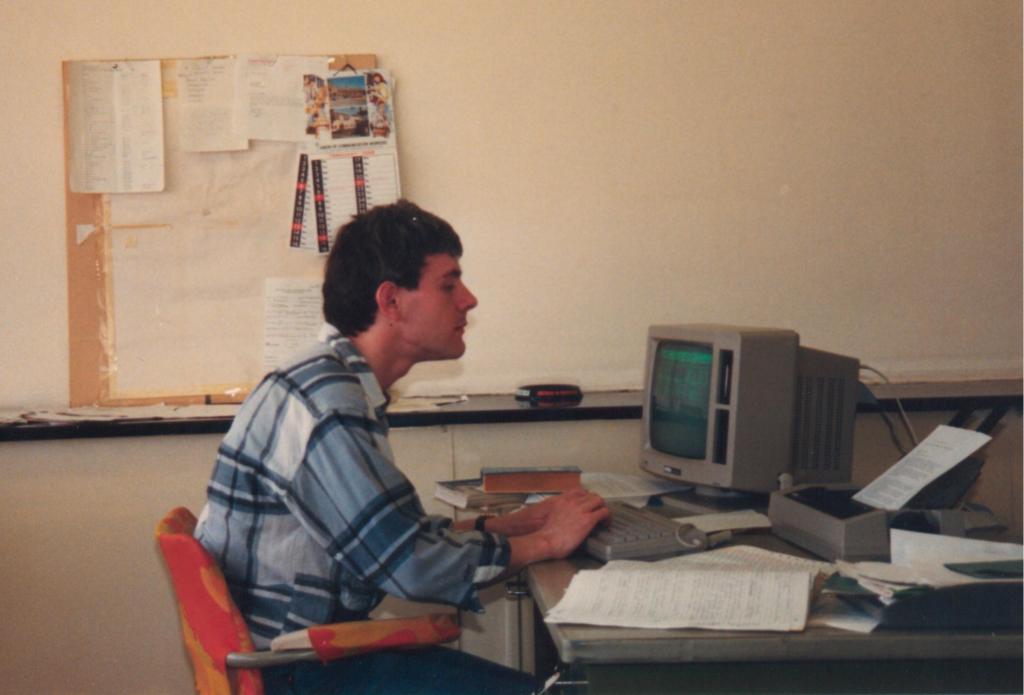
Shortly after disembarking from the potato boat, the job centre got me an executive position filling drums with linseed oil for the Saudi construction trade. They also took my details and said they would pass them onto the Post Office. About three months later I was invited in for an interview. My memory is a bit hazy and I’m not sure if I told them that I was passionate about being the best that I could be in the dynamic international logistics and distribution industry or that I’d heard it was a decent job close to where I lived. Either way, I wasn’t visibly drunk (which as I discovered would not necessarily have been an impediment), replied reasonably coherently and they took me on.
Back then in the late 80s Czechoslovakia was an obscure Eastern European country that no one knew anything about. Such is the precipitate decline of British imperialism and the financial opportunities created by the collapse of Stalinism that a Czech billionaire has been approved as the new owner of the Royal Mail.
There used to be a very different balance of class forces in a jobs like that.
The London Overseas Mail Office had been built in a no man’s land between West Ham and Canning Town in east London. Even by the standards of the time it was a grim part of the world. The plus side was that the Union of Communication Workers (UCW) had negotiated a two-hour lunch break because it was such a dump. To encourage the workforce to get back to their job on time the Post Office had built a bar in the office building, though this didn’t stop a lot of men from going to the pub which had strippers as entertainment for much of Friday.
Sober up during overtime
Pretty much five days a week several of the older men would drive to a nearby pub and have three or four pints before returning to work. By the time they’d somnolently pretended to work through the afternoon, they’d be just about OK to drive home after their overtime.
Overtime was the Holy Grail. Part of the induction was to be repeatedly told that you must not work too fast. People’s mortgages and holidays depended on overtime. Time and a half after 4pm; double time on Saturday mornings. People found their own ways to fill the days. Gabby on my table was doing an Open University course and Skippy who sat in the middle of us was writing song lyrics that he’d send off to Elton John. I bumped into Skippy a few years ago and he’s living in a tower block he’s sharing with some Albanian mafia types, so I’m guessing he didn’t get on Elton’s payroll. As for me, having access to unlimited free photocopying and lots of reading time was a gift for a young political activist and the two hour lunch breaks were a godsend after late night in pubs arguing with Stalinists.
As if the two-hour lunch breaks weren’t enough time off the job, I got elected UCW branch secretary which meant that I also had two hours of facility time a day to represent my 120 members. So, you can see that I needed the overtime to keep up with my work. This mostly consisted of me telling a counterpart in Cairo or Toronto why I hadn’t the foggiest notion why a parcel was 100 grams lighter than declared and had no interest in finding out.
A career highlight was leading a week long unofficial strike. We walked out because it was one of those 1960s buildings with a state of the art air conditioning system which meant that you froze in the winter and roasted in the summer. We had two demands. The first was that the management undertake to install windows that opened and closed, a cutting-edge temperature regulation technique at the time. The second was that male members of staff be allowed to wear shorts when it was warm. I quickly came to regret that aspect of the victory for aesthetic reasons
My memory is that out of 120 union members there were three scabs. One I felt sorry for. He was a middle-aged man with kids on the lowest grade and was permanently skint. Another was just an obnoxious Sun reading arsehole and the third used to read the Daily Telegraph and was occasionally seen attempting to self-pleasure himself in the office. A damp patch on the front of his trousers suggests that he saw the thing successfully through to the end on at least one occasion.
The business that Daniel Křetínský is buying very different. When I worked in the Royal Mail it was considered a very desirable job. It allowed women and men to earn enough to buy a house, run a car and keep a family in relative comfort. The strong level of union organisation prevented the casualisation and hyper-exploitation that are endemic in the distribution industry now. Perverse as it seems from the shenanigans I’ve described, there was a strong ethos of public service and a sense of being part of something that was essential to people.
Another big difference was that back then you could post a dozen Christmas cards second class and not yelp with horror at being told the price of a stamp and you knew things would be delivered on time.

 Liam redux
Leave a comment