

This story’s eventual happy ending is shown in the first couple of minutes when we see contemporary footage of someone kicking the Italian dictator’s corpse in the head. It is a useful reminder that only change is constant.
This new Italian series is currently available on Now TV, that’s the subscription service that you can sign up to for a month, gorge yourself on the programmes you want watch and then cancel. I’d advise paying extra for the ad free version.
Luca Marinelli is magnificent as Mussolini and is on screen for virtually all of the eight episodes. He captures the ludicrous strutting and chest puffing that were part of Mussolini’s image and that Trump seems to have mimicked. He also spends almost as much time talking to the viewer directly through the camera as he comments on his thoughts, actions and what he thinks of those around him as he does interacting with the other characters.
This series covers the years 1919 when he founded the fascist party with demobilised troops who’d fought in Italy’s very bloody war with Austria-Hungary up to 1925 when he announces his dictatorship to parliament. I really hope that there are two more series to cover the rest of his life and how he met justice at the hands of the Italian working class.
Marinelli and the director Joe Wright have taken the essence of Trotsky’s description of Italian fascism and translated it into a fast paced, thrilling and scarily contemporary story:
“The fascist movement in Italy was a spontaneous movement of large masses, with new leaders from the rank and file. It is a plebian movement in origin, directed and financed by big capitalist powers. It issued forth from the petty bourgeoisie, the slum proletariat, and even to a certain extent from the proletarian masses; Mussolini, a former socialist, is a “self-made” man arising from this movement.”
Mussolini’s ascent was enabled by bourgeois politicians who thought he was playing by the same rules they’d applied for decades, a king who just wants a quiet life and the Catholic Church which was terrified by the rise of a communist movement inspired by the Russian Revolution. As with Trump, they all regarded him with disgust and contempt, but they offered no meaningful challenge even when the army leadership was offering to disperse the fascists with a few volleys. And, just like with Trump, former opponents went grovelling for jobs and favours as soon as he was in a position to dole them out.
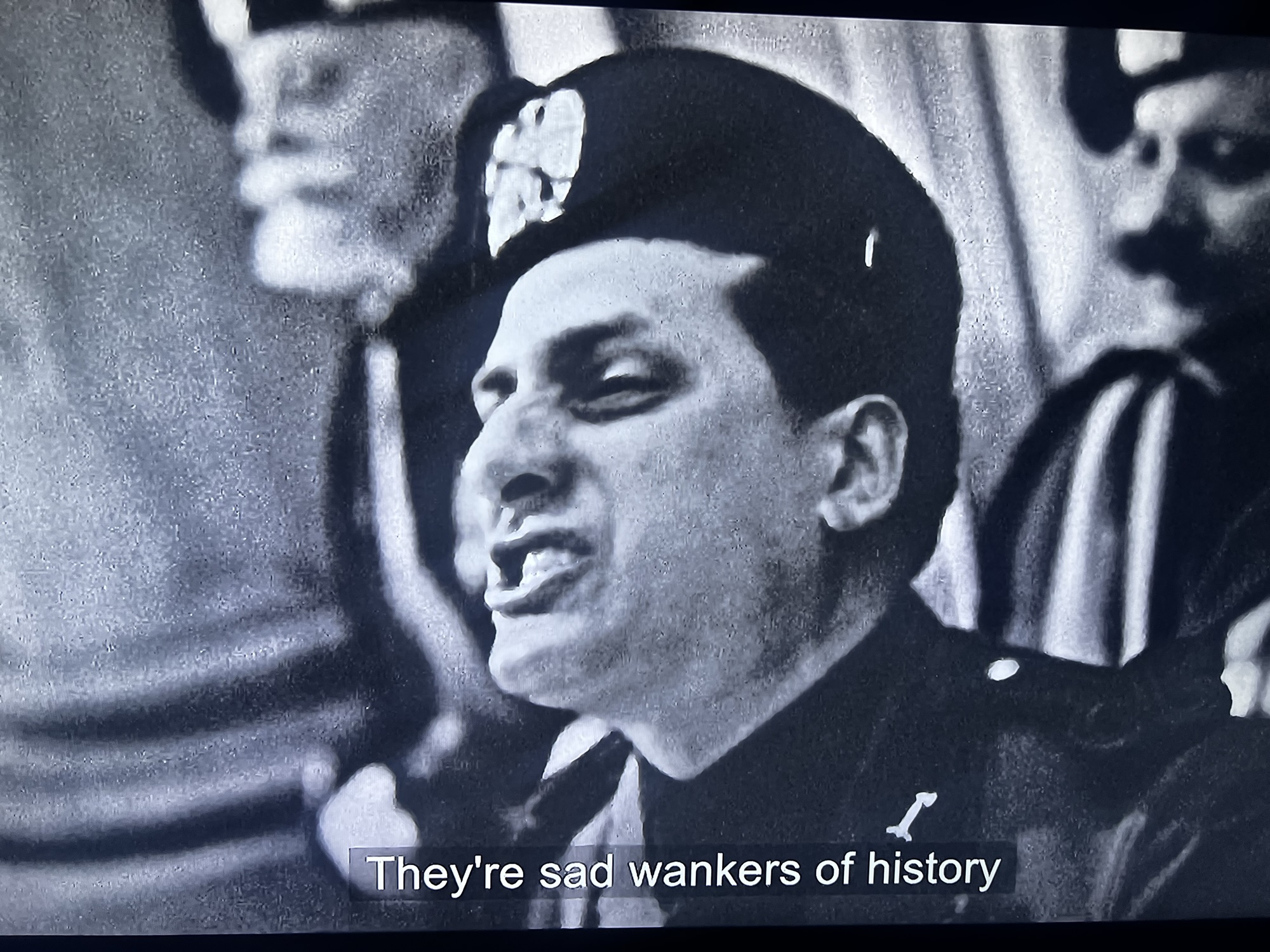
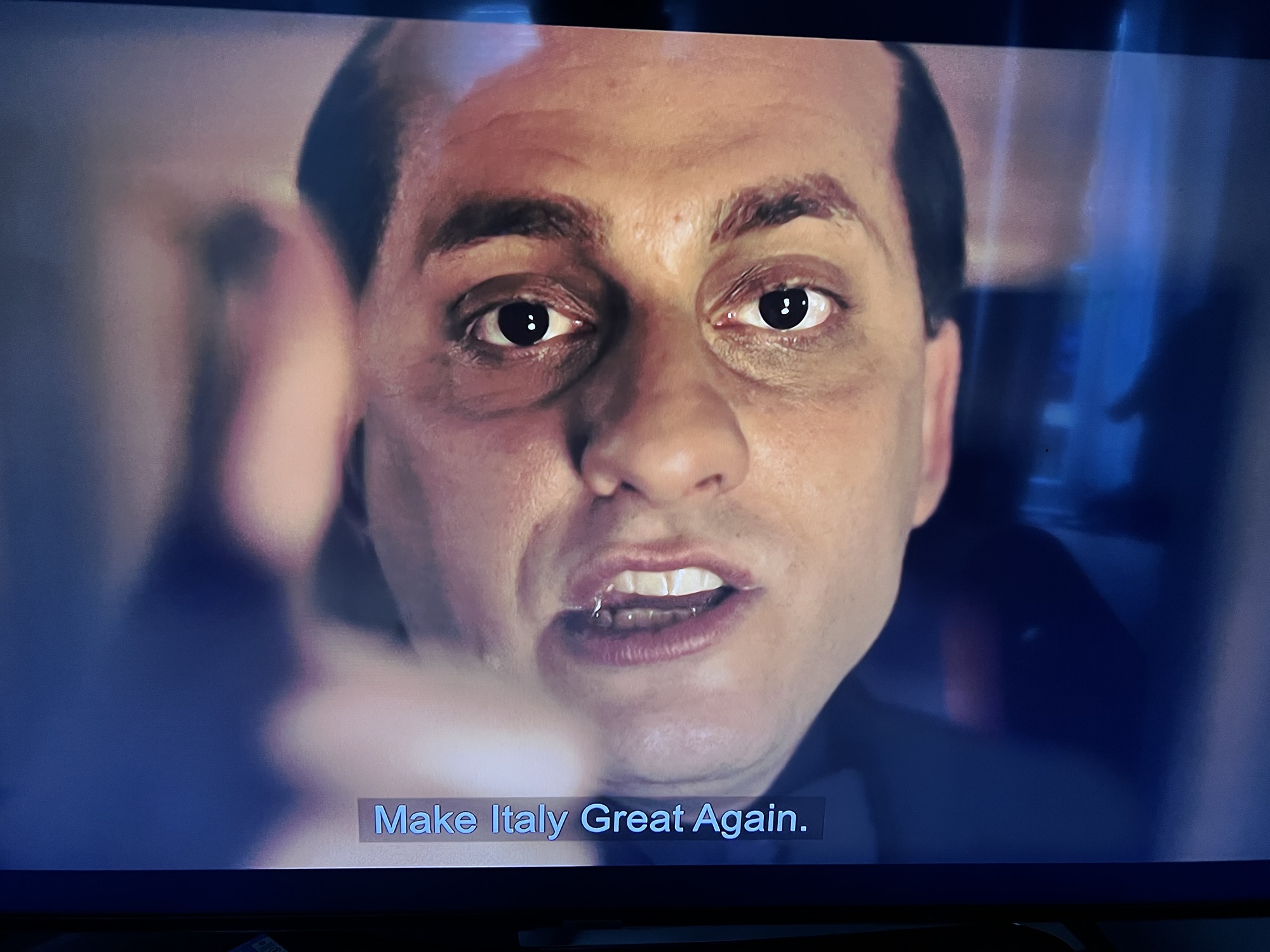
At the risk of saying something positive about the fascist dictator, he had more physical courage than Trump and was rather smarter. He left the Italian Socialist Party because he supported the imperialist war and volunteered to fight in it. Not for him any whinging about dodgy feet to avoid getting shot at. Like Trump, he enjoyed dishing out abuse and I like the way the translators rendered “masturbatori malinconichi”. The Trump parallel is made blindingly explicit when Marinelli addresses the viewer and says in English that he is going to “make Italy great again.
Neither the director nor Antonio Scurati, on whose novel the series is based, could have anticipated just how prescient this series would be about the world in which it’s currently being screened. Mussolini observed some of the outward forms of bourgeois democracy while also using violence, murder and torture to carry out a coup and we are seeing a variant of the same process happening right now with the pious complicity of the Democrats and the British and European ruling classes.
The series ends with the word “silence”.

 Liam redux
Leave a comment