
People with personal experience of these matters told me that the worst members of the RUC to be interrogated by were those evangelical Christian types who had accepted Jesus as their personal saviour. What was true in Belfast remains true in Tehran. When you feel you are doing the work of your god as well as the state you quickly manage to overcome whatever qualms you might have entertained.
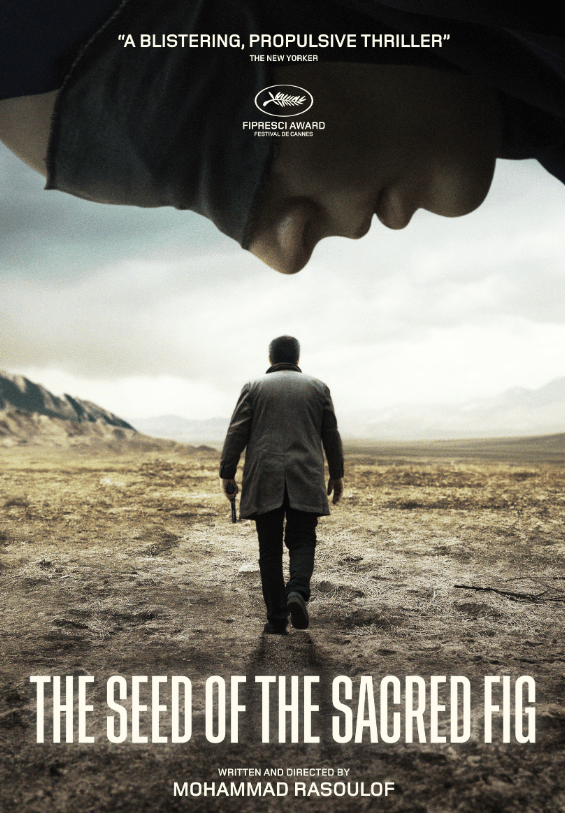
That is certainly the case for Iman, the lead male character in this excellent new Iranian film. It starts with him going to a shrine to offer thanks for a promotion which will entitle his family to a larger flat and probable advancement to a place in a counter-revolutionary court administering theocratic “justice”. When he baulks at fast tracking people to the gallows he and his wife settle on the “I was just following orders” justification for their social advancement.
My starting point for any consideration of the post-Shah Iranian political dispensation is that it was a theocratic counter-revolution made possible by smashing the workers’ movement and murdering the left. Its role in Syria and Lebanon has been to support two very reactionary states and the quicker it is overthrown by the Iranian people, the better.
So, contrary to a lot of readings, I saw this as a very optimistic film if you are willing to see the process it shows unfolding over years.
Iman’s two daughters Rezwan and Sana are teenage girls who live life through their phones, messaging friends and watching videos. They want to paint their nails, wear tight clothes and dye their hair blue. All these things would be problematical for their parents at the best of times, but following daddy’s promotion it is made clear to them that they must be models of the old men’s theocratic virtues in their appearance and behaviour. They also have to break off existing friendships.
All this is set during the women led uprising following the state’s killing of Mahsa Amini in 2022. Rezwan and Sana immediately identify with Mahsa and the young women defying armed cops and militias. A friend of Rezwan’s is shot in the head with birdshot, small lead pellets the cops use which aren’t intended to kill but do blind and disfigure. The girls, and after an intense inner conflict their mother, side against the father.
The generational gap is the reason for optimism. The men who lead the counter-revolution are aging, elderly, dying or dead. Good riddance. They have given a materially relatively comfortable life to the people who work for their bodies of armed men and in their legal system. However, their daughters and sons despise this system and have repeatedly been willing to sacrifice themselves to bring it down. Much of the filming was done clandestinely and director Mohammad Rasoulof,who is now exiled in Europe and has seen the inside of Iranian prisons, uses lots of mobile phone footage of young women facing down the cops and militias.
The Seed of the Sacred Fig has been nominated for an Oscar and a BAFTA. It is certainly a lot more deserving of awards than some of the other tosh that’s in the running. Going to see it isn’t just a way of expressing solidarity with the women of Iran and performers like Mahsa Rostami and Setareh Maleki who have taken huge personal risks to appear in such a defiant rejection of theocracy, it is a gripping and inspiring work of hope and rebellion.



 Liam redux
Leave a comment