
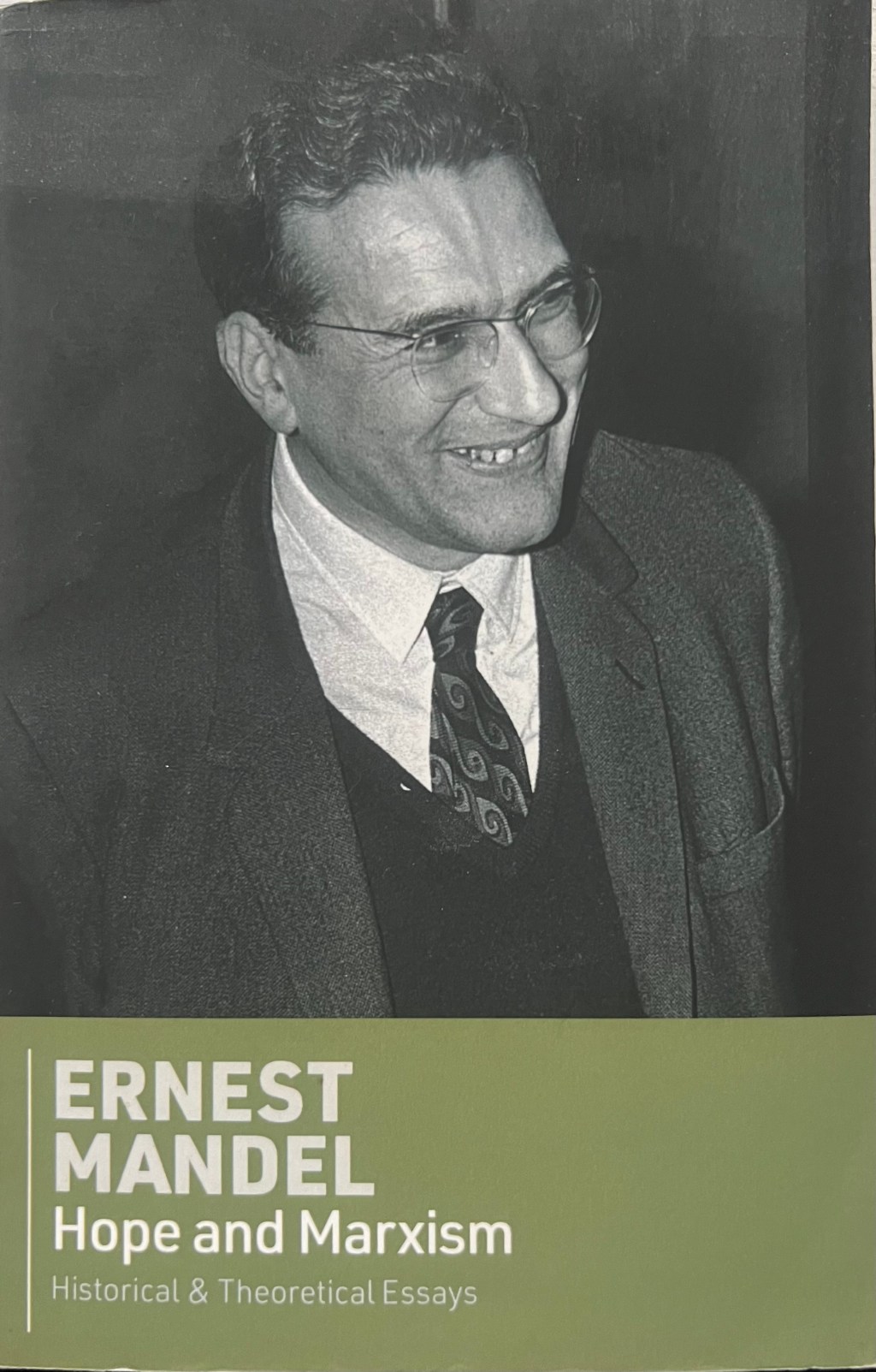
For every one of the last twenty five years or so a dear friend has sent me a birthday card. It is very thoughtful of her, and I really appreciate it. The fact that, without fail, it is precisely one week late every year does not make it less meaningful. So, in that spirit, a couple of weeks after the thirtieth anniversary of Ernest Mandel’s death, and prompted by seeing this piece a few days ago I thought I would offer my own thoughts on why he is probably the most significant intellectual influence on me.
It was only random chance that he survived World War Two. Having joined a Belgian Trotskyist organisation as a teenager, he was arrested twice for resistance activities. His Jewish background and his Marxism made him a double target for the Nazis, and it was not uncommon for Stalinists to murder Trotskyists in that period. He escaped from prison twice and survived a concentration camp. Revolutionary activism in Europe then was not a thing for the fainthearted. He never, to my knowledge, refers to these personal experiences in his writing other than in his pseudonymous introduction to his comrade Abram Leon’s book The Jewish Question: A Marxist Interpretation. The quote from him on this site’s banner is taken from that.
The laziest, most useless form of Marxism is one that relies on having the apposite Trotsky, Lenin or Marx quote for every contemporary event. That is not too different from those religious nutjobs who have convinced themselves that Isiah and Revelation are telling us something about the 21st century. Mandel had a deep knowledge of Marxist literature but it informed his thinking, and he would have scorned any attempt to win an argument on the basis of a quote ripped out of all context applied to a very different configuration of class and international forces.
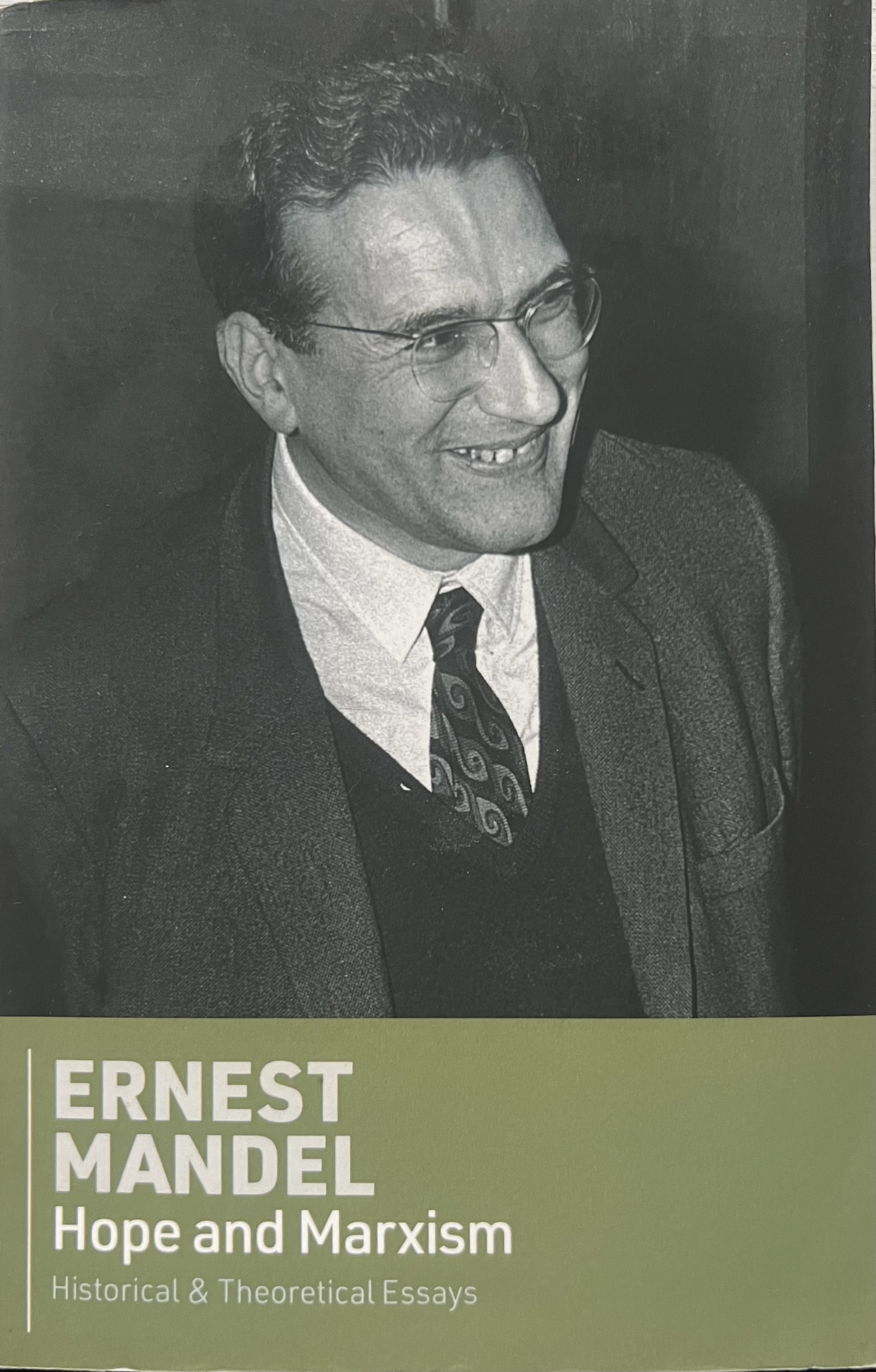
In fact, he went further. On multiple occasions he was extremely critical of Trotsky to an extent that would have certainly put him on the opposite side of the argument if they had been contemporaries. Mandel often wrote on the nature of socialism, democracy and pluralism. He had a much richer understanding of it than Trotsky or Lenin demonstrated, and indeed any other leading figure on the international Marxist left in any tradition. For him, the fundamental mistake of the Bolsheviks was made in 1920-21 when they banned other parties and even factions inside their own party.
You need criticism
As he points out, “In none of the works of Marx or Engels will you find a single sentence which asserts that the dictatorship of the proletariat means the monopoly of power by a single party[i].” For him, the method that became the Stalinist caricature of a workers’ state led to the collapse of those states because they were not based on the conscious support and activity of the working class. The bureaucracies that headed those states were loathed by many of their own citizens and were repellent to the vast majority of young people and workers in the capitalist world. His view was that “you need criticism, you need the confrontation of different proposed solutions, you need variants… It is an absolutely essential precondition for making a victorious revolution which will lead to a classless society.”[ii]
There was no ambiguity for him about what a future workers’ state would look like. “The right to establish various political organisations and parties, including opposition ones; to create an opposition press and the right of political minorities to express their views… will be jealously defended by the workers’ councils.[iii]” And this would be guaranteed by the active involvement of the working class in the running of the state.
It is also from Mandel that I acquired my lifelong contempt for the phony front organisations that are a depressing feature of the left. You know the sort. A bunch of people set up an off the shelf campaign, get a few well-intentioned sponsors and then try to hegemonise and area or political activity. This reduces the working class to foot soldiers and cannon fodder for self-appointed leaders. For Mandel “Revolutionists (sic) will systematically favour and try to develop self-activity and self-organization of the masses[iv].” These phony front organisations, irrespective of who is running them, are using a Stalinist, substitutionist approach which actively prevents working class self-organisation.
Optimism
One way some organisations keep members on a treadmill of activity is what Mandel describes as “a meaningless caricature when one insinuates that revolutionary Marxists expect or predict permanent catastrophes, every year in every imperialist country…leaving aside the lunatic fringe[v].” This is common with only the level of catastrophism varying. Seeing every passing event as a sure harbinger of imminent revolution is not a serious way of thinking. It is cultism.
Mandel wrote “Behind every reason for despair, one must find a reason for hope” in 1946 having seen many of his comrades die, having survived a concentration camp when six million other Jews didn’t, and having witnessed every barbarity that capitalism had to offer humanity.
It would not be in keeping with the spirit of his thinking to point out that he got some things wrong. I was swept along by his overly optimistic predictions about the collapse of the Stalinist states and there is little in his work on capitalism and ecology, a surprising omission when you consider the extent to which it exercised Engels and Marx. However, his insistence on thinking rather than relying on dogma, his commitment to developing Marxist theory while freely criticising the mistakes of the greats, his absolute insistence on pluralism, democracy and working class self-activity are his enduring contributions to socialist thinking. He was above all a revolutionary optimist who reminds us that “anticipation, hopes and dreams are not only categories of historical materialism, but also categories of revolutionary Realpolitik[vi].
[i] World Revolution Today – Trotskyism or Stalinism
[ii] Vanguard Parties
[iii] Introduction to Marxism
[iv] The Marxist Case for Revolution Today
[v] The Marxist Case for Revolution Today
[vi] We Must dream



 Liam redux
Leave a comment