
Attending a funeral a few days ago, I was struck by how many people went up to receive communion. It was an indication that around one hundred and fifty people in the congregation were willing to accept the priest’s view that God’s love is infinite and that there is an eternal life after this one. A Trotskyist version of this is offered by Workers Power who are still committed to “developing a programme, a strategy, for Your Party” when even Socialist Worker is administering Extreme Unction to the invalid.
However, that is not what is interesting about the Workers Power article which is a polemic against the Green Party and those who are inclined to “red wash” it. K.D. Tait makes some valid points. The most recent manifesto is not significantly different from what Corbyn proposed; a Polanski government would face a situation similar to that confronted by Syriza with capital flight and economic sabotage; there is a lack of clarity over what form nationalisation would take; NATO; landlords etc. The punchline is that a Polanski government will be unable to meet these challenges “because they have no organised presence in the workplace”.
The theoretical heart of Workers Power’s position is a particular view of the role of the union movement in Britain, and its conclusion is that “the working class was betrayed by the bureaucratic leadership of its institutions, so fight for democratically-controlled, combative ones, and build a new party to drive that struggle.” It is not an irrelevant detail that days lost through strikes in a period of mass impoverishment are continuing to fall sharply from 2.47m in 2022 to 2.3m in 2023 and a probable maximum of 0.9 million in 2024. There are no data yet for 2025. Don’t build your hopes up.
Two fairly recent recruits to the Green Party are singled out for criticism. Michael Chessum does not know class politics when he sees them according to Workers Power. There is some evidence to the contrary. However, most of the argumentation is directed against James Meadway and his Morning Star article in which he argues that the unions ‘have limited reach into wider society, and this isn’t going to change any time soon’.
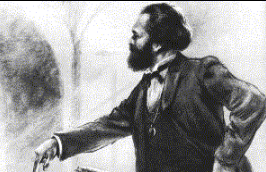
This brings us to Karl Marx’s Inaugural Address of the International Working Men’s Association. In 1864 Marx was wrestling with an analogous problem to that faced by the left in Britain for a protracted period. The European revolutions of 1848 had been violently defeated and almost two decades of reaction followed. As today, capitalist abundance was accompanied by widespread poverty and immiseration for much of the working class. Marx uses the British government’s own data against the ruling class and says, “never before seemed the English working class so thoroughly reconciled to a state of political nullity.”
Marx was arguing that the old ways didn’t work and that the conquest of political power was now necessary. He directed his strongest criticism against the British unions, pointing out that they were “limiting themselves to a guerrilla war against the effects of the existing system, instead of simultaneously trying to change it[i].” Today they largely seem to have abandoned even guerrilla tactics.
Against this bureaucratic union conservatism Marx says in the closing section of his address that “To conquer political power has, therefore, become the great duty of the working classes. They seem to have comprehended this, for in England, Germany, Italy, and France, there have taken place simultaneous revivals, and simultaneous efforts are being made at the political organization of the workingmen’s party.”
Not even Zack Polanski’s biggest fan would confuse him with Karl Marx. However, what is apparent is that the 200 000 plus people in the Green Party now agree with Marx that “to conquer political power has, therefore, become the great duty of the working classes.” They might not phrase it quite like that, but the tens of thousands of mostly young workers feeling themselves getting poorer in a period of capitalist abundance have intuited Marx’s conclusion. If they do not see the unions as relevant to their lives that is not their fault and they are creating their own instrument.
The Workers Power article is right to point out the gaps in the current version of the Green programme and the party’s lack of recognition of what might lie ahead. For those of us who lived through the Syriza experience and much else besides, that is it what makes it a good place to be.
[i] Marx, “Value, Price and Profit,” MECW, 20, 149.


 Liam redux
Leave a comment