

This is a draft
Respect’s performance in the local government elections has been impressive. These were the first elections of this type the organisation has contested on such a scale. In many wards Respect came second or third, locating it as a credible electoral choice for thousands of working class voters. Eighteen candidates were elected as councillors.
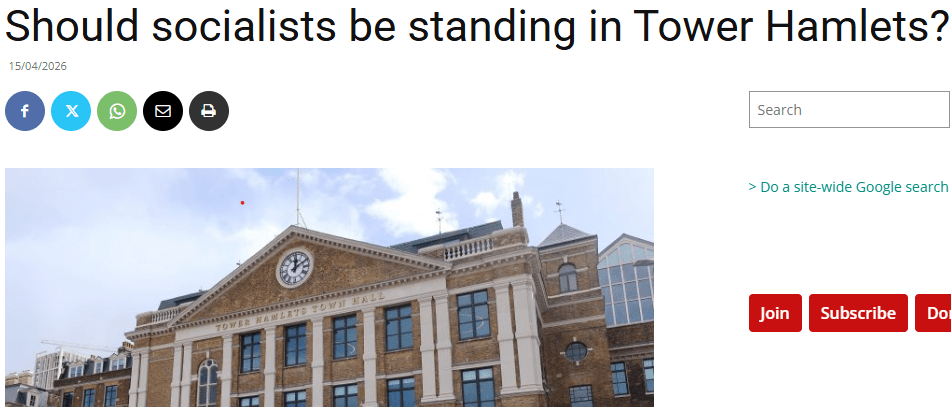
The election of twelve councillors in Tower Hamlets only tells part of the story. There is evidence indicating large-scale electoral fraud which deprived some other Respect candidates of victory. There will be a legal challenge against this and we are likely to see the final tally rise. Newham mayoral candidate Abdurahman Akhtar Jafar won second place with 15,881 votes, this includes 12 898 first preferences. Not only did the party win three councillors in that borough, it came second in thirteen wards.
Across the country Respect candidates have broken through the barrier that usually prevents small parties from gaining more than handfuls of votes. In Bristol Jerry Hicks won 679 votes. This represented 25% of the vote in a ward that is 86% white British. Respect candidates came second in ten wards and third in eight others nationally. In Birmingham Salma Yaqoob polled 4,339 votes. This was 49% of the poll. The 28 Respect candidates outside London achieved 16,019 votes, representing an average vote of 16.4%. In Birmingham the average vote was 21.5%, while in Preston it was 27.0%. The average vote of the 18 candidates outside London, Preston and Birmingham was 11.5%. Only three candidates achieved less than 5% (and one of these was in Birmingham), and there were several results at 20%+, and a good number between 10-20%. The first past the post system used in British elections has always made it difficult for smaller parties to win votes and these results are much better than anything achieved by the non-Labour left for many years, both in terms of their consistency and their geographical spread.
It has taken years of work for the Greens to have an instantly recognisable political identity and a relatively small number of councillors. Respect’s success has barely been mentioned in the mainstream press.
There is a contradictory element to some of the results. The twelve councillors in Tower Hamlets are all Bangladeshi. This means that the council group is not fully representative of the ethnic and political diversity of either the borough or Respect in Tower Hamlets. Many of the councillors are politically untested and few of them have experience of socialist organisations other then Respect. Sections of Respect’s leadership have been very reluctant to adopt rudimentary Labour Movement procedures for the accountability of elected officials. The councillors will be able to cite the precedent that George Galloway has set whenever they are asked to report to the local organisation. The leadership’s assertion is that Galloway’s moral authority and the support of the national office will make sure that the new councillors stick to the policy commitments that were made during the election campaign.
The other side of the contradiction is that Respect has now begun to accumulate a mass base of support. This has to be consolidated by building vibrant, functioning local organisations using the networks and contacts that were made during the election campaign. In addition to having a large membership that than be used in large, spectacular events the organisation needs to put down roots in working class areas and offer its members the routine and structure that help create a stable, democratic organisation.
Labour’s neo-liberalism led many of its former voters in Barking and Dagenham to help elect eleven fascist councillors. In many wards in Tower Hamlets Respect won over large numbers of white working class voters because it campaigned against privatisation and the housing shortage. A result of this is that in the borough the fascist vote was only 9.4% in an area that is more deprived than Barking.
In many parts of the country Respect has proved that it is now capable of giving the other parties a real electoral challenge. In the months that follow its councillors can make the organisation even stronger by leading struggles both inside and outside the town halls. It will be the politics of class struggle and a fighting Respect that will give working people an alternative to new Labour.


 Liam redux
Leave a reply to Anonymous Cancel reply