image “These gentlemen don’t fear ideas that float in the air, that are written on paper, or that appear in printed or spoken form. What they fear is organization – organized action, organized attempts to bring these ideas to fruition.”
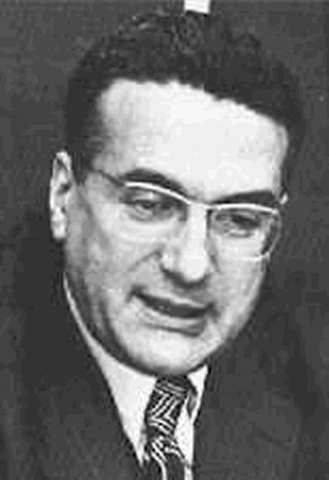
Ernest Mandel was one of the most innovative Marxist thinkers of the second half of the twentieth century. Mandel escaped twice from Nazi prisons, once by persuading his German guards that it was their internationalist duty as socialists. They had been SPD members.

He was a “professional revolutionary” who invested all his energy, knowledge and vast personal culture in the struggle for socialism and in the building of a revolutionary party and the Fourth International. At the same time, Mandel maintained a hectic pace of scholarly activity; he is the author of several imagebooks: Marxist Economic Theory; Trotsky: A Study in the Dynamic of his Thought and Late Capitalism, among others.

This 90-minute documentary directed by Chris Den Hond.looks back at Mandel’s life and 60 years of struggles: from the Civil War in Spain to the fall of the Berlin Wall, with segments on Algeria, Che Guevara, Vietnam, the 1960-1961 Belgian general strike, May 68, Portugal, Chile, feminism, ecology, workers’ control, the Sandinistas and more. This DVD includes “A man called Ernest Mandel”, a 40 minute 1972 film by Frans Buyens

It includes interviews with: Eric Toussaint, François Vercammen, Mokhtar, Alain Krivine, Janette Habel, Tariq Ali, André Henry, Francisco Louça, Ida Dequeecker, Marijke Colle, Michel Warschawski, João Machado and Catherine Samary

Contact:

IIRE, Phone: +31 20 6717263, Skype: iire-iirf iire@iire.org, www.iire.org

Lombokstraat 40, NL-1094 AL AMSTERDAM, Holland

Contact for Canada and the USA:

Ernest Mandel DVD

P.O. Box 85, Station E,

Toronto, Ontario M6H 4E1 Canada

e-mail: mandeldvd@gmail.com

phone: (416) 537-8925


Technorati : , , , ,
Del.icio.us : , , , ,

13 responses to “Ernest Mandel – DVD biography”

  1. Somebody whack it on mininova or pirate bay.

    Like

  2. Is there a distributor for Australasia as well? Looks like something really worth seeing…

    Like

  3. Tim I sniff a business opportunity but I’d keep the day job.

    Like

  4. I want one too. UK distribution via ISG? How much?

    Like

  5. Mandel certainly had an interesting life and he was in many ways admirable. I’d be rather surprised if this dvd dwelt overlong on the less admirable aspects of his political involvement though – for instance his role in destroying the British section of the Fourth International after the role and in foisting Gerry Healy on the international movement.

    Like

  6. Dave the distribution arrangements are in the process of being clarified. I’ll let you know when there is something definite.
    Mark I’ve not seen it yet but it’s hard to imagine a history of European Trotskyism without some mention of Healey. Maybe someone should make a dvd about him.

    Like

  7. I’m not sure an accurate dvd could be made about the old monster without earning an 18s certificate.

    My point about Mandel was more basic than just the Healy part though. He undoubtedly led an interesting and at times heroic life. He devoted that life to the cause of socialism. He also had plenty of interesting things to say.

    But at the same time he played a shockingly terrible role in some events. He was one of the big players in forcing Healy on the British organisation and in general in destroying the British section of the FI. This was for the crime of being right on the major issues of the day while Mandel and his associates were worshipping Tito, insisting that the world economy wasn’t collapsing, arguing that Western Europe couldn’t return to capitalist democracy and coming up with all kinds of lunatic theories about the Stalinist bloc. Mandel disgraced himself at that time. And later he was behind a lot of other rubbish, student vanguards and the like.

    I think a serious documentary about the man, taking into account the great and the awful, would be well worth seeing. I doubt if that could describe a dvd made by his followers however.

    Like

  8. Sorry about that. The above bit should say that Mandel and his associates were “…insisting that the world economy WAS collapsing”.

    Like

  9. Seriously I would like to order a copy to show at the radical left film club I am a member of at my university, but sending a cheque from New Zealand to Amsterdam isn´t a very practical proposition.

    Has any thought been given to setting up an online ordering facility?

    Like

  10. Prinkipo Exile Avatar
    Prinkipo Exile

    I think Mark P is confusing Mandel with Pablo in some of the things he alleges. And I don’t think you can place the whole “student vanguard” thing at his feet. It was some of the younger elements around the FI who got carried away, often before they joined the FI – Robin Blackburn and Tariq Ali being cases in point. The resolutions of the FI talked about the “worldwide youth radicalisation”, much of which was true and outside of an element of ultra-leftism regarding Latin America at the 10th World Congress, many of the FI’s formal positions were quite good.

    Like

  11. No, I don’t believe that I’m confusing Mandel with Pablo. Both were prominent members of the FI at the time and both were pushing the same nonsense, as was James Cannon and Gerry Healy. It’s only later that the four of them became factional opponents. At the time they were united in pushing Healy’s career and in pushing all the gibberish and confusion which the FI of the time was so justly famous for.

    Later Mandel wholeheartedly pushed the student vanguard idea and, of course, the Latin American guerrilla army stuff. He wasn’t the only one – so did most of the USFI. On balance, while he had a lot to say about economics, his political record was poor.

    Like

  12. I’ve been asked to post this brief comment from a comrade whom we’ll Chris and has very limited computer access at the moment.

    We did not force Healy on anyone. We agreed a split in the section. Grant, whom Mark supports, made no serious objection to solidarity with Tito. Look at the minutes. To not support Tito would have been sectarian. It was a major lever to intervene into the mass CPs. The Brits never understood the need to intervene into the actual movement, hence Grant gained nothing from the CP crisis which built Pat Jordan’s group and the JCR. Similarly they abstained fron VSC.

    Like

  13. I don’t pretend to have been involved in the FI in the 1940s, and I suspect that few people still alive and politically active actually were. But according to the best known and most detailed book on the subject, Richardson and Bornstein’s “War and the International”, the international leadership of the FI intrigued for a long time to boost Healy’s position in the British section and to build a faction around him. This hasn’t been disputed in any serious history that I’ve seen and it fits pretty much exactly with the account in Grant’s book.

    “Agreeing to a split in the section” actually meant agreeing to let Healy and his faction ignore the decisions of the majority. They encouraged and then recognised his split as part of the international, which was entirely undemocratic and served only to undermine the RCP majority.

    His remarks about Tito are also misleading. The problem was not with using splits in the Stalinist movement to intervene. It was with theorising that Tito was an “unconscious Trotskyist” and with painting his dictatorship in democratic and socialist colours. I note that Chris has nothing much to say about the other major issues of disagreement between the British section and the international leadership – on the supposedly imminent collapse of the world economy, on the class nature of the expanded Stalinist bloc, and on restoration of bourgeois democracy in Western Europe. On all of these issues, as on Tito, the majority of the British section was very clearly correct (or at least, less spectacularly wrong) when compared to the views of the FI leadership.

    It is also a simple slander to suggest that the British group never understood the need to intervene into the actual movement. The RCP and before it the WIL had carried out exemplary work during and immediately before the war, had come to national prominence by leading strikes and had grown substantially in this period. If they had been foolish enough to be in agreement with the FI leadership after the war, they would not doubt have been treated as a model section.

    Also, reading the Grant groups disorganisation in 1956 (something which we probably agree on), after the RCP had been destroyed and after Healy with the support of the FI had witchhunted all oppositionists out of the organisation, back onto the earlier period is both unfair and irrational. The RCP was a much more dynamic and capable organisation than the post-expulsion Grant group was. And of course, when the Grant group reorganised they began a period of nearly three decades of uninterrupted growth.

    Like

Leave a reply to Darren Cancel reply

Trending