
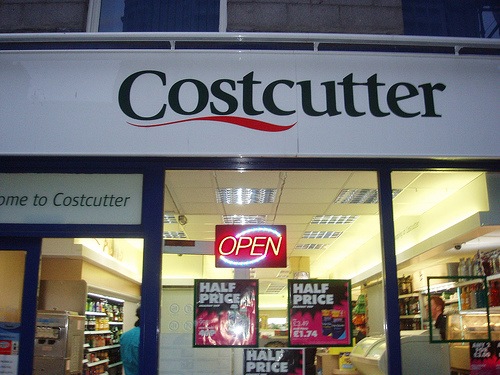
 The Costcutter shop across the road sells organic loaves baked on the premises. It may be self indulgent but they taste like real bread. Before the summer they cost 99p. Today they cost £1.29. That is one third more in half a year. Kerrygold butter is the preferred choice in this house. It has gone up by about 40p in the same period.
In common with most men my method of grocery shopping is to wander in a set pattern buying the usual stuff and not really noticing the price. But the sharp, frequent rises in the prices of these staples caught even my attention. This is more than the owners of a small supermarket franchise sticking the arm in. The Economist reported that “in early September the world price of wheat rose to over $400 a tonne, the highest ever recorded. In May it had been around $200.”. According to The Financial Times “in the UK, food inflation was already running at an annual 5.1 per cent in October”.
Australian grain production has been hard hit by that country’s two year drought. That seems to be the only place with a drop in production. This year has seen the world’s largest ever grain harvest totalling 1.66 billion tonnes, up 89 million tonnes from last year. So if we are not looking at a drop in production why are our sandwiches becoming more expensive?
 A subsidiary reason is that people in India and China are eating more meat but this is a medium term trend and cannot explain the recent sudden increases. The answer is the use of American maize to produce ethanol as fuel for cars. One ton of corn gives an average 413 litres of ethanol (109 gallons). The centrepiece of George W. Bush’s response to climate change is to use food to allow relatively affluent Americans to drive their cars. The US government buys up one third of the country’s production which raises the prices. As maize becomes more profitable farmers are keen to convert land previously used to grow soybeans and wheat to maize production. All of these crops can be used to feed people and animals. Instead they are fed to cars. The Economist says “federal subsidies alone cost $7 billion a year (equal to around $1.90 a gallon).”
The poorer you are the more of your income is spent on food and that’s not only true in east London. In the very poorest countries a one third rise in food prices reduces living standards by over 20%. The International Food Policy Research Institute estimates that the expansion of ethanol and other biofuels could reduce calorie intake by another 4-8% in Africa and 2-5% in Asia by 2020.
This is a glimpse of the capitalist solution to some of the problems created by climate change. Petrol contributes to global warming. Let’s try to reduce the amount we use but still keep our cars on the road. How do we do that? Easy! Make everyone pay more for the food, making sure the worst off are hit hardest and that people already on the edge of subsistence get even less to eat.





 Liam redux
Leave a reply to Gadget Queen Cancel reply