image Forgetting about kitsch novelty items what Russian made consumer goods are in your house? Your MP3 player or your TV? Probably not unless you are incredibly eccentric or are a Russian who is keen to support local industry and are incredibly eccentric. This thought occurred to me last week when we were discussing the Socialist Resistance statement on the Caucasus. The question was raised of whether or not we can now describe Russia as an imperialist power. Now in view of the fact that the discussion was a bit impromptu it would be a bit daft to say that any firm conclusions were reached. One strand of thinking reasons that Russia is part of the G8, has nuclear weapons, exports large amounts of capital and has had a capitalist restoration from which has emerged a self conscious ruling class and gangster bourgeoisie which won its position through exploiting its place in or relationships with the Soviet bureaucracy.

All these things are factually correct but at the moment unconvincing. The capitalist restoration has opened the Russian economy to the world market and in return Russian exports have more in common with Nigeria or Saudi Arabia. The private oil and gas companies can make fabulous profits but this model of economic development more closely resembles a neo-colony (which Russia clearly is not) that an imperial power. According to the Economist fuel and gas accounted for 64.8% of Russian exports in 2006, metals 13.8% and machinery and equipment a paltry 5.8% and it doesn’t mention how much of that was sent back because it didn’t work properly. By contrast imagemachinery and equipment accounted for 50.5% of imports. At the same time the CIA estimates that per capita GDP is $14,700 / £7950 and while they might have an axe to grind the figure can be taken as reasonably accurate. By this measure Russia is just ahead of Malaysia and Chile but behind Botswana and New Caledonia.
This would explain the large scale export of capital. There is not too much in the domestic economy in which it can be profitably invested so it makes more sense to spend the money on property in the south of France or English football teams. Russian capital is not being invested abroad to develop non-competitive or complementary branches of production and nowhere in the world can one reasonably claim that Russian capital is playing a dominant role in another state’s economy other than in those regions where the lines between former Soviet businesses and the new capitalist firms were blurred.

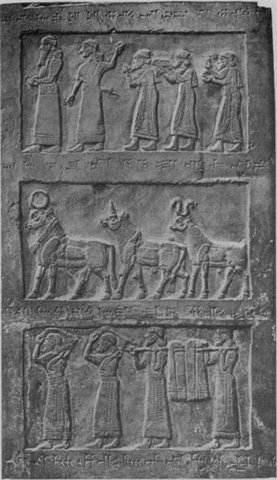
Xerxes was having bas reliefs made to demonstrate that the Persian Empire was receiving tribute from Turkey, China and all points in between 2500 years ago. We don’t use  “imperialism” in the same way to describe that society as we would use it to describe contemporary British or United States imperialism. It was a much more underdeveloped social formation . The Russian ruling class has shaken off the stupor of the Yeltsin years and is now militantly embarking on a campaign to secure what its sees as its state’s periphery against the U.S. which currently occupies foreign territory in the form of military bases in sixty-nine countries. There is nothing supportable or progressive about the Russian government or its society and its affirmation of the rights of South Ossetia and Abkhazia is manifestly self serving. However it is much too premature to label a third rate economy utterly reliant on exporting raw materials as imperialist even if it is trying to incorporate neighbouring regions and has a huge, largely useless, army.

127 responses to “Russia – is it too early to describe it as imperialist?”

  1. but wouldn’t it be suitable to label also Saudi-Arabia in a certain way an “imperialist country” with an active policy trying to ideologically dominate the islamic world? Or do we need an “updated” marxist theory of imperialism?

    Like

  2. I would certainly describe Russia as imperialist, for two reasons, first a host of semi-colonies Armenia, Khazakstan etc. from the former CIS
    second because it is now exporting large quantities of FDI to these states in particular but also worldwide.
    If you want I can send you the reports, but Deutsche Bank Research have loads on it.

    Like

  3. Marxist theories of imperialism tend to emphasize the establishment of economic and militant power over other countries through the export of finance capital. There’s an excellent report on how Russian capitalists are investing their weath here: http://www.dbresearch.de/PROD/DBR_INTERNET_DE-PROD/PROD0000000000224964.pdf

    Russian capital has flooded into former Warsaw Pact countries and in markets where it exports commodities, especially in metals and energy. Despite Liam’s joke about Russian machinery not working, the increasing profitability in the CIS is also the result of improvements in production, investment in machinery and increasing labour exploitation.

    The export of capital is consciously supported by the Russian state, and reflects a way to diversify financial risks and to gain access to high technology and international markets.

    In that context, it seems quite appropriate to say that Russia’s capitalist class is imperialist.

    Like

  4. Unless one believes the upstart Milliband, Russian Imperialism is hardly the main issue in the world right now.

    The hypocrisy of criticizing Russian recognition of South Ossetia and Abkhazia is staggering. following US recognition of Kosovan secession.
    Not to mention using Georgia for a new Caspian pipeline to deliver oil from Azerbaijan to the Turkish port of Ceyhan, cutting out Russia.

    Let’s hope his diplomatic mission to Georgia fails otherwise he’ll become an even more credible alternative to Brown.

    Russia can’t compete with the US, Japan & Europe or their Chinese suppliers in the manufacture of consumer goods, but it’s self-reliant in oil, gas and almost all industrial metals, as well as aerospace and weapons production. Which means it’s also not just “Saudi Arabia with nukes” and has considerably more room for independence.

    Does this make it an imperialist power on an even- steven basis with the USA and EU?

    Not exactly, because of the class dynamic involved in their geopolitical relationships.

    The Russian capitalists who have *officially* invested $70 billion abroad aren’t the same people who are worried about states in Russia’s “near abroad” joining NATO or the EU.

    Much more capital has flowed overseas since 1991 than this figure indicates – in excess of $200 million – much of it illegally via banks in Cyprus. These people aren’t too concerned about the fact that Cyprus has joined the EU, because it remains a competitive tax haven for offshore companies.
    They don’t represent a state and have no unified ideology other than maximising the return on their deposits.

    To the degree that the Russian state resists its encirclement and piecemeal dismemberment by NATO and the EU, it’s acting legitimately as the representative of its people.

    I’d imagine the Majority support giving the finger to the US and Britain. Needless to say, this doesn’t mean offering a carte blanche to every act of bureaucratic chauvinism from Moscow, or arguing that Russian capitalists are any more progressive than Western ones. But they don’t exactly seem to be the people offering any resistance to them either.

    Like

  5. “…in excess of $200 million”

    Billion.

    Like

  6. […] Ossetia – it would be too obvious – but it’s clear that this recognition of independence is self-serving. A few years down the line, there could possibly be the integration of the two new states within […]

    Like

  7. The figure provided by Deutsche Bank is $170 bn invested abroad, and that was up to 2007, with a rapidly rising trend. It seems reasonable to assume it will have massively increased since then.
    Russia is certainly imperialist. Miliband or not.

    Like

  8. priankoff- if Russia is imperialist (and having $170 billion invested abroad plus seems to strongly suggest so!) this in no way equates to either Russian capitalism being a progressive alternative to the US or as yet equal to US imperialism- it does suggest that Russia offers a form of resistance to US imperialism but one of inter-imperialist rivalry not a progressive resistance.

    Like

  9. Priankoff raises some useful points, but let’s not get off the point. The question is not whether Russia imperialism is the main issue in the world, or whether it has the same power as the US or EU. No-one here is arguing about that.

    However, you are mistaken in thinking that the Russian oligarchs are not worried about increasing US influence over Russia’s neighbours. Khodorkovsky’s fate shows that these people are co-dependent on the team around Putin and represent one class viewpoint. They want to have economic dominance in the states around Russia, and they invest there heavily. Their wealth is not simply sitting in banks or invested in Chelsea FC. They are conduction horizonal and vertical integration across borders.

    Russia’s self-determination is not at threat in this conflict. Russia plays no progressive role in this conflict. Russia’s working class can itself not be free while it support Russia’s expantion into Georgia and the Ukraine (and that is what is happening here).

    Russian bosses ‘giving the finger’ to the US is not anti-imperialist. It’s inter-imperialist rivalry, and we should stand with neither Washington nor Moscow.

    Like

  10. `The hypocrisy of criticizing Russian recognition of South Ossetia and Abkhazia is staggering. following US recognition of Kosovan secession.’

    Equally Priankoff you could say the hypocrisy of `recognising’ (annexing more like) South Ossetia and Abkhazia is staggering seeing as it was the Russians who protested the most about Kosovan secession.

    `To the degree that the Russian state resists its encirclement and piecemeal dismemberment by NATO and the EU, it’s acting legitimately as the representative of its people.’

    There has been no piecemeal dismemberment of the Russian state by NATO and the EU. In fact, the Clinton regime did a fantastic amount to stabilise the staggering Russian ruling class post Soviet collapse. Any dismembering of Russia has been done by the oligarchs who have picked the peoples’ pockets and are shifting all their wealth abroad. In the meantime they are invading, or interfering with, their neighbours to trample dissent at home.

    My vote: imperialist to the core.

    Like

  11. bill j, jason, brooks, ellis etc…

    Which part of “class dynamic” didn’t you understand?

    What do you imagine the US navy’s doing in Batumi, Handing out Prianiki wrapped in silk bows?

    HoneyAnimal or Milliband?

    Like

  12. What has that got to do with it?

    Like

  13. how about “imperialism with special characteristics”? that seems to suit the times.

    Like

  14. ineresting and thought proviking – well done

    Like

  15. Priankoff, are you saving that there is a working-class dynamic to the actions of the Russian army? No-one here is suggesting that the US military is playing a progressive role, and the SR statement is headlined “Reject imperialist interference in Georgia!” – which makes clear its opposition to US military adventures. However, we also feel that the working class needs an independent line from the Russian state, whose class nature is capitalist.

    Like

  16. I think Bill and Chris have changed my mind on this. The extent of Russian investment abroad is severely caricatured or not reported in the mainstream press and this influenced my judgement.

    Below is a significant conclusion from the Deutsche Bank report.

    Russia has become one of the leading foreign direct investors among emerging markets in the last decade. The Russian expansion abroad started in the CIS and has moved forward to industrialised countries as well as Africa. While resource-based industries continue to dominate outward investment, financial, telecom and retail trade companies are also venturing abroad.

    Like

  17. I don’t think you can call Russia imperialist in the way we apply that label to the US, Britain, France, etc. It’s a bit wordy, but why can’t we just say it is a dominant regional capitalist power with its own expansionist, oppressive dynamic? I would say that of India, for example, which is certainly not “imperialist” according to any definition I am familiar with, in spite of the growing presence of Indian firms and investments abroad. The imperialist dynamic in the world today runs through Washington-London-Berlin-Tokyo-Paris (with secondary relays in capitals like Amsterdam-Rome-Ottawa-Madrid-Canberra-Tel Aviv-etc) — and not through Moscow-Beijing-New Delhi-Sao Paulo. While the latter powers can play a contradictory role at times, they certainly do not for all that represent a “progressive” alternative to the imperialist powers.. Class and national autonomy from these dominant regional powers, to be sure, but not because they are “imperialist”. That’s my take anyways.

    Like

  18. A Portuguese comrade once quoted to me another example of an imperialist country with backward elements in its domestic economy – the example was Portugal. He called it an ‘underdeveloped imperialism’.

    Like

  19. There’s an excellent collection of stats here;
    http://www.dbresearch.de/servlet/reweb2.ReWEB?rwdspl=0&rwnode=CIB_INTERNET_EN-PROD$CIBMAP&rwsite=CIB_INTERNET_EN-PROD

    If you go to Russia, you will see that since 2000, its nominal dollar GDP has increased 8 fold.
    In other words, on current trends by the end of next year, it will be the fourth largest economy in the world.
    The key thing to note about all these former Stalinist states, is the rate of growth. As their economies collapsed during the 1990s, so did their currencies. As they have recovered from around 2000 onwards so have their currencies.
    So their economy recovery is compounded by their financial recovery. Russia is clearest example of this in the world.

    Like

  20. I think the problem lies on seeing imperialism on simply economic terms. In reality there are political and military as well as economic conditions that characterize a state as imperialist. Furthermore imperialism today is a system of states with a hierarchy of course and not just a level of development of some states. For example, in economic terms Switzerland and Japan are imperialist (capital productivity, export of capital etc) but politicaly and militarily the rely on US power to protect their offshore investments. The US is the hegemonic power because it can guarantee the reproduction of the global capitalist order (not alone of course but no other state can do it with out the US). And of course more foreign capital enters the US than it exports to the rest of the world without the US becoming a neo colony. Now in what sense Russia is not imperialist? Hasn’t the russian capital reached a level of concentration and cetralisation comparable to the western capital? Of course russian capital is not as productive as for example german capital (exept in the energy, mineral extraction and defence sectors) but the political and military strength of the russian state is used to create sphres of influence tha give preferential access to russian capital against other more productive capitals. So the inter imperialist rivalry takes a political and military form not just economic.

    Like

  21. Bill – “excellent collection of stats” is not a phrase that sensible well adjusted people use. Maybe you can get away with “useful but dull” or “tedious but illuminating”. Data are life sapping.

    Like

  22. Well put Dimitris.

    Raghu, you cannot be a little bit imperialist. It is a bit like being a little bit pregnant. It is important for marxists to be able to judge and explain when quantity has transformed into a new quality. India is not imperialist and neither is China. Some people characterise Iran as imperialist because it has a modicum of `regional power’. It is not but characterising it as such allows for all sorts of political opportunism.

    Russia is imperialist and once against the weakest link in the imperialist chain. Its paranoia stems not from NATO encirclement but from the internal opposition to the rule of the oligarchs. Putin heads a rotten and unstable bonapartist regime precariously balancing on class contradictions. It will survive through a regime of constant war on its smaller neighbours uniting the Russian people behind a paranoid nationalism. While the oligarchs continue their criminal rape of the economy. It will fall eventually either to socialism or barbarism.

    It is important that Russian workers oppose Putin’s chauvinist, imperialist wars. Georgia has a right to self determination and we should oppose the occupation and the annexation of the territories just as we oppose the West’s military incursions.

    Like

  23. Well fair point. I need to get out more.
    BTW forgot to mention PR wrote an article on it last year

    Click to access 25-30%20Russia%20under%20Putin.pdf

    My names on the top but its not really really fair attribution to be honest.

    Like

  24. The picture I get from all this is rather different:-

    * Due to a big rise in world commodity prices, Russian private companies (which are heavily concentrated in oil, gas and minerals) have been making windfall profits.

    * Rather than following some neo-imperialist policy of re-cementing together the “Russian empire”, many of these companies have been piling their cash into acquisitions in Western Europe.

    A total of around $60 billion controlled by the top 25 Russian corporations and up to $200 billion in total Russian sourced investment.

    * The extent to which this represents a net inflow of capital to Russia is unproven as there are no figures on the revenues being repatriated.

    It is known however, that the UK and USA have been able to finance their balance of payments deficits and run down domestic industries, through their heavy ODI activities and earnings.

    The UK’s earnings on its Overseas direct investments were over $44 billion in 2000, exceeding earnings by FDI investors by $15 billion

    Selected estimates of ODI holdings, by country

    US $1,789bn,
    Germany $677 bn
    UK $605 bn
    Russia $157bn
    China $90bn
    (China is the biggest holder of foreign currency reserves and overtook Japan in 2006)

    That puts the BRIC countries into persepective within the globalised economy, where they are all playing the game set by the World Bank and IMF. (Maybe a little to sucessfully for some of its leading members) As recession hits, we can expect more attempts to rein in Russia and China.

    * It’s not exactly a symmetrical picture and I see no evidence of a direct link betwen Russian foreign policy and the overseas investment pattern of its companies and/or private citizens.

    NATO expansion into Poland, Georgian and other CIS countries does continue a pattern established in the Cold War and is provoking the possibility of future wars.

    It’s reasonable for any Russian government to oppose the expansion of NATO and deployment of missiles into countries it shares borders with.

    All the evidence of the Georgia-Osettia war indicates it was provoked by Georgia with the complicity of the USA.

    NATO’s policies reflect the fact that the USA is overwhelmingly its most powerful military component.

    It’s an anachronism that should be abolished.

    Like

  25. Fair summary. As Russia has recovered, so it has used its oil rents to go on a buying splurge throughout Western Europe. How does this show its not imperialist?
    But it has a different relationship with mainly ex-USSR nations which it controls far more directly and which take an overweighted proportion of its FDI.
    The important thing to remember is the trend, which is exponentially upwards.
    As for the recession, US GDP grew at 3.3% last quarter. That’s not to say there isn’t uneveness amongst the major imperialist nations, but nothing you could call a “recession”.

    Like

  26. Admittedly having the advantage of intervening at the end of commentary on this question, I will take advantage of it 🙂 What is interesting is the irony contained in this question for Marxists when we consider this: Was the Tsarist Russia of Lenin’s time imperialist?

    First I should make my position clear on the concrete issue at hand: As opposed to David Ellis, Russia’s actions can hardly be equated “just as” those “of the West”. The preponderance of state power and capital in favor of the NATO bloc is of such extent as to make any attempt at “equivalence” laughable – if not downright a apologetic for NATO and its wretched Milliband. Likewise with self-determination, or “Kosovo revisited”: Not only what of the self-determination of South Ossetia and Abkhazia which Ellis neglects to mention, but also more importantly that this is not fundamentally about self-determination but about imperialism, as was Kosovo, but here even more so as NATO’s intervention in Georgia – beginning with placing Saakachvili in power and ending with the US backed Georgian military provocation – is patently obvious to the whole world. The correct response here is to call for the removal of the US/NATO/Israel from the Caucasus as a step in the ultimate dissolution of NATO (and Israel). Only after that can we honestly talk about the degree of danger Russian imperialism, as with any imperialism, poses to humanity.

    That said, a couple of points of confusion have been introduced in the original discussion. Liam’s lead article in fact hedges what appears to be a “firm characterization” with a keyword: “premature”. This can only mean two things: that sometime in the future we can expect to see a characteristically imperialist Russia. That in turn can only mean the we can already see the tendency _right now_. From my Marxist perspective this second is the more important point, and it is quite secondary whether it can be said that “now” Russia is imperialist or whether we have to wait a few more years, for between the concepts structure and tendency the latter is clearly more important for a Marxist analysis in determining the point of a practical intervention, i.e. “praxis”. To see the tendency is already to imply structural imminence – so why beat around the bush? As NATO intensifies its anti-Russian aggression – ongoing now since the dissolution of the Soviet Union, is it not obvious? – the tendency will inevitably become manifest, and in my view has already become so in the Caucasus.

    A second confusion involves the criteria for determination of a capitalist state as imperialist. Perhaps Chris Brooks is right that Marxists emphasize the export of finance capital as the most important criterion, but if those Marxist trace their views back to Lenin’s “Imperialism” they are surely wrong to do so, for there the key concept was the capitalist _state_, and not capital per se. Remove the state from the analysis and we simply have the analysis of Marx’s “Capital” extended to the world market. But that would not be imperialism. Conversely, remove capital and we would still have “imperialism”, but of a type hardly different from that of Han China or ancient Rome.

    The confusion comes in when it is thought that capital is the fundamental category for the analysis of the structure of imperialism. It is not; it is the state – after all we are speaking of imperialism as the “highest stage” OF capitalism. More concretely it is the analysis of the balance of state forces on an international scale. Now, under capitalism, every state strong enough to do so (and those “strengths” may be of pre- or non-capitalist origin) will strive to use its power to “capture” markets for the benefit of “its own” constituent capitals. The extent to which a particular “constituent capital” extends its operations abroad, as a category of analysis, is a resultant measure of the scope of that imperialism. The resultant may even be integrated into the extended scope of that (expanding) imperialism, giving further strength to the state, but it is not to be confused with the causal category here, which is state power. With imperialism under capitalism, state is the cause, finance capital the effect. And FDI is not the only measure of that effect – currency seniorage is probably more important (although clearly limited by the structure of FDI) in the age of fiat money where it is precisely the state that can exercise absolute control over the money supply.

    How else can the the U.S. maintain its gargantuan military spending even as its global economic position whithers away? And how else could Tsarist Russia be considered an imperialist power by classical Marxism, the irony here being that that was the one state Lenin famously regretted not being able to write about in 1917?

    But them perhaps they were all wrong. I don’t think so.

    -Matt

    Like

  27. In other words, Russia is imperialist. Except you simply repeat Liam’s caveat that it isn’t yet.

    We are well used to one group of imperialists describing the actions of another group of imperialists as imperialist. Fortunately Marxism is, or should be, able to rise above the hypocrisy. So I don’t see why you are unable to defend the right of Georgia to self-determination just because Milliband is for it. I see Germany is defending Russia.

    With a major redivision of the world between the imperialists on the cards now is not the time to be ditching one of Marxism’s greatest weapons against it: the right of self-determination.

    I think you should also look into the recent history of Abkhazia and S. Ossetia a bit more too before allowing appearances of `first shots’ to dictate your analysis.

    I do believe that your analysis is distorted by a sort of Gramscian-Stalinist metaphysics which makes you approach the world with totally a priori notions instead of letting the facts enter into your analysis although of course your analysis is much better than anything coming out of most of the other groups as it takes a goodly step towards an understanding of Russian imperialism even if you continue to favour it over the other imperialisms.

    I truly believe that our ability to use imperialisms hypocrisy against it are dependent on our lack of hyporcisy.

    Like

  28. I have a number of questions on these (and related) issues that I wouldn’t mind other posters answering:

    1) Bill J: “There’s an excellent collection of stats here;
    http://www.dbresearch.de/servlet/reweb2.ReWEB?rwdspl=0&rwnode=CIB_INTERNET_EN-PRODCIBMAP&rwsite=CIB_INTERNET_EN-PROD

    “If you go to Russia, you will see that since 2000, its nominal dollar GDP has increased 8 fold.”

    What is nominal dollar GDP and how can it grow so fast? Two rows below, is the rate of “real GDP” growth, which aggregated would come to nothing like the an increase by a factor of 8. In fact, extending the data back to 1993, shows several years of decline in “real GDP” and that does not even include the crucial declines in 1991-2 (difficult to estimate, I presume, as the USSR was not yet dissolved for some of that time).

    (I should add that asking a question about growth or size of economy doesn’t mean I think Russia is not imperialist).

    2) On self-determination. Should we start thinking about this again? I don’t have any immediate answers, but do we too willingly support calls for self-determination for different ethnic groups in these types of conflicts? Example: there have been reports of Ossetian and Russian militias oppressing the Georgian minority in S Ossetia. Do we therefore call for self-determination for them, now that S Ossetia is independent?

    I get the impression that, since the break-up of Yugoslavia, the national question has elided into an “ethnic question” in many places, especially in the eyes of the imperialists. This looks like an ideological regression, that parallels the decline in class consciousness in many regions over the last 20 years.

    3) What of the concept of “sub-imperialism”? Weren’t certain powerful states thought to have a dominating/oppressive role in their regions (S Africa, Brazil – where else)?

    4) Also possibly needing re-thinking is “development”: S Korea was considered an exception to the idea that neocolonial countries can’t “develop”. How many “exceptions” are there now?

    Like

  29. […] that the dynamics behind Russian foreign policy are completely different from the dynamics behind western imperialism. Russia is not out to suck the life-blood out of other countries. The main threat to the world is […]

    Like

  30. Nice post Phil and it opens up the debate nicely and in a comradely way.

    On the S Ossetia and Abkhazia issues, they were autonomous regions of Georgia. For years now the Russians have been intimidating Georgians, Abkhazians and Ossetians out of these enclaves leaving Russian militias and the possibility of a gerrymandered referendum for joining Russia. For let us be clear, these regions are not now independent but have been annexed like Kosovo was by the West but at least the population of Kosovo is largely Kosovan and was treated badly by the Serbs giving the West every opportunity of disguising their actions as humanitarian. Russia has no such cover and doesn’t really care. The West also annexed northern Iraq under pretext of liberating the Kurds when it invaded Iraq. I’m sure the Japanese are still itching to get their hands on large parts of China as is Russia. And of course, the question of Iran looms large.

    Seamus Milne in his Guardian column the other day welcomed the emergence of Russia as a major power once again to balance the power of the West (no balance can last). This is to hope that imperialism will defeat imperialism. In fact, all it does is ensure that capitalism will go out not with a whimper but an all mighty bang.

    Like

  31. Basically there are different measures of GDP.
    GDP (Gross Domestic Product) is the change in value of output of a given state in a give period. This is measured independently of changes in exchange rates.
    Hence the GDP of Russia grew by say 7% this year, meaning in Russia the additional value of output was 7% larger than the year before.
    (There’s various ways of measuring this but that’s the gist. Wikipedia do a good summary.)
    But the change in the GDP is not the same as the international value of the GDP, which depends on GDP multiplied by exchange rates.
    The nominal dollar GDP of Russia is its GDP multiplied by the value of the Rouble against the dollar.
    This is further complicated in the case of Russia as the figures for the 1990s, measure the transition from a non-capitalist planned economy into a capitalist one.
    In other words the collapse of the economy in the 1990s, which is nonetheless an addition to the world capitalist market, is measured as a decline in it.
    Anyway to return to the story, alongside the collapse of the plan, there was also a collapse in the Rouble, as raw materials prices fell through the floor. So the nominal dollar GDP of Russia fell to a mere $250bn in 2000, i.e. ridiculously low.
    As raw materials prices have risen since the turn of the millennium, so has the value of the Rouble recovered. This when combined with the real growth of Russian GDP, has meant the economy has increased 7 (I said 8 but that was bad maths) fold since 2000.
    China has risen 4 fold in the same period, for the same reason.
    As capitalism only recognises real cash money, this is the real measure of economic power, not the actual growth in GDP. What it means is that by next year, China will overtake Japan to be the second largest economy in the world and Russia will be the fourth.

    Like

  32. Yes Bill, but you also have to look at the class nature of the state as Dimitris said above. That requires more than empiricism and is especially important in regard of China.

    Like

  33. Russia has a capitalist economy but it is capitalist economy based on exporting raw materials and hydrocarbons.

    Russia has not got the same dynamics as western imperialism. The US imperialist hegemony is much more aggressive with its wars and proxy wars than Russia.

    At the moment Russia is edging its bets with its capital. Therefore it has a different role from western imperialism and can’t take on the same role as western imperialism as they will be stop.

    It is not an issue of capitalist over production as Russia does not have this problem as they can get a good price for their products.

    Anyway, this is my own take on the situation
    http://harpymarx.wordpress.com/2008/08/31/mr-brown-bangs-the-drum/

    Like

  34. Harpy,

    I’m not saying this to be argumentative but that is not an analysis it is just a set of impressions. If Russia is not imperialist is it semi-colonial or is it something new entirely that we have not seen before?

    Like

  35. David: What I am arguing is no more a set of impressions than anybody else. Nobody, from what I can see, has gone into a fully argued analysis (least not in these threads therefore why am I different……).

    The point is with what is happening to Russia in relation to imperialism it has a different dynamic to western imperialism. And it has much greater limilts on what Russia can do.

    These are my initial thoughts and like initial thoughts kinda evolve and develop over time.

    People are not making clear the distinction between imperialism in the marxist sense (difficult to locate Russia in that analysis) and definition of imperialism in the general sense which has been going on since antiquity.

    It fits comfortably in the second category in order to fit in the marxist sense you have to have all kinds of qualifications.

    When you look at the process of the ruling class in trying to accomodate Russia into the imperialist system by the west. They want Russia in but as a junior and subordinate member.

    And no David, in answer to your question, Russia is not semi-colonial but it is developing something new, at most it will develop into a subordinate partner within an overall imperialist system.

    Like

  36. `And no David, in answer to your question, Russia is not semi-colonial but it is developing something new, at most it will develop into a subordinate partner within an overall imperialist system.’

    Marxism on the hoof. Sorry to be flippant but you are inventing new forms at will. Surely Russia is showing that it is not prepared to be a subordinate partner but wants full membership.

    At what point will you decide to oppose Russian imperialisms invasions and annexations of its smaller neighbours? Not yet I suppose is the answer or perhaps if it is only a subordinate partner, never? I ask in all seriousness.

    Like

  37. “Surely Russia is showing that it is not prepared to be a subordinate partner but wants full membership.”

    Therein lies the danger. Think Germany in 1914 looking for its place in the sun.As different countries develope or not at different paces adjustments in relationships can sometimes lead to wars.Georgia could be looked at as the Moroccan incident where war was staved off but a little later it broke out over Serbia in 1914.
    In another place look at the Indian sub continent where a new equilibrium has still to be found. I would question wheteher full membership of say the G8 or whatever will totally eliminate the danger of war. capitalism is inherently unstable not because of the actions of some people but the system itself.
    We live in dangerous times.

    Like

  38. I think Harpy marx’s comments are useful. And she is absolutely correct to say that her arguments are no more impressionistic than anyone elses, and her arguments have the considerable merit of being an attempt to look at the evidence without pre-conceptions.

    It is no good pretending that marxist definitions of imperialism that describe the period of fanance capital a hundred years ago are still relevent off-the -sehlf when the world economy has considerable evolved since then.

    Russia’s current capital export is clearly not fulfilling the same role as the capital export by Britain, France and Germany in the first world war era.

    And when will we oppose Russia’s “invasions and annexations of its smaller neighbours?”

    I would have to wait for that to happen before I opposed it.

    Like

  39. Thanks Andy, I appreciate the comment.

    Like

  40. Try Georgia Andy. Of course, Lenin’s dead but Gramsci lives. Nothing preconceived about your interventions are there? 😉

    I agree with you Jim. Of the major powers Russia is potentially one of the most revisionist of the current world order mainly due to its internal contradictions. A tiny imperialist oligarchy, a thin layer of middle class and a vast sea of poverty. Probably the main reasons the West abandoned Georgia: fear that a set back for the Russian government would lead to serious internal opposition to the oligarchy. Russian workers will eventually support their Georgian brothers in opposition to this invasion and others because they have experienced life under Putin’s dictatorship themselves. Unfortunately they labour under the dead hand of the remnant Stalinist parties.

    Don’t get me wrong, I’m all for pointing out the hypocritical role of Western imperialism in Georgia’s misery but to cover for Russian imperialism is fatal for socialism in Russia.

    Like

  41. sorry Davis Ellis,

    Yes the Soviet Union annexed georgia in 1921, but it hasn’r annexed it recently has it?

    On the other hand georgis did rescind the autonomus status of South Ossetia and Abkahazia, annexing them to Georgia.

    Like

  42. Andy,

    Well it could hardly have annexed it recently as it ceased to exist in 1990-1.

    You describe the spread of the world’s first socialist state in 1921 as a policy of annexations and yet the invasion of Georgia by today’s Russia and its annexation of the two regions is what, progressive? Even if the first was wrong, and i don’t agree, why is it right now?

    Georgia didn’t annex S. Ossetia and Abkhazia they were part of it. Whether they were justified in recinding their autonomous status probably depends on a detailed analysis of the actual events at the time. I doubt they were but I’m not familiar enough with the events of that time to be sure. Certainly not as sure as you. I’m no apologist for the gangsters and petty-bourgs who gained power in Georgia after the collapse but I wasn’t that keen on Saddam Hussein either. However, would you support a Western invasion of Iran to `liberate’ the Kurds. Did you support Western interference in the ex-Yugoslavia? I don’t and didn’t. I didn’t support Serbian Stalinism’s alliance with fascistic ethnic cleansers either but tried to find an independent road for the working class.

    I know you don’t support Georgia’s right to self-determination but on what basis are the actions of the Russian government progressive? Are they liberators? If you think the collapse of the soviet union to gangster capitalism was a good thing then I guess they are liberators.

    There are some 200,000 S.Osettians living in Georgia proper unmolested. Surely S.Osettia’s case for independence, if desired, would have been better served and more easily attained from Georgia than from Russia which it is now a part of whether it likes it or not and the Georgian population is subject to murderous assaults by Russian militias operating out of S.Ossetia under the protection of Putin’s army.

    Like

  43. So georgia forcibly incorporating South Ossetia – a region that has always had autonomy in the USSR into georgis is somehow “Georgia’s right to self determination”.

    Like

  44. You justify Russia’s invasion on the basis that Georgia was some king of vassel state of NATO. I disagree. Yet, when Georgria actually was the launch pad for White Russian and imperialist operations directly against the new Soviet Union in 1921 and the Bolsheviks moved against it you call that annexationist. How come the policy of the Bolsheviks was wrong but that of Putin right?

    After the collapse of the Soviet Union S.Ossetia had a choice of being an autonomous region of Russia or Georgia. It chose Georgia. Since then, the Russians have intervened to support Russian militias and ethnic cleansing style provocations such that S.Ossetia actually did become a vassel state of Russia within Georgia and the Georgians felt obliged to recind its autonomous stauts. I don’t think the 200,000 S.Ossetians who live in Georgia proper opposed the move except perhaps on the grounds that it would provoke Russia further.

    Like

  45. Even if I concede that Georgia has no right to self-determination, which I don’t, I still can’t see why you wish to portray imperialist Russia as some kind of progressive force in the world and yet never waste an opportunity to paint the Bolsheviks, especially Trotsky, as reactionaries over their intervention in 1921.

    You talk as if the Soviet Union still exists yet you seem to have only ever found that defendable in its Stalinised form.

    The paranoia of the Russian oligarchs stems not from Russia’s encirclement by NATO per se, an alliance not a unit, after all they spend most of their time in London or on the Med, but from the precariousness of their rule internally which is damaged if they don’t aggresively play the imperialist card.

    If Russia did become a semi-colony and it is the oligarchs who are doing most to turn it into a `Saudi Arabia with trees’ then it might become necessary to take a different approach. Until then, their defeat in Georgia by a combination of Georgian resistance and Russian working class opposition to the invasion would be a progressive thing. Just as the liberation of Iraq by a combination of Iraqi resistance and US working class opposition to the war would be a progressive thing. Of course, if Russian imperialism and Western imperialism were to clash directly on Georgian soil it would be necessary to call for a defeat for both sides. This doesn’t look likely however as the West seems to have conceded that the Russians need this one despite the bluster of their apologists (Brown esp) who have suddenly discovered international law.

    Like

  46. Just on 1921 again. Georgia at that time was considered part of Tsarist Russia. In Georgia, not the White Russians, the local aristocracy, the Russian and international imperialist industrialists, let alone the West or even the people, considered Georgia a self-determined state but a base for the re-taking of the Empire of which Georgia would still be a part of. The Bolsheviks were the first to raise the slogan of self-determination. When they went it, they were in no way entering a sovereign independent state but a part of the Tsarist Empire still occupied by its forces.

    Like

  47. Back to the current conflict:

    Besides unilaterally recognising the secession of Kosovo:-

    * Condoleeza Rice visited Georgia in early July, with an offer of acclerated NATO membership.

    * “Exercise Immediate Response 2008”, including over 1,000 US troops and trainers, along with forces from Georgia, Ukraine, Azerbaijan, and Armenia starts at the end of July.

    * Georgian Defense Ministry announced a two week exercise, “Georgian Express 2008”, would take place with 180 British military personnel, starting in September.

    * Government leaders from Poland, Ukraine, Estonia and Lithuania pledge their support to Georgia, while agreeing to the deployment of US missiles on their territory.

    * Georgia launches a full-scale military assault on the centre of South Ossetia.

    * Meanwhile US warships begin “planned exercises” in the Black Sea and cruise-missile carrying warships are used to send nappies and baby food to Georgia!

    And “Russian Imperialism” consisted of what exactly?

    Intervening to repel a Georgian attack which had killed a number of Russia peacekeeping troops.
    Recognising Abkhazia and South Ossetia’s as autonomous protectorates of Russia.
    This, in regions which had already overwhelmingly voted for it – consistent with popular feeling there since the 1920’s.

    The bureaucrats who helped destroy what remained of the state-run economy in the former USSR may spend most of their time in Paphos, Monaco and London.
    But Putin and Medvedev aren’t among their number.
    Under their leadership, the Russian state acquired a 50.002% controlling interest in Gazprom and extended its portfolio to oil.

    At the same time they relaxed the rules on foreign direct investors buying shares, a move aimed at placating the international capitalist order.

    The Soviet bureaucracy from the time of Stalin onwards have sown illusions in pacts that would stave of imperialist agresssion, peaceful coexistence between social systems and relying on the ‘rule of international law’. Putin and Medvedev continue this tradition, albeit with the parameters of vacillation set much further to the right.

    The conflict gets ever nearer to home, but now they believe in the peaceful coexistence between their state and international capitalism in one joint stock company!

    But amongst the military, the alarm bells have been ringing for some time.

    One consequence of the eonomic revival of Russia is the increased military spending begun under Putin’s aegis:

    The air force is being updated, production of the TU-160 “BlackJack” long-range bomber has been resumed and more advanced SU35 “Flanker” fighters are being produced.
    There are increasing reports of Russian aircraft probing Western air defences in the North Atlantic theatre.

    The soviet era GLONASS global positioning system has been reactivated by launching new satellites, to give it worldwide coverage.

    The Russian navy is being updated by spending nearly $50 billion dollars up to 2015. In February 2008 a Russian naval task force completed its first deployment to the Atlantic and the Mediterranean in 15 years.

    So Russia is certainly not “Saudi Arabia with trees”, but the only country with nuclear weapons capable of competing with the USA and oil supplies are the amphetamine of such conflicts.

    Behind the immediate territorial issues between Georgia and Ossetia loom the bigger ones of control of the Black Sea ports and the Caspian Oil reserves.
    Victory for NATO would encourage the most nakedly pro-capitalist layers in the region, who are totally dependent on Western military force.

    Not just in Ukraine, Poland, the Baltic States and Georgia, but in Russia too.

    Like

  48. David has said much of what I would have said in this exchange, but I just wanted to comment on what my friend Raghu asked. Is it right to say that Russia is imperialist in the same way the US is? I don;t think it’s as useful to talk of ‘Russia’ as it is to talk of the ‘Russian state’ and the Russian capitalist class. Russia, and the former Soviet republics are, clearly a series of very complex society. To a very great extent the old system lives alongside the old one; many worker-owned enterprises are planning, buying and selling in the same way as they did 20 years ago. However, the state defends the interests of the capitalists. And the capitalists, as a class, are not simply a comprador class dependent on the export of commodities. They are spreading the portfolio of their assets and risks, in a policy that is clearly imperialist. If the state’s policy defends that line concretely, then we can also say that the state supports an imperialist policy.

    None of this equates one state with another; any more than it does to point out that Andorra and the US are both capitalism. However is does make the point that the Russian army and the Russian elite are not defending the interests of working people – they are defending the interests of the leisure class.

    Like

  49. I also find much wisdom in what Harpymarx has said. I agree with the Socialist Resistance statement on the Georgia events, but I just don’t think the definition of Russia (or the “Russian state”) as “imperialist” is entirely helpful.

    We used to speak of “sub-imperialist” and “secondary imperialist” states. The former would apply to states such as Israel and apartheid South Africa. These were regional powers who were linked directly into the chain of imperialism, playing a kind of gendarme role in regions somewhat removed from the imperialist heartland.

    The latter applied to states such as the Netherlands, Canada or Spain — which, while obviously lacking the military and economic clout of the dominant imperialist powers, played a vital support role to them and whose industrial and financial houses had a fairly classic imperialist economic relationship with the oppressed and exploited at home and abroad.

    I guess one key problem for me is that politically Russia is clearly not aligned with the dominant imperialist powers in the same way that today’s “sub-imperialist” (eg. Israel) or “secondary imperialist” (eg. Canada) powers are.

    Even just going by what the different sides of this exchange have said, I am at great pains to find any other state that is “imperialist” in the same way people say the Russian state is. I mentioned and discounted the possibility that India fits the bill; others have mentioned and discounted China­.

    So in response to those who want a precise definition of what the Russian state IS if it isn’t “imperialist”, I have another question: what other state is “imperialist” in the same way — economically, politically, militarily, etc — you are saying Russia is “imperialist”?

    In the same vein, I would also like to ask those quick to slap the “inter-imperialist” label on the conflict between Russia and US-led imperialism (for lack of a better term) what other such “inter-imperialist conflicts” we have seen in the world since the Second World War.

    My general feeling, like Harpymark if I follow her, is that as a major regional capitalist power Russia would like to join the US-led imperialist club as a member commensurate with its economic and military clout (not to mention physical size), but that the dominant dynamic of imperialism and capitalism cannot (or does not for the moment appear to) allow it, except in very partial ways.

    How this plays out remains to be seen. I don’t see how taking this more agnostic position on defining the Russian state as “imperialist” is “fatal for socialism in Russia” as David Ellis says. I don’t think India or China are “imperialist” either, but I’ve been pretty clear (in my own head anyways) about supporting the exploited and oppressed in those countries and their surrounding regions.

    Like

  50. Raghu, any theory has to account for inter-imperialist conflict. During the period of the cold war (and especially after Suez), we really could say that there was one chain linking imperialists classes and states, aligned to NATO, and that imperialist countries were aligned to the interests of the US. But now we are in a period like the pre-WW2 period where there are conflicting imperialist powers.

    Terms like ‘secondary imperialism’ and ‘sub-imperialism’ can be used effectively, and they can be helpful when the terms are understood. But one of the weaknesses of the CPs was the way it came to see any underdog in a row between capitalists as potentially progressive – because it challenged the Hegemon and thus increased the space for working people to make politics. I think we see that with Jack Barnes too, for example.

    That’s the context of this discussion. In Respect, for example, some back the Russian side in this conflict (and that’s because they want to support Russian as a counterweight to the US, not because they support the South Ossetians per se). The label of imperialism isn’t vital in this context, but it does help us to make the point that Russian military are defending the interests of Russian capital. I think that also the way that ‘Vpered approach it.

    Like

  51. Thanks Raghu for your comment. You did follow me correctly.

    Like

  52. Thanks for your comments, Chris Brooks. It may be accurate to say that “we are in a period like the pre-WW2 period where there are conflicting imperialist powers.” I don’t think we are, but it’s a valid theory that needs to be explored and debated. But you have concerned my fear that including the “imperialist” label in the SR statement presupposed that the debate on the nature of Russia and of imperialism today, and the existence or not of “inter-imperialist conflict” as a defining feature of the current period, is closed. A short statement intended for a largely British audience on a specific series of events in the Caucasus is an odd place to announce the conclusion to such a complicated and involved debate! I think it was desirable and possible to show a little more caution. I guess that has been my main concern here.

    Like

  53. Sorry, that should obviously have read “…confirmed my fear” not “…concerned my fear”!

    Like

  54. Hi Raghu,

    Of course as a British organisation, SR will make announcements aimed at a British audience. And it’s often the dialectical way that it’s sharp events which develop the understanding that folk have. No debate is ever closed, in the sense that all knowledge is provisional. But we did take a discussion on it, and reached enough agreement to use that term in the statement. Of course it’s also notable that @vpered and Buzgalin also went out of their ways to write of imperialism. That’s interesting, and suggests that they are also responding to the fear that comrades see the Russian government as acting in the interests of working people.

    Like

  55. Some useful facts and figures on Russia’s nuclear capability and statements by its leadership.

    ‘Russia has approximately 5,200 nuclear warheads in its operational stockpile and
    8,800 in reserve or awaiting dismantlement, for a total of 14,000 nuclear weapons.

    Other nuclear-related developments in Russia include a resurgence of the importance
    of nuclear weapons in its security posture, an increase in force exercises and missile test-launches, and an upgrade to Moscow’s air defenses.’

    “Yury Baluyevsky, chief of the general staff of the
    armed forces and first deputy minister of defense,
    said in January that Russia’s “partners should
    clearly understand” that Russia would use force to protect its territory and allies, “including
    on a preventative basis, including the use of nuclear weapons,” a declaratory policy that resembles that of the Bush administration.”

    “U.S. plans for building missile defense sites in Poland and the Czech Republic
    provoked nuclear threats from the Russian military. Col. Gen. Nikolai Solovtsov, chief
    of Russia’s Strategic Missile Command (SMC), repeatedly stated that such a system
    would be a potential target for Russian nuclear weapons.”

    Putin echoed this attitude in February 2008,
    warning that if Ukraine joined NATO and decided
    to host missile defense sites, “Russia will
    have to point its warheads at Ukrainian territory.”

    Bulletin of Atomic Scientists

    Full:-

    Click to access fulltext.pdf

    Like

  56. Here is a thoughtful analysis that may help the debate along:

    http://www.nybooks.com/articles/21772

    It’s not Marxist but contains good info. It also hints that Russia might now be prepared to participate in sanctions against Iran as a kind of spheres of influence deal.

    Like

  57. its too early!!!!!!!!!!!!!!!!!!!!!!!!!!!!! lol!!!!!!!!!!!!!!!!!
    bugger me……hungry 56, czech 68 etc etc etc
    of course its bloody imperialist.
    Jeeeeeeeeeeeeeeeeeeezzzzzzzzzzz when will the left get it….stalinsim was state capitalism… yes yes I know thats SWP theory and all that but hey they were right.

    Like

  58. jim: if stalinism was `state capitalism’ why call it stalinism? Surely you should be saying that Stalinism was a concept introduced by Trotsky to befuddle and mislead the working class?

    But I don’t think you want to be that bold. What you want to do perhaps is evacuate the concept of Stalinism of all its content by reducing it to a piece of empiricist nonsense. State capitalism is not a category that marxists recognise except occasionaly as lazy short hand. Corporatism, Stalinism, imperialism, these are hard won theoretical concepts with programmatic implications. They are not to be bandied around willy nilly.

    What would have been the programmatic implications of your position for the brave men and women of the two uprisings you mention? I suspect it would have had a paralysing effect on the working class and played into the hands of either Stalinism or Western imperialism. Why did the West stand back. Because if the uprisings had spread eastwards that would have been the end of peaceful co-existence and world revolution would have been back on the agenda.

    We will never get to socialism without property first passing through the hands of the state. Of course, whose state becomes a fundamental issue under such circumstances. State capitalism is the equivalent of theoretical smog.

    Like

  59. Surely all states, even subsiduary ones, which take part in inter-state competition can be described as imperialist countries. unless of course the nature of inter-state competition in contemporary capitalism is not explained by a theory of imperialism.

    Like

  60. `Surely all states, even subsiduary ones, which take part in inter-state competition can be described as imperialist countries. unless of course the nature of inter-state competition in contemporary capitalism is not explained by a theory of imperialism.’

    And with that 150 years of Marxist theory is casually flushed down the toilet.

    Like

  61. David, I’d like to you email with you about this. What’s your email address? I am at chris.brooks at fastmail.co.uk .

    Like

  62. No, it was to re-assert that the discussion should be situated in a Marxist theory of the workings of the global system (as Luxemburg’s was, as Bukharin’s was, as Lenin’s was etc). It is not to flush this theory down the toilet to discuss the nature of the contempory system and treat that as a starting point. Its to follow in the tradition of those who were doing precisely that in the first half of the last century.

    Like

  63. Well yes. Given that every capitalist state takes part in inter-state competitionif this were the criterion for determining whether a state was imperialist, then every capitalist state is imperialist.
    This is in fact the method adopted by the AWL who described Iraq as imperialist – after the invasion! (The only states they exclude are bizarrely enough Israel, the UK and USA who of course they support following any invasion or act of war they make.)

    Like

  64. Hello Chris. I know the SR statement was the result of a democratic discussion. I just disagree with the outcome, wishing comrades had been a little more cautious. It would have been possible to mention that a debate exists on the precise characterization of the Russian state but that this doesn’t mean we can’t agree on the principle tasks and points of analysis.

    Yes, of course, SR is in Britain and therefore targeting a British audience. But I don’t see the urgency in telling a British audience that the Russian state is “imperialist”. Politically, it seems to me that in Britain the threat of people lining up behind British and American hostility to Russia is far greater than people embracing some supposed progressive alternative represented by Moscow, Beijing, New Delhi and Brasilia. The political context is of course different in Russia itself, where comrades understandably want to hedge as much as possible against the population rallying to a national-chauvinist position dressed up as opposition to US-led imperialism. That is all I meant about the British audience.

    At the risk of repeating myself, let me just say that for me it has never been a matter of the Russian state “acting in the interests of working people,” certainly not in a consistent way that would justify giving any kind of political support from the Left. But that doesn’t necessarily make it “imperialist”. As others have pointed out, that would make every capitalist state in the world “imperialist”, rendering the term essentially useless for political activists.

    Anyway, I understand that SR using the term “imperialist” is hardly the end of the world. The debate among socialists of goodwill on the exact characterization of Russia will continue (as it has at least since the 1920s!), and I am grateful for this opportunity to participate from afar in that debate here on Liam’s blog.

    Like

  65. Just picking up on Andy Newman’s comment “It is no good pretending that marxist definitions of imperialism that describe the period of finance capital a hundred years ago are still relevent off-the -shelf when the world economy has considerable evolved since then”.

    Perhaps Andy can briefly outline his new theory of imperialism having abandoned the one developed by Lenin and the Communist International?

    Or maybe he doesn’t know the difference between developing a theory to account for historical developments and throwing away an analysis without having anything to put in its place?

    Like

  66. Stuart,
    Andy long ago threw away theories which have an origin in Marx, Lenin etc. Hence his promotion in RR to being on their national exec and Galloway waxing lyrical about how great he is etc. Funny that Andy then decieded to drop all criticism of Galloway and join his merry band lol

    Anyway. It is clear Russia is an imperialist power, of course not in the same league as USA but niether is the UK but we rightly use this term. What is it about Russis that some socialists find difficult, lets e honest they still hope in their dreams that its a bit differnet to capitalism.. well sorry its not is it. Chechnya was a bit of a hint wasn’t it? Soviet State Capitalist had a clear imperilaist relationship with the eastern bloc. Time to wake up and smell the coffee….its called state capitalism.

    Like

  67. Jim – don’t bother returning to this site. I deleted your offensively trivial comment about Celia and. If that is typical of your level yours are the sort of contributions that are not welcome.

    I did try contacting you at the e mail address you provided but it bounced back. Imagine my surprise. You are a credit to your tendency.

    Like

  68. Meanwhile, picking up a few related threads and weaving through them a bit……

    Turkish “Hurriyet” news agency
    reported on Tuesday, September 09 that:-

    QUOTE

    “Russia plans temporarily to base a nuclear-powered missile cruiser and anti-submarine aircraft in Venezuela, foreign ministry spokesman Andrei Nesterenko said Monday.

    Russia to base nuclear warship and anti-submarine aircraft in Venezuela”

    “Before the end of the year, as part of a long-distance expedition, we plan a visit to Venezuela by a Russian navy flotilla… and the temporary basing of anti-submarine aircraft of the Russian Navy at an airport in Venezuela,” spokesman Andrei Nesterenko was quoted by Reuters as saying.

    The Venezuelan navy announced Saturday that four Russian ships with almost 1,000 sailors aboard would carry out joint manoeuvres with the navy of Caracas leftist government in Venezuelan territorial waters on November 10-14.

    The four ships will include the Peter the Great nuclear-powered guided missile cruiser and the Admiral Chabanenko anti-submarine ship, Nesterenko told a briefing in Moscow.

    The visit has been planned for a long time and “is not in any way connected to the current situation in the Caucasus,” said Nesterenko, referring to tensions over Russia’s incursion into U.S. ally Georgia in August.

    “It is not aimed at any third country,” he said…….
    Admiral Eduard Baltin, former commander of Russia’s Black Sea Fleet, said the Caribbean manoeuvres meant “Russia is returning to the stage in its power and international relations which it, regrettably, lost at the end of last century”.

    “No one loves the weak,” Baltin was quoted as saying by Russia’s Interfax news agency.

    Leftist-populist President Hugo Chavez, a harsh critic of the U.S. government, has forged closer ties with Moscow including arms supply and production deals.
    Chavez has supported Moscow in the Georgia conflict, and stressed that “Russia is rising up again as a global power.”

    Russia’s defense ministry in July denied a report it was considering basing bomber aircraft in Cuba in retaliation for U.S. missile defense plans in Eastern Europe.

    “We regard these sorts of reports from anonymous sources as disinformation,” RIA Novosti quoted defense ministry spokesman Ilshat Baichurin as saying.”

    ENDQUOTE

    Like

  69. Some people adopt the formulation that Russia is engaging in great power politics whilst the US is engaging in imperialism. The point of my intervention was to remind people that the Marxist theory of imperialism developed in the early 20th century was an attempt to explain great power politics and its connection to the working of capitalism. Statements to the effect that Russia is not imperialist its just engaging in great power politics signal therefore a gap in contempory Marxist theories of imperialism not an example of them. Lenin never had any doubts that competition between the major capitalist powers and the great power politics associated with this, were imperialist, even if some were more powerful then others.

    Although AndyN probably disagrees with me on the conclusions I draw from this, I agree entirely with him that any survey of the ninety years since Lenin wrote his pamphlet (in his own view subsequently superceded by Bukharin’s pamphlet, see his introduction) demonstrates that it is not sufficiant to simply trot out a few slogans from a pamphlet which Lenin regarded as having been superceded by another work a short period after its publication. Particularly as in the period after 1945 we clearly entered a different era then the one Lenin had described.

    To cling to the letter rather then the spirit of Lenin’s pamphlet is to end up with a theory which is forced to talk vaguely about great power conflicts unconnected to any Marxist analyses of the global system of imperialism we actually inhabit. Its to deprive Marxist theories of imperialism of any explanatory force. So even in its own terms, when people cling on to the letter of this theory, they are actually forced to falsify it.

    Like

  70. Well maybe, but Bukharin’s theory really has nothing in common with Lenin’s apart from the fact that were written more or less at the same time.
    The reason Bukharin was taken up by the Cliffites was because it allowed them to rationalise their other theory of state capitalism, the idea that the centrally planned economies of the USSR etc. although they weren’t capitalist economies – as Cliff demonstrated in his book – nonetheless were capitalist because they were in “military” not economic competition with the real capitalist states.
    Harman is at present busy revising this theory to explain how in fact these non capitalist “capitalist” economies, were in fact capitalist capitalist economies all along, and therefore in economic not just military competition with the West.
    Never mind this is in direct contradiction to everything the Cliffites said for forty years after WWII.
    It is important to update Lenin’s theory, without wanting to blow our own trumpet, as far as I’m aware, and I don’t think I’m exaggerting the only group on the British left at least to do that is PR.
    John Rees book “Imperialism and Resistance” for example, has nothing to do with Lenin’s theory and is in any case in large part lifted (I don’t think I’m exaggerating) from John Bellamy Foster – a Maoist!

    Like

  71. Trouble is Bill that Lenin wrote the introduction to Bukharin’s pamphlet and said it superceded his own. I’m not making it up!! I don’t think incidently that this settles anything but I think it demonstrates that there was a very different and more open attitude to theoretical controversy in those days.

    Like

  72. Oh and, for what its worth, I tend to think most contemporary discussions of imperialism veer between misguided attempts to suggest that Lenin’s initial theory is becoming ‘more relevent’ again (a really wierd formulation which implies that theories are written down and we hang on to them in the hope that they might become true at some point and ignore what happened in between) or on the other hand theories which see imperialism as simply a north-south relation.

    Whatever its strengths or demerits the SWP did at least provide some kind of a framework for understanding historical changes in the nature of imperialism, without which, I would argue, its impossible to talk sensibly about the present (thats not the SWPs version but an attempt to do what the SWP did). Clearly the world changed since Lenin described it in a pamphlet (the stuff on finance capital based actually on German and not British capitalism) and the world has since changed again since Kidron critiqued Lenin’s theory. Any theory of imperialism would have to prevent some kind of theory of these developments.

    Like

  73. “nonetheless were capitalist because they were in “military” not economic competition with the real capitalist states.”

    I think you’re caricaturing state cap quite a bit. The Russians absorbed economies in Eastern Europe that had substantial amounts of private enterprise, and some reverted to it in the eighties.

    Like

  74. Oh and Bill there was always discussion about the economic linkages that DID exist. Its just that the main driving force was considered to me military competition (and this was not only true of the bureacratic state capitalisms). In any case to have debates about these things is actually a sign that a theory has a bit of life in it. If over four decades a theory was found to have no inconsistancies, no empirical gaps, and no need of development, I’d be suspicious that it was a religious relic. Of course it doesn’t prove the theory is right!

    Like

  75. Well given that Bukharin’s pamphlet was published the year before Lenin’s, in 1915, it would seem a little odd for Lenin to say it had superceded his later draft.
    http://www.marxists.org/archive/bukharin/works/1917/imperial/intro.htm
    http://www.marxists.org/archive/lenin/works/1916/imp-hsc/

    So it does settle something – you don’t know your chronology!
    I did a quick comparison of Cliff vs Harman here;
    http://www.permanentrevolution.net/entry/1600

    Basically they don’t agree on anything. TBH its not even true that their theory is even similar except its called the same thing – state capitalism. Which was always a nonsensical definition of an economy that Cliff conceded was not capitalist.
    Today why its important is that it means the SWP are incapable of understanding globalisation as they claim nothing really significant or qualitative changed with the restoration of capitalism in the former Stalinist centrally planned economies and the expansion of capitalism to cover an extra third of the world’s surface.

    Like

  76. Two pieces by Kidron on Lenin from the early 1960s:

    http://www.marxists.de/theory/kidron/intercap.htm

    http://www.marxists.de/theory/kidron/imperial.htm

    In terms of coming to terms with the ‘Bukharanite bug’ the most comprehensive discussion is Alex Callinicos’s critical review of Nigel Harris’s ‘The End of the Third World’ which sadly is not on-line.

    Like

  77. If you look up Kidron’s conclusion;
    “…finance capital is not nearly as important for and within the system as it was; the export of capital is no longer of great importance to the system; political control in the direct sense meant by Lenin is rapidly becoming dated; and finally, resulting from>these, we don’t have imperialism but we still have capitalism … If anything, it is the permanent war and arms economies that are “the highest stage of capitalism”.”

    You can see how it was Kidron who was relating the transient and unessential, Lenin relating to the long lasting and essential.
    Finance capital has been soaring alongside globalisation, particularly in the former of the export of capital. Political control, or rather the struggle for it, is becoming ever more important and as for the “PAE”, arms spending in the USA is around a quarter of its levels in the 1960s/70s/80s as a proportion of GDP, even including the effect of the Iraq war.
    Lenin 4 – Kidron 0.

    Like

  78. Well I think thats a bit silly Bill. It falls precisely into the prophesy model of theory I was referring to. If Kidron was right or half right in the 1960s (the world after all which gave birth to the contemporary world) and I think he was (in particular the discussion of the role of non-alignment is very sharp in retrospect explaining both its existence and its collapse as the system changed), then any Marxist theory of imperialism of today has to provide an explanation of how we moved from the real trends (as opposed to aspects of reality disobediant to Lenin’s theory) of the 1960s to the real trends of today. It also allows you to provide some account of the real differences that remain between today and Lenin’s time. Otherwise your not dealing with a scientific approach to reality but a religious one in which the real world went AWOL for fifty years but yea! see! the messiah cometh! If you do that its all too likely that the messiah will turn out to be someone quite different.

    Brian perhaps.

    Like

  79. Which makes you wonder then why the SWP haven’t provided such a theory – but instead re-cycle Kidron who wasn’t even correct in the 1960s?
    Presumably it causes you no problem that Cliff says that generalised over accumulation is impossible in a state capitalist system, yet Harman attributes the collapse of state capitalism in Russia to generalised over accumulation?
    For what its worth PR have developed such a theory. Its here;
    http://www.permanentrevolution.net//?view=entry&entry=1397

    Like

  80. This is Harman in ’91 who provides an account of the debates of the late ’70s and 80s inside the IS tradition in terms of the shifts that took place in the nature of the system Kidron described in the early 1960s:

    http://www.marxists.de/theory/harman/statcapndx.htm

    To be fair this idea of the essential and the eternal does seem a bit mystical.

    Like

  81. Do you expect anybody serious to take an article entitled: `imperialism – highest stage but one’ seriously?

    `To cling to the letter rather then the spirit of Lenin’s pamphlet is to end up with a theory which is forced to talk vaguely about great power conflicts unconnected to any Marxist analyses of the global system of imperialism we actually inhabit. Its to deprive Marxist theories of imperialism of any explanatory force. So even in its own terms, when people cling on to the letter of this theory, they are actually forced to falsify it.’

    Marxists talk of the chain of imperialist power not the global system of power. To talk of the `global system of power’ is precisely to reject the spirit of Lenin’s analysis. Lenin was quite clear that ultra-imperialism was ultra-nonsense you, however, are sure of the opposite and that your ultra-nonsense is Marxism.

    Besides which, the USSR was imperialist in your analysis and it is still imperialist which just shows that empiricism can happily encompass huge change simply by denying it or by adopting the metaphysician’s rule: The more things change the more they stay the same. Depriving Marxism of explanatory power?

    Like

  82. An article really scarred by state capitalist theory and the rejection of Lenin’s imperialism. Take for example his assertion that;
    “Imperialism: the merger of finance capital, industrial capital and the state”

    To form state capitalism. Now that the state capitalist period is over, then logically so should imperialism be. If Harman was consistent he should argue that we no longer live in the imperialist epoch. And in fact if you read say Rees Imperialism and Resistance, as I said before based on the writings of John Bellamy Foster, an underconsumptionist Sweezyite, then he equates imperialism with capitalism. Discussing how imperialism has existed since the inception of capitalism in the C16.
    And another point about Harman his forecast for the scale of changes in the Eastern Bloc were also completely wrong;

    “These realities mean the most likely outcome in the former “Communist” countries is not 100 percent privatisation, but rather the continued existence of state ownership of large scale, loss making industry, alongside private ownership of small scale enterprises in commerce and retailing – with the “private owners’ often being the managers of the large nationalised plants.”

    As it happens there was pretty much 100% privatisation as this was the means through which the capitalists could ensure the destruction of central planning. In the major country where this did not occur – China – then the large nationalised plants are growing and very profitable.

    Like

  83. On a separate note I was reading a report by UBS on the Chinese housing market which explained how the transition from non-capitalist planned production to capitalist commodity production meant that the argument there is an “over accumulation” of housing stock is wrong;

    “Fourth, true commodity housing only started on a large scale in 1998 when housing reform started (before then most urban dwelling were owned by the government or work units). Over time, the newly constructed houses replaced the old state-owned units. If we assume all urban residential floor space completed after 1998 are commodity buildings and none existed before, commodity building now accounts for 35% of total urban living space. This means that there is still a lot of room for further development in commodity houses, although not necessarily more expensive ones on average.”

    This is the real reason why the theory of state capitalism is so pernicious. It means a completely wrong assessment of trends in these newly restored capitalist economies, principally of course in China and Russia.

    Like

  84. Why should someone not take an article called highest stage but one seriously Dave? Is it a sort of religious objection?

    Bill Chris’s article does not argue that the State and Capital relation has disapeared. Indeed it kicks off with a (justified) kick in the pants to Nigel Harris for arguing precisely that. It is indeed true that if this relation disapeared there would be no imperialism. Sadly this is not in any way the case.

    Like

  85. Which just illustrates that the point – Harman’s theory contradicts itself. Harman claims that imperialism creates state capitalism – when Harris points out that the collapse of state capitalism should therefore mean the end of imperialism – Harman disagrees.
    The most basic lack of consistency doesn’t seem to bother him at all.
    Cliff says one thing – it doesn’t happen – no matter says Harman, Cliff’s still correct.
    Kidron says one thing – it doesn’t happen – Kidron even admits he’s wrong – no matter says Harman, Kidron’s still correct (he just doesn’t know it)
    Harman says one thing – it doesn’t happen – no matter says Harman – I’m still correct.
    Makes life easy I suppose.

    Like

  86. `Why should someone not take an article called highest stage but one seriously Dave? Is it a sort of religious objection?’

    No, it’s an objection on the grounds of silliness. Let me know when we’ve reached the highest stage bar ten.

    Like

  87. This is started off as an interesting thread on an important topic, but it’s becoming a discussion about the self-consistency of state capitalist theory.

    Perhaps someone could explain:-

    *How the “Russian Empire” (a.k.a.the Soviet Union) was dismantled with hardly a shot being fired?

    * How a new layer of “imperialists” have apparently (re?)emerged within 17 years?

    * Are Putin and Medvedev’s attempts to regain some control of domestic industry analogous to the Japanese Samurai’s role in the 19th C?

    * Why is this new layer of Russian “imperialists” building military alliances with a state (Venezuela) that is intent on nationalising its domestic industry?;
    Not something Britain or America tend to do under any circumstances; Suez, Chile, Iraq and all that……

    Like

  88. Or rather the inconsistency of state capitalist theory.
    There have been plenty of explanation of how the USSR collapsed and capitalism was restored. Their were some shots fired, but not that many. This doesn’t change the facts of the matter.
    I think the PR article I linked to earlier explains how a new layer of imperialists have re-emerged in that period.
    Not really, they are more akin to the Chinese bureaucracy’s control of industry and finance and their very successful management of a state capitalist system.
    Imeprialists can build alliances with anyone. Churchill and Stalin weren’t a likely paring either.

    Like

  89. “Let me know when we’ve reached the highest stage bar ten.”
    Surely what we need to know about is the final stage bar closing.
    ” Now that the state capitalist period is over”
    “How the “Russian Empire” (a.k.a.the Soviet Union) was dismantled with hardly a shot being fired?”
    Supporters of state cap don’t tend to see it as a special explanation designed for a specific period, more as an extreme variant of a trend in capitalism towards state monopolies (which may have eased in the classic one-one company-state style in recent years, but doesn’t mean that multinationals are no longer dependent on states to establish the conditions of accumulation). Thus I think you are largely firing at straw men, the contradictions you identify in the theory are an inevitable consequence of your belief that the theory is an inflexible tool outdated by events.

    Like

  90. In many ways Prianikof I’d be interested in seeing your own answers to these questions. The US obviously won’t enter into an alliance with a country it see’s as challenging its hegemonic role in Latin America. The Russians are entering into an alliance with Venezuela for precisely the same reason (unless of course you see Russian foreign policy as motivated by Socialist Internationalism). Putin’s speeches about the dangers of Unilateralism could have been uttered by a German chanceller in the 1890s. Its worth returning to Kidron’s account of the non-aligned countries. SkidMarx is right about the IS traditions attitude to the theory of state capitalism. Its not simply a theory about an exceptional case (as with the theory of bureacratic collectivism for instance). Its a theory of a wider transition in capitalism beginning in the inter-war years and extending into the post-war period. Russia was a special case because it was bureacratic rather then monopoly state capitalism. But even here it existed on a continuum. This stage runs into its own problems in the 1970s. As the working class directly experiance restructuring occured during this period which we were unable to resist successfully. The same thing followed ten years later in the former Soviet Union its insulation explaining both the lag and the much more serious nature of the crisis. Whats permenant in the theory is the refusal to confuse judicial and real property relations, and the fact that the current crisis cannot be understood without reference to the proceeding period (ie its not good enough to treat the period between 1945 and the late 1970s as an anomoly: its the period which led to the present: the idea that the era of the first world war has ‘returned’ is idealist metaphysical strangeness: where was it ‘waiting’ all this time?). In terms of higher stages, well it all depends if we otherthrow it or not doesn’t it. Lenin’s predictions were wholly rational and depended for their realization on successful proletarian revolution. As it happened this did not succede and we got the barbarism of Stalinism and Fascism and the Second World War. After this though, capitalism restructures itself. Studying how this happened and understanding that Marxist theory needs to understand that history has happened is not in some sense inconsistant or illogical. Its consistant with the method of classical Marxism (including the method of Lenin’s pamphlet) which was in turn informed by not treating Marxism as a holy relic but as a research program linked to practical political action.

    Like

  91. Oh yes and we won’t know the final bar of capitalism until we otherthrow the thing. Its bars are infinate if we don’t unless it destroys us along with it (always possible but never finally predicatable).

    Like

  92. My brother told me this rhyme:

    “Stalin had a little lamb, it gave him nasty urges,
    He tied it to a five-bar-gate, and shot it in the purges”

    Like

  93. `Oh yes and we won’t know the final bar of capitalism until we otherthrow the thing. Its bars are infinate if we don’t unless it destroys us along with it (always possible but never finally predicatable).’

    So according to the theoretical giants of the SWP Lenin was wrong about imperialism being the highest stage of capitalism? What do you call this new even higher stage?

    Skidmarx: don’t mix different people’s quotes up as if they were made by the same person. It is dishonest in the same way that johng’s reply is dishonest using a different meaning for the word `bar’ to the one I presented.

    Like

  94. I didn’t mean to suggest they were made by the same person, I just thought they could be answered in the same way.Perhaps you might make some point of substance, such as explaining how the swift transition back to private monopoly capitalism is dealt with in whatever theoretical framework you’d like to juxtapose to state capitalism.

    “Are Putin and Medvedev’s attempts to regain some control of domestic industry analogous to the Japanese Samurai’s role in the 19th C?”
    Moving on to someone else’s question: quite possibly. I don’t know enough about 19th century samurai be be definitive.

    Like

  95. But there is a bit more of a fundamental problem with the SWP’s state capitalist theory.
    The USSR wasn’t capitalist – it did not have a capitalist economy.
    As indeed Cliff conceded in his book “State capitalism in Russia.”
    Bend it which ever way you want, but given this absolutely fundamental flaw – then anything else that flows from it must also suffer from that flaw and should be discounted on the same grounds.
    Harman now claims that the USSR did have a capitalist economy. And attributes its collapse to the overaccumulation of capital and falling profit rates. Even though Cliff said there can be no general crisis of overaccumulation in a state capitalist society.
    The fact that Harman refutes Cliff while claiming he is correct simply demonstrates he doesn’t really care about the theory at all – its the label he’s interested in. And the assertion that neither he, or Cliff can ever be wrong – even when they refute each other.

    Like

  96. Bill: ‘Imeprialists can build alliances with anyone. Churchill and Stalin weren’t a likely paring either.’

    No, but Stalin was involved in another horsetrade that went wrong. Stalin was also promising to safeguard capitalism at the time. Which is what he did in Greece amongst other places.

    JohnG: ‘The US obviously won’t enter into an alliance with a country it see’s as challenging its hegemonic role in Latin America. The Russians are entering into an alliance with Venezuela for precisely the same reason (unless of course you see Russian foreign policy as motivated by Socialist Internationalism’

    “Socialist internationalism” isn’t the term that comes to mind when thinking of Putin or Medvedev. But Russia isn’t the main bulwark of international reaction it was during the Tsarist period either.
    Nor was it under Stalin or his successors, because the imperialist powers were fundamentally hostile to the USSR as a political system. Not simply because they wanted its resources, but because it retained state control of industry and foreign trade.
    Which was an example that could be followed by radical nationalist governments seeking to develop independent of the Western monopolies.

    It strikes me that the current tensions have arisen not just because of the ongoing need for ever more oil supplies, but because Putin’s government regained a dominant position in the oil and gas sector.

    The threat to Russia not being simply a question of *territorial* advantage, but the ability of Western Capitalists to buy up Russian companies.
    The Caspian on its own doesn’t have enough oil to make a decisive difference, but Siberian oil and gas could.

    To the extent that the Putin and Medvedev have inherited a state system which derives from the pre 1989 USSR, there system of international alliances follows a similar pattern.
    Russia didn’t enter into military alliances with the Pinochets and Bothas, but often promoted compromises.

    To the extent that it inherited the imperial conquests of Tsarist expansion in the Caucauses and E.Europe in the post revolutionary period, the question of Russian chauvinism remains a real question.

    A socialist, internationalist policy would be very different on both questions.

    Like

  97. But Stalin wasn’t an imperialist. Churchill was.

    Like

  98. “The USSR wasn’t capitalist – it did not have a capitalist economy.
    As indeed Cliff conceded in his book “State capitalism in Russia.” ”
    In its internal organisation it was at times non-capitalist, though there was at times considerable private enterprise, particularly if we include the sale of state property “illegally”, and is judged as having a capitalist dynamic by reference to its inescapable relations with the world economy in an era of imperialism. There may be social relations in Burma right now that resemble serfdom or slavery (especially prisoners from minority nationalities, but Burma is still a capitalist country.
    “But Stalin wasn’t an imperialist”
    I think that’s still up for debate.

    Like

  99. Well yes obviously Lenin was wrong about it being the highest stage of capitalism. Thats because capitalism wasn’t overthrown. What replaced it is what the whole argument about state capitalism is, and I’d suggest that you read the two pieces by Kidron and then the piece by Harman which summerises the debates over the next couple of decades that flowed from that initial take. In other words its not simply a discussion about the ‘actually existing socialism’ and never was, and the fact that you have’nt grasped this suggests that you don’t really know anything about the theories you have so much contempt for).

    Prianiikof don’t really disagree with anything you’ve said here. I certainly don’t see Russia as a centre of global reaction akin to the Tsarist Empire even if David Milliband does and its absolutely right that the Soviet Union was seen as a developmental model by many third world countries. But I don’t understand the relevence of your points and certainly don’t see how anything you’ve said rules out Russia being an imperialist country. If we think back to Germany in the first part of the 20th century which arrived on the scene after the world had already been divided up, its strategy was focused on a) state protection against the Empire of free trade b) its near abroad. One of the more famous intellectuals of the German bourgoisie stated: “I am a class conscious bourgoisie and every line I write is directed against Proletarian revolution and Manchester (Manchester symbolising the Britain’s Empire of free trade).” His name was Max Weber or is that Putin.

    In India the first intellectuals to formulate economic nationalism as part of their critique of British rule in India avidly read German economists like to supplant Mill. In other words there is really nothing that novel in the broad sense about the situation you describe. And Germany was an imperialist country. At that stage it was a laggart that had to find creative ways to assert itself. So is Russia today.

    Like

  100. Chris, I e-mailed you last Sunday so I’m guessing for whatever reason it didn’t get through to you or perhaps you changed your mind. If you still want to get in touch privately perhaps you could get my e-mail from Liam?

    Johng:

    `Well yes obviously Lenin was wrong about it being the highest stage of capitalism. Thats because capitalism wasn’t overthrown. What replaced it is what the whole argument about state capitalism is, and I’d suggest that you read the two pieces by Kidron and then the piece by Harman which summerises the debates over the next couple of decades that flowed from that initial take. In other words its not simply a discussion about the ‘actually existing socialism’ and never was, and the fact that you have’nt grasped this suggests that you don’t really know anything about the theories you have so much contempt for).’

    Obviously Lenin was wrong? ! How did he make such a huge mistake? What were his methodological errors? Where did he abandon the Marxist method while writing his study of imperialism? This casual ditching of theory is so typical of an english middle class, intellectual dilletant. Kidron the conqueror of Lenin, don’t make me laugh. `Imperialism: the highest stage but one’, that doesn’t even mean anything.

    Like

  101. So at times the internal organisation of the USSR was not capitalist – which times – maybe for the 70 years between 1920 and 1990?
    The sale of private property occured after the restoration of capitalism i.e. from 1991 onwards and proved that the economy was no longer run on non-capitalist i.e. centrally planned lines.
    But it is enough to concede that the economy was not run on capitalist lines for the whole state capitalist theory to explode.
    Given that the definition of a state is one based on an analysis of the economy.
    Once that is surrendered then Stalin can clearly not be an imperialist as an imperialist is a category that relates to capitalism.
    Notwithstanding all this – Chris Harman’s still 100% correct on everything!

    Like

  102. Lenin didn’t make any ‘mistakes’ (although he may have been over-reliant on German data). Its simply that very unforunately he died in the early 1920s. Its as stupid or as sensible as asking what mistakes Marx made in his analyses of imperialism which necessitated Hilferding, Luxemburg or Lenin having a think about it. Worse still apparently Marx did not have an explanation for the first world war!!

    bill j, you equate capitalism with the existence of private property and as you know the theory developed by the SWP does not. Its not compulsory to have a debate about it but your line of argument is one which avoids having a debate.

    Like

  103. `Lenin didn’t make any ‘mistakes’ (although he may have been over-reliant on German data). Its simply that very unforunately he died in the early 1920s. Its as stupid or as sensible as asking what mistakes Marx made in his analyses of imperialism which necessitated Hilferding, Luxemburg or Lenin having a think about it. Worse still apparently Marx did not have an explanation for the first world war!!’

    Lenin didn’t make any mistakes then except drawing a hugely premature conclusion from inadequate data?

    Like

  104. Yes I do equate capitalism with private property. So does Marx. And so does Cliff.
    For example here he describes how, because there is no competititon, no law of value and no commodities, price, does not determine production in a “state capitalist” economy;
    “In a society of private producers, connected with one another only through exchange, the medium regulating the division of labour in society as a whole is the monetary expression of exchange value – price. In Russia there is a direct connection between the enterprises through the medium of the state which controls production in nearly all of them and so price ceases to have this unique significance of being the expression of the social character of labour, or regulator of production.”
    http://www.marxists.org/archive/cliff/works/1955/statecap/ch07-s1.htm#s4

    How then to describe an economy without private property, without commodities, without exchange, without the law of value, without price and without capitalists?
    Obviously as a – capitalist economy!!!
    Makes perfect sense.

    Like

  105. JohnG “I don’t understand the relevence of your points and certainly don’t see how anything you’ve said rules out Russia being an imperialist country.”

    I think there are clear practical consequences, even if you don’t seem to appreciate them.

    1) The political forces which would genuinely like to develop a Russian empire aren’t dominant within the state as yet. So using the argument it’s already imperialist weakens attempts to resist them.

    2) Russia continues to vacillate politically, trying to placate NATO on many issues, but lurching back to an anti-NATO position and its old system of alliances on others. This indicates fissures within the government and armed forces, being created by NATO expansionism.

    A left-opposition with the correct slogans can exploit that situation to its advantage.
    Over 75% of Russians supported the actions of Medvedev and Putin over Georgia. Not because they are jingoists, but because they don’t want NATO expansion and see it as a threat.

    3) I’m not convinced that Russian overseas investors have repatriated more capital than was lost during the period when the kleptocracy was shifting it into the Western Banking system.

    4) I don’t see any conscious policy where Russian arms follow Russian capital investment (a lot of which is in Western Europe)

    5) To argue that Russian foreign policy vis-a-vis Nicaragua is “Imperialist” could be a serious political mistake!

    6) The Russian imperialist designation implies some equivalence to NATO – the member states of which have perhaps 40 times the overseas capital holdings!

    I prefer to use the term “Russian chauvinism” because” :-

    *Opposing Great Russian Chauvinism is in line with the traditional Leninist policy on the national question.

    * It means not accepting any acts of ethnic cleansing, such as undoubtedly occured in Abkhazia against Georgians and in the North Caucasus, where there are lingering disputes between Ossetians, Circassians, Ingush and Chechens, which can manipulated by the Russian state as well as NATO.

    * It has more purchase within mass base around the KPRF and its satellites.

    Trying to act as a left tendency which denounces Russian Imperialism in that milieu is likely to confine you to the sectarian fringes.
    For British or North American left groups to do it risks dovetailing with the line of imperialism.

    Like

  106. “Over 75% of Russians supported the actions of Medvedev and Putin over Georgia. Not because they are jingoists”
    Any evidence for this claim?
    “To argue that Russian foreign policy vis-a-vis Nicaragua is “Imperialist” could be a serious political mistake!”
    Would it have been a mistake to describe the USSR’s policy towards Nicaragua as imperialist?
    “I prefer to use the term “Russian chauvinism” because” :-”
    it harks back to an era when Soviet policy was revolutionary and not imperialist at all?

    Bill J:maybe you should read the quotes from Engels at http://www.kenmcleod.blogspot.com or those in the SWP publication “From Workers’ State To State Capitalism”. You may notice that Cliff’s book is called “State Capitalism in Russia”. Once again, he may say that it is not capitalist if seen in isolation, it doesn’t exist in a vacuum. He and everyone who agrees with him thinks that the separation of producers from control of production and a division of the world into competing states in an era of globalised economics is enough to define capitalism, and if you still wish to claim that Cliff thought that Russia wasn’t capitalist and his successors are having to change the theory to claim that it is you are pointless. We can argue about how the law of value etc. applies to state cap economies.

    Like

  107. quote: “Over 75% of Russians supported the actions of Medvedev and Putin over Georgia. Not because they are jingoists….”

    skidmarx : Any evidence for this claim?

    Novosti News Agency August 28th reported:
    “According to the latest poll conducted by the All-Russian Public Opinion Research Center (VTsIOM), 71% of those interviewed are for recognizing the independence of Abkhazia and South Ossetia, and only 10% are against; a survey by Levada Center has shown that Medvedev’s rating has risen from the pre-war 70% to 73% now and that of Putin, from 80% to 83%. ”

    Worldpublicopinion.org July 10, 2006 also reported that:-
    “The Russian public…believe that Russia has reason to fear NATO: 61 percent agree with this proposition and 29 percent disagree.

    On energy policy and nationalisation:-

    “Under President Putin, the Kremlin has re-established its control over Russia’s energy industry. Despite the outcry such measures have generated abroad, Russian public support for them is very strong. His re-nationalization of the oil and gas companies is especially popular: 85 percent of Russians favor the policy (56% “definitely”). Only seven percent oppose it. Moreover, most Russians (65%) say they would definitely (34%) or probably (31%) favor the “nationalization of other industries that are presently in private hands.” Only a quarter (23%) say they would oppose such measures.”

    skidmarx: “Would it have been a mistake to describe the USSR’s policy towards Nicaragua as imperialist?”

    Yes. The USSR’s policy was to restrain the Sandinistas to fighting for Democratic demands.
    Not to take the country over and exploit its wealth. Bit of a difference. And no, I don’t think Putin and Medvedev are socialist internationalists.

    Like

  108. Btw “Nicaragua” was a typo earlier up the thread. It should have been Venezuela!

    Like

  109. That’s evidence for the percentages, not for the claim ” Not because they are jingoists….”.
    As an energy producer primarily, Russia has less need to grab control of raw materials.My point is that if one agrees (which you don’t) that the USSR was imperialist, it’s not such a big leap to say the same about Russia today.
    It was somewhat the case in the 19th century for imperialist powers to give aid to revolutionary movements in each others spheres of influence. Didn’t make ’em progressive.

    Like

  110. I was simply pointing out that according to Cliff’s book the USSR’s economy was not capitalist.
    It did not have any of things necessary for it to be capitalist. Commodity production, exchange, price, private property, the law of value, the overaccumulation of capital, capital, surplus value, profits, etc.
    That Cliff in spite of all this perversely named this system as capitalist simply demonstrates that these categories have no material consequence for him and of course for the SWP.
    If it is the case that the USSR was capitalist simply because it existed in a capitalist world, then Lenin evidently did not lead the Bolsheviks to the overthrow of capitalism, as from the day of the inusurrection on, the soviet republic existed in a capitalist world.
    Harman later claimed and does indeed claim now, that the USSR did indeed have capital, surplus value, profits, the overaccumulation of capital, prices determining production, private property etc.
    Notwithstanding the fact that Cliff had already proved, and in fact founded his theory upon the fact that they did not exist.
    This base contradiction doesn’t seem to cause the SWP any problem whatsoever.
    As indeed you demonstrate.

    Like

  111. But Bill this entirely ignores the substantive arguments, developed at length about why those who take the position you do in terms of defining capitalism are wrong (‘juridicial fictions’ and ‘accumulation for accumulations sake’ been a shorthand way of referring to the arguments I make, but there is of course a large argument about how and if the law of value operated as well). Its fine to differ about this but simply ignoring these arguments means that you are wrong to state that the position you oppose is simply ‘peverse’ on these questions. Your quote simply reflects the fact that Cliff recognised a problem which provides the point of departure for a larger discussion about what might be wrong both with the vision of capitalism and with the dynamic of the Soviet Union.

    But on the other points:

    1) The forces dominant in the Russian State are a bunch of ruthless crooks intent on protecting and promoting the interests of Russian Capitalism. ie they’re like any capitalist state, and in an era of global competition, promoting a national capital involves being involved in the game of imperialism, just as Germany was in the 19th century even if its a weaker power.

    2) Your use of the term ‘left opposition’ seems to imply that Russia is still in some sense different from other capitalist countries. paradoxically this is why I also differ from SkidMarx on some aspects of this because I think there is a bit of a symmetry between different carry-overs from the past in terms of analytical frameworks (this isn’t meant polemically incidently). Russia is no longer in any sense different from other capitalist states. Its quite clear from interviews with leading figures that their competition with NATO has nothing whatsoever to do with any principled opposition to the nature of the global system. They want a return to business as usual as fast as possible. NATO in my view is the aggresser in this situation but this does not mean that there is any fundemental political difference of principle. Its a simple case of a regional bully being bullied by a global bully.

    3) They may not have (I don’t know) but Putin’s program is for Russian capital to recover from that period. Again, so what. What else would his policy be?

    4) Russian policy towards Venezuela is purely to do with the rivalries she has with the US. And the Marxist theory of Imperialism is a tool to explain the great power rivalries which dominate global politics. If the Marxist theory of Imperialism can’t do that, then it is not a useful theory. I believe suitably adjusted it can do (and that this involves understanding the changes in the nature of imperialism since Lenin’s time).To believe in a revamped theory of the non-aligned movement in this context is a mistake. We oppose US imperialisms designs on Venezuela and support the right of the Venezuelan government to defend itself by all means neccessary against them but we don’t for that reason equate the great power rivalries between Russia and America as in some sense a reflection of anti-imperialism. Venezuela is utilizing these rivalries against US imperialism but in doing so is partly dependent on the structure of global imperialism (ie the hierarchy of competing powers) to do so. In all probability, as with the non-aligned movement, this will lead at some point to either defeat or betrayel.

    6) If your concerned that my position involves equating the size of Russian capital with western capital or imagining that imperialism is a symmetrical system don’t be. The German metaphore ought to have alerted you to that. There is no question that Russia is a far weaker power then the US but it is, as Germany was in the 19th century, starting to punch above its weight. But one framework we need to ditch is one which see’s imperialism entirely in terms of the structure of the dominant imperialist country. As with a similar mistaken approach to the mode of production of a single country this is not a Marxist way of looking at the question.

    Like

  112. David its not hugely premature to be concerned with the next thirty years. Its vital. And Lenin himself referred to the inadequacy of his data. Perhaps you should actually read Lenin as opposed to worshipping him.

    Like

  113. Oh and Bill, all that has been settled is that you are unaware that Lenin only later came to read Bukharin and clearly have’nt read Lenin’s own introduction to Bukharin’s book. You ought to do that.

    Like

  114. `David its not hugely premature to be concerned with the next thirty years. Its vital. And Lenin himself referred to the inadequacy of his data. Perhaps you should actually read Lenin as opposed to worshipping him.’

    No, you certainly haven’t come here to discuss have you?

    Lenin drew the conclusion that imperialism was the highest stage of capitalism. Along come the SWP and decide that Lenin was wrong and that it was the highest stage but one. Please tell us where Lenin departed from the Marxist method.

    Like

  115. Lenin drew that conclusion because at that time it was true. The world was thrown into barbarism for the next thirty years. But unfortunately we did not overthrow global capitalism then. And as Lenin wrote elsewhere (and the entire POINT of Bolshevism and what differentiates it from second international marxism) is that if you do not otherthrow capitalism it will overcome its crisis and restructure itself. It is you who have departed from the Marxist method by turning Marxism into a speices of theology. You remind me very much of an academic I once met who claimed that Bernstein was much neglected because he predicted that advanced capitalist countries could overcome inter-imperialist competition to set up global and regional institutions to co-operate in the expansion of capitalism as against Lenin who thought this impossible. What he neglected to mention was that Bernstein wrote this before the first world war, and only a theologist would therefore consider him to have predicted anything at all.

    Like

  116. `At the time it was true.’

    So you mean Lenin foolishly failed to call his book `Imperialism: The highest stage of capitalism so far.’? Peronally I think if that is what he meant that is what he would have said. He was quite well known for his preciseness.

    Seems that the rest of your arguement is that Bernstein was merely premature. All revisionists believe in some form of `ultra-imperialism’ and Lenin’s book was written largely to counter Kautsky. You should read it some time.

    Like

  117. Lenin only later came to read Bukharin. Which of course explains why Lenin wrote the introduction to Bukharin before his own book was published!
    And you can complain all you like, but it is simply true that Cliff explained the existence of state capitalism in Russia (the USSR) because the law of value, capital, surplus value, profits, prices, etc. did not exist.
    Yet Harman asserts the opposite – whilst claiming Cliff was correct!
    So what does this show?
    Only that people can believe the most contradictory and incoherent arguments with no basis in empirical fact, or logical integrity, if they choose to.

    Like

  118. No. The view that the problem with Bernsteins book was that it was just premature was a view I just lampooned. Its absurd. Its like saying that the Comintern’s strategy towards fascism was entirely correct because Franco fell in 1977. He was just wrong period and there is nothing to be learnt from it. And no my claim is that the failure of international revolution meant that it turned out that capitalism outlived the phase of imperialism Lenin was writing about. Which is just an empirical fact. At least Bill knows enough to describe these empirical facts as conjunctural (they include the decrease in trade between advanced capitalism and the erstwhile colonies, and yes the end of colonialism) even if he makes the mistake of imagining that its possible to say that Lenin was right in the long term whilst offering no explanations for the shorter terms that make up the long term. Lenin writes in the introduction that his book has been superceded by Bukharin’s. He must have had a reason for doing this. What it shows is that when you first approach a problem you set up a theoretical framework and others develop it. Its quite normal in the Marxist tradition. The key question is does it take a stab at explaining whats actually happened in the post-war period? Yes. Does your take that the world becomes anomolous for forty years before returning back to normal at some point in the 1980s explain the world (even if you filled the framework with empirical detail). The answer has to be no.

    Like

  119. To repeat Lenin no where says his work was superceded by Bukharin’s and particularly not in his introduction to Bukharin’s book, for the simple reason that Bukharin’s book was published the year *before* Lenin’s book.
    But let’s take a look at Lenin’s introduction. Does it support the Cliffite state capitalist theory – based on the abolition of commodity production, private property, exchange and the law of value?

    Lenin writes;
    “It is highly important to have in mind that this change was caused by nothing but the direct development, growth, continuation of the deep-seated and fundamental tendencies of capitalism and production of commodities in general. The growth of commodity exchange, the growth of large-scale production are fundamental tendencies observable for centuries throughout the whole world.”
    http://www.marxists.org/archive/bukharin/works/1917/imperial/intro.htm

    So Lenin explains the rise of imperialism as arising out of the development of the exchange of commodities across the world. Whereas Cliff explains in the USSR *THERE IS NO EXCHANGE OF COMMODITIES*;

    “Formally, products are distributed among the different branches of the economy through the medium of exchange. But as the ownership of all the enterprises is vested in one body, the state, there is no real exchange of commodities.”
    http://www.marxists.org/archive/cliff/works/1955/statecap/ch07-s1.htm#s4

    Ergo to assert that Bukharin’s theory explains Cliff’s state capitalist theory of imperialism is utterly false and wrong. Bukahrin’s theory is based on the extension of commodity production and exchange – Cliff’s theory is based on its abolition.

    Like

  120. Sounds like a very elaborate rationalisation for Bernsteinism to me. The first world war proved Bernstein wrong but if he’d waited he would have been proved right.

    `What it shows is that when you first approach a problem you set up a theoretical framework and others develop it. Its quite normal in the Marxist tradition.’

    Develop it yes but you’ve simply ditched it. It’s called revisionism.

    Like

  121. A rationalisation for Bernstein? How the hell do you work that out? When have I ever agreed with Bernstein? When has the theory of state capitalism ever had anything in common with Bernstein? Your talking rot.

    Well I must be looking at a newer and later introduction Lenin wrote where he uses exactly those words Bill. I’ll have to track it down and when I do I’ll let you know. It may actually be in one of the introductions to imperialism itself.

    Bukharin’s theory is concerned with the way price competition is displaced by competition between states. This is the connection. And any close study of the exchange of commodities reveals enourmous differences between the structure of the system at the time of the first world war and the structure of the system in the 1950s. Its simply absurd to pretend otherwise.

    Like

  122. State capitalism is siimply an invented category as i said earlier. I’m referring to your notion of `Imperialism: The highest stage but one’. This is post-Lenin Bernsteinism.

    Whilst Lenin was dealing with the revision of Marxism by Kautsky and co. you are a revisionist of Lenin. Now, tell us where Lenin deviated from the marxist method and got things so wrong.

    Like

  123. Yes find those words.
    Lenin in his introducing and summary of Bukharin’s argument, explained the development of imperialism as arising out of capitalism – as being a natural development of the exchange of commodities.
    Cliff explained the development of state capitalism as arising out of the absence of the exchange of commodities.
    Yet Cliff claims that his theory arises out of Bukharin’s.
    This is evidently impossible.
    But as I said before, these really elementary and fundamental contradictions provide no problem for Cliffite theoreticians.
    As I’m afraid John you demonstrate.

    Like

  124. Have you considered that maybe there is a reason Cliff’s book is called State CAPITALISM in Russia?

    Like

  125. Yes I have considered it but have yet to find a convincing explanation why.
    The first line of Marx’s capital states;
    ” The wealth of those societies in which the capitalist mode of production prevails, presents itself as “an immense accumulation of commodities,”[1] its unit being a single commodity. Our investigation must therefore begin with the analysis of a commodity. ”
    http://www.marxists.org/archive/marx/works/1867-c1/ch01.htm#S1

    Marx then goes onto explain that;
    “They are, however, commodities, only because they are something twofold, both objects of utility, and, at the same time, depositories of value. They manifest themselves therefore as commodities, or have the form of commodities, only in so far as they have two forms, a physical or natural form, and a value form.”
    http://www.marxists.org/archive/marx/works/1867-c1/ch01.htm#S3a4

    This is the so called law of value. That commodities exchange according to the amount of labour congealed in them. Yet according to Cliff in the USSR the commodity production and the law of value do not exist;

    “Hence if one examines the relations within the Russian economy, abstracting them from their relations with the world economy, one it bound to conclude that the source of the law of value, as the motor and regulator of production, is not to be found in it.”
    http://www.marxists.org/archive/cliff/works/1955/statecap/ch07-s1.htm#s4

    Therefore the economy of the USSR, as you conceded earlier is non-capitalist.
    So why Cliff chose to call the USSR capitalist remains as unclear now as it was at the beginning.

    Like

  126. From “Russia: a marxist analysis” p7, quoted in “Trotskyism” by Alex Callinicos(1990,p74):
    “From the form of property alone – whether private, institutional or state property – abstracted from the relations of production, it is impossible to define the class character of a social system.”
    From one of the quotes you use:
    “Hence if one examines the relations within the Russian economy, abstracting them from their relations with the world economy” the point is not to look at Russia abstracted from the world economy. I know that Marx starts Capital dialectically starting from the abstraction of the commodity.

    Like

  127. Well don’t blame me, I was quoting Cliff!
    The irony of the Callinicos quote is that he is really polemicising against Cliff’s theory, but claims to be defending it.
    Those of us who assert that the USSR’s economy was not capitalist, do not abstract the relations of production from the juridicial i.e. property forms.
    For property forms, as Marx explained, are simply the legal expression of the social relations of production.
    In the case of the USSR, it is enough to say that it the social relations are not capitalist – surplus value is not extracted, there are no profits, no commodity exchange, the law of value does not exist, there is no capital accumulation, no overaccumulation of capital, no falling rate of profit, no labour market, prices do not deterine production, etc. without adding that there was no private property – in the means of production, to conclude that the economy of the USSR did not include *any* of the defining features of capitalism that Marx described in Capital.
    And that ergo it was not capitalist. For as we know in Marxist theory the nature of the economy determines the nature of he state, i.e. the state rests upon a particular mode of production. In the case of the USSR, the state did not rest on a capitalist mode of production and therefore was not capitalist.
    This of course begs the question what was the nature of the USSR, and personally I still think you can’t beat the Revolution Betrayed.

    Like

Leave a reply to Matt Russo Cancel reply

Trending