Thanks to Roy for this.


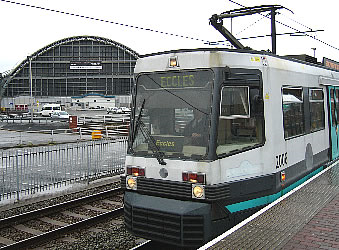
image 40 people attended the inaugural meeting yesterday (25th September) of Manchester ’s new Campaign for Free Public Transport. Participants including members of the Campaign against Climate Change, Friends of the Earth, The Green Party, Respect, The SWP, the Socialist Party and the Community Action Party, together with bus workers, cycling and railway activists, and non-aligned members of the public.

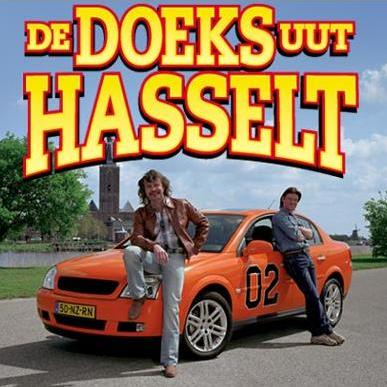
Roy Wilkes of Respect opened the meeting by declaring that this is a campaign whose time has come. Climate change is a serious threat to the future of humanity and our response to it must include moving beyond the domination of the private automobile. In a recent survey, 72% of the population said they would only abandon their cars if public transport was free. The campaign was also needed in order to assert the principle that public transport should become a genuine public service rather than a source of private profit. Hasselt, a small town in Belgium, shows that zero fare transport is both possible and transformative.image
Cllr Jack Fagan (Wigan Community Action Party) spoke forcefully against the TIF (and the congestion charge that goes with it), arguing that free public transport would be a fairer and more effective way of reducing congestion. Ali of Friends of the Earth (attending in a personal capacity) defended the TIF and argued that there could be drawbacks to free public transport, for example that it might discourage walking and cycling.

There followed a wide ranging and high quality discussion covering many aspects of public transport policy. It was agreed that we would leave aside the question of the congestion charge since there are supporters of free public transport on both sides of the congestion charge debate.

Following a vigorous debate, the meeting adopted the following statement as the aims of the campaign:

“The aim of the Greater Manchester Campaign for Free Public Transport is to secure an expanded public transport system that is fully integrated, publicly owned and free at the point of use.”

Amendments seeking to replace “secure” with “work towards” and to replace “free at the point of use” with “affordable” were both heavily defeated.

The meeting recognised that a national campaign is needed on this issue. (There is a very good campaign for free public transport in Scotland but nothing in England and Wales .) The matter will be raised at the recall conference of the Convention of the Left, and it is to be hoped that campaigns similar to ours will be launched in other parts of the country, and that these will come together into a national campaign.

The next meeting will be at 7.15pm on Tuesday 7th October, in the Friends Meeting House, Manchester , where we will start to thrash out the practicalities of organising and building a mass campaign. In the meantime, ideas and suggestions can be shared via the e-list.

For more information about the campaign, contact Roy Wilkes on 07801 263 265 or email: roywilkes59@talktalk.net

16 responses to “Campaign for Free Public Transport launched in Manchester”

  1. Sounds like an excellent meeting. I think free public transport should be a central part of the campaign.

    It seems quite bizarre that some people would argue that this would discourage cycling. I cycle every day- near enough- though sometimes in the mornings put myu bike on the train and cycle home. What should be encouraged is more cycle lanes, more car free zonesand incnetives to cycle- such as free bikes from work, secure places to park, possibly flexible start times for those taking green transport etc

    Like

  2. I’m glad the minimalist amendments were shot down – that wouldn’t always have happened, certainly not in such an open forum. This is good stuff.

    Like

  3. In some agreement with Jason here, although I dislike having to share the cycle lane with buses, I much prefer it to being snarled up with stressed out car drivers commuting to work. I’ve never seen research either way, but I’d imagine that greater use of public transport encourages more cycling, certainly it’s much more pleasant to cycle to work during school holidays when the number of cars on the road is reduced by only a small amount.

    There’s a government scheme which gives tax breaks to allow purchase of cycling equipment via interest free loans from your employer, despite working for one of britains largest companies (>100k employees) my company claims that estimated take-up of the scheme would not warrant the admin costs, but I would think that civil servants and local govt employeess might have more luck with this if unison/pcs/nut were on side.

    There’s a seperate issue with cycle lanes, I don’t know about anywhere else but in leeds(and I’ve heard it claimed that leeds is one of the better authorities for this) they are very much just tacked onto the side of the road (although there are some major junctions which are modified for cyclists) rather than being a feature of highway planning, still less as part of a local transport plan; there’s no concept of coherent routes to get cycling communters safely from home to work and back again.

    Like

  4. Actually, some cycling organisations an activists oppose cycle lanes – on the basis that they are usually a substitute for a pro-cycling policy. not part of one.

    In Swindon the cycle lanes help you along the safe roads, stop at the dangerous roundabouts, where you are on your woen, and then start again on th eother side.

    Meanwhile motorists use the cycle lanes as car parking.

    Like

  5. Andy,

    Yes I’ve come across that attitude before regarding cycle lanes, in Leeds most have now been made safe enough for use, although at busy times taking a cycle lane up which is not physically seperated from the rest of the carriageway up the inside of queuing traffic is highly dangerous.

    Roundabouts are a particular problem for cyclists, but actually it’s very easy to put safe cycle crossings alongside pedestrian crossings etc. Additionally traffic light phasing is to maximise car throughput, cyclists often have to lurch from red light to red light in busy cities.

    But changes to the highway are only a small part of a cycling policy which would need to be part of an overall public transport policy. For cycling commuters the key is to have safe, quick, coherent routes that actually connect places, these routes do not need to be new lanes or remodelled junctions, they could just be footpaths, bridleways, towpaths etc linked together with suitable signage, lighting, bridgesand whatnot.

    Parallel to the road I use to get to and from work is an ancient right of way which was the road for horses and carriages before the ‘new towns’ of chapeltown and chapel allerton were build a hundred and twentyyears ago; at the moment this is right of way is a set of overgrown footpaths and passageways running in between the backs of streets, but every 50-100 metres it stops where a residential road crosses, it would make perfect sense for cyclists and pedestrians for the route to be resurfaced and resurrected, it would also act as natural traffic calming for the roads it crosses which are marred by speeding motorists using them as rat runs. Such a simple act would cost less than £10K but would put a safe cycleway slap bang in the middle of thousands of potential users.

    There’s lots more that needs to be done, secure places to store bikes, carriage by trains/trams etc, local pay as you go hire schemes, so I best stop ranting about cycling.

    Interestingly despite the greens in leeds being officially part of the ruling group on the council for some years they did absolutely nothing regarding cycling or any other public transport issue, they did vote with their coalition partners to privatise leeds bradford airport though, although it has fallen flat due to the downturn in air travel, hopefully we’ll kick the idiots out and replace them with labour before they get chance to complete it.

    Like

  6. The best cycle ways are ones that are off the road- perhaps running parallel to it. Other options would be the one Martin mentions or disused railway lines- I use one of these for about 10% of my way to work.

    I think though the main thing has to be free public transport, other free initiatives like free bikes and perhaps making some parts of the city car free (perhaps excepting taxis and some other vehicles- disabled drivers, emergency services etc.)

    Like

  7. Mmm, disused railway lines. I wonder what we could do with them? I know run trains on them. As a railworker not one person at my depot is in favour of the congestion charge that is coming to Manchester. `W e run the bloody trains and we will have to pay to get to work` is the most common comment.

    Like

  8. In which case, upnorth, come to the next campaign meeting! It is at 7.15pm on Tuesday 7th October in the Friends Meeting House. Those who work in public transport will need to be absolutely central to any successful campaign for free public transport, an important part of which will be to bring transport back into public ownership.

    Like

  9. Well of course the railway lines hsould not have been closed down and may be there is an argument to re-open them.

    It would mean laying track etc but a publicly owned transport system run democratically by workers and working class commuters could certainly afford such an investment and perhaps it should be done.

    Until it is done opening them up as cylce ways is excellent however – I use one almost everyday- and indeed other purpose built cycle ways should be considered.

    The main point I think will be to investigate what direct action can be undertaken to force the privatised public transport back into public ownership. I agree links with tranposrt workers are key.

    On the congestion charge I have mixed feelings- it really is a regressive taxation on the working class. Much better would be free public transport and other schemes to get people using more eco friendly transport. We should not only be fighting for a massive windfall tax on the nergy companies, petroleum giants and private companies runnign ttrransport but price controls run by workers and immediate nationalisation under workers’ control without compensation.

    Like

  10. When I say may be an argument to reopen them I should clarify before I’m accused of being lukewarm.

    There is an absolute and definite need for an expansion of rail services- in mnay cases it may well be that old lines can be used. Whether they are or not there should be a massive expansion and investment in rail. Paid for by taxing the rich and confiscating their resources. Fought for by militant class struggle tactics- demos, strikes, fare strikes, direct action etc. all in co-operation with transport workers’ rank and file union activists.

    Like

  11. What are your mixed feelings on the congestion charge Jason.

    Like

  12. We should remember that the concept of free public transport was one that was once supported by the left of the Labour Party, Ken Livingstone mentions it in his book on the GLC, and David Blunkett (hard to remember him as a Left winger!) in a book written in the 80s talks about the Sheffield policy of very cheap fares as the first step in a struggle to introduce entirely free public transport. We also need to look at contemporay examples such as Hasselt in Belgium where free public transport cut congestion and led to 1000% increase in the use of public transport.

    Report of a local fare strike here:
    http://cardiffrespect.blogspot.com/2008/01/fare-strike-against-first-great-western.html

    Like

  13. On the subject of cycling, one could look at the innovative bike share system tried out in Paris (40 years after the Dutch Provo’s white bicycle plan)

    The Paris scheme launched a year or so ago has become a network of 20,600 bicycles.

    Anyone can collect a bicycle at one of 1,451 stations across the French capital. The bicycles are free to hire for the first half-hour.

    Like

  14. On the congestion charge- I am really not for it but instead free public transport, massive investment in transport, banning cars from some areas (except essential workers and may be taxis for example).

    However, I suppose I am open to arguments that polluters should pay but until there is an alternative it seems like simply a tax on commuters- i.e. predominantly ordinary workers getting to work the only practicable way in many cases.

    Free bikes is a good idea. But realistically I suppose we need to build a vibrant campaign and have some direct action around which to campaign.

    Like

  15. The other issue Railworkers have is the extension of the Metrolink on existing railway lines. The Rochdale loop line already has a 15 minute service. When this goes to Metrolink, Manchester Victoria depot will lose 30% of it`s work. This could lead to job losses which as you can imagine is not very popular.

    Like

  16. Right so that could be an immediate link between a campaign for free public transport and protecting rail workers’ jobs.

    Like

Leave a reply to Andy Newman Cancel reply

Trending