
 If you were running twee nostalgia emporium Times Past in the early months of a major recession you should be scouring the calendar for dates that offer the chance to commemorate major historical events. Yet its website gives no hint of plans to mark the 360th anniversary of the execution Charles Stuart by the Puritan revolutionaries. They are missing a top marketing opportunity by not producing a range of china cups, replica executioner masks, axes or chopping blocks and perhaps a range of action figures. The potential is limitless but they need to get their finger out because January 30th 2009 is not that far away. Not even the Royal Mail is doing anything and if ever an event deserved an issue of commemorative stamps the first regicide by a revolutionary democratic government in the world is one. It’s something that should warm the hearts of English people and progressives everywhere.
 The historical events that get commemorated are highly ideological. The bicentenary of the battle at Trafalgar occasioned a lot of hankering for imperial seafaring. The eightieth anniversary of World War One dominated British TV for weeks with an explicit attempt to make the link between sacrifice fighting the Boche and lives wasted in Afghanistan. Even Charles Darwin got a TV series celebrating his achievements but a veil is drawn over the men who signed a king’s death warrant.
 A paradox of English history is that one of its greatest figures, Oliver Cromwell, is more discussed and better remembered in Ireland than in his own country, notwithstanding the presence of his statue outside Parliament. The Irish view is a bit one sided and tends to dwell on his military campaigns which wiped out a quarter of the population. That sort of thing has a negative long term impact on your public image at the best of times and the Irish have a special talent for holding grudges. The English bourgeoisie has found it hard to create a Cromwell myth to parallel the sanitised biographies of Nelson or Churchill. Regicide fell out of fashion after The Restoration and it’s hard to find a contemporary politician willing to raise the flag for a king killer. An exception to this may have been New Labour Foreign Secretary Robin Cook. Micheál Ó Siochrú mentions in his book God’s Executioner that Bertie Ahern walked out of Cook’s office on seeing Cromwell’s portrait on the wall saying that he wouldn’t return until the likeness of “that murdering bastard” had been removed. Ahern wasn’t quite so squeamish about dealing with living bastards like Bush and Blair with a lot more blood on their hands but that’s another matter.
Christopher Hill explains that the decision to execute wasn’t taken from personal animus to the Stuart monarch; “The bourgeoisie had rejected Charles I’s Government, not because he was a bad man, but because he represented an obsolete social system.” From the rejection of the government came the need to reject the man and the circumstances of contemporary Europe meant that a living former king was always likely to return with an army. Decisive revolutionary justice is hard to prettify. Almost as unfashionable as revolutionary justice is the notion of struggles between classes. Hill cites a contemporary writer who describes the lineup on either side: “Against the king, the laws and religion, were a company of poor tradesmen, broken and decayed citizens, deluded and priest-ridden women. . . . the rude rabble that knew not wherefore they were got together, … tailors, shoemakers, linkboys, etc.; … on the king’s side … all the bishops of the land, all the deans, prebends and learned men; both the universities; all the princes, dukes, marquises; all the earls and lords except two or three; … all the knights and gentlemen in the three nations, except a score of sectaries and atheists.” The man was a blogger before his time but the reality he describes does not sit easily with the type of history which is setting out to consolidate an unreal version of the past. Any useful account of the English Revolution has to include the massive class conflict it contained.
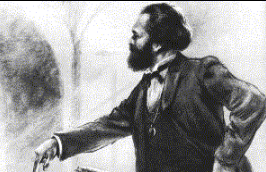
The execution of Charles Stuart was one of the highpoints of English history. It was an assertion of bourgeois democracy and a refutation of the divine right of kings all carried out in a single morning. Karl Marx had very sharp views about where everything started going wrong; “After the rout of the Royalists in England, Oliver Cromwell, the Lord Protector of the new bourgeois republic, organised an expedition to Ireland on the pretext of suppressing a Royalist revolt there but in fact with the aim of reducing her to colonial submission and plundering the land. He hoped that by confiscating Irish lands he would solve the problem of paying the creditors of the republic, the officers and men in the army.” The Levellers had protested against this imperial adventure by Republican England and many soldiers in the revolutionary army refused to take part in the expedition. Their reasons for doing so were ideological. They wanted to complete the revolution in England and would not “divide until the liberties of England were secure”.
And they would still be waiting. New Labour has made the “liberties of England” less secure than ever before and is more fanatically royalist than many of Charles’ followers. Still January 30th is a day worth marking as a reminder of how the world can be turned upside down.
That’s a cue for a song!




 Liam redux
Leave a reply to charliemarks Cancel reply