
Rowan William, the Archbishop of Canterbury, is shaping up to be a much more effective critic of the Con Dems’ class war than anyone on the Labour front bench. That isn’t too hard.
Like the Labour leadership he’s got nothing useful to say on the political conclusions to be drawn but at least he’s showing some understanding of the issues and is willing to speak up for the needs of ex-prisoners, not something you could imagine Alan Johnson doing.

This is an extract from an interview he gave to BBC West Midlands’ Andrew Peach Show.
AP: OK lets just look at politics over the last few months. How do you feel about the big programme of cuts that the coalition government is implementing? How do you feel about welfare budgets being cut to the sort of extent we’re talking about? Is that fair?
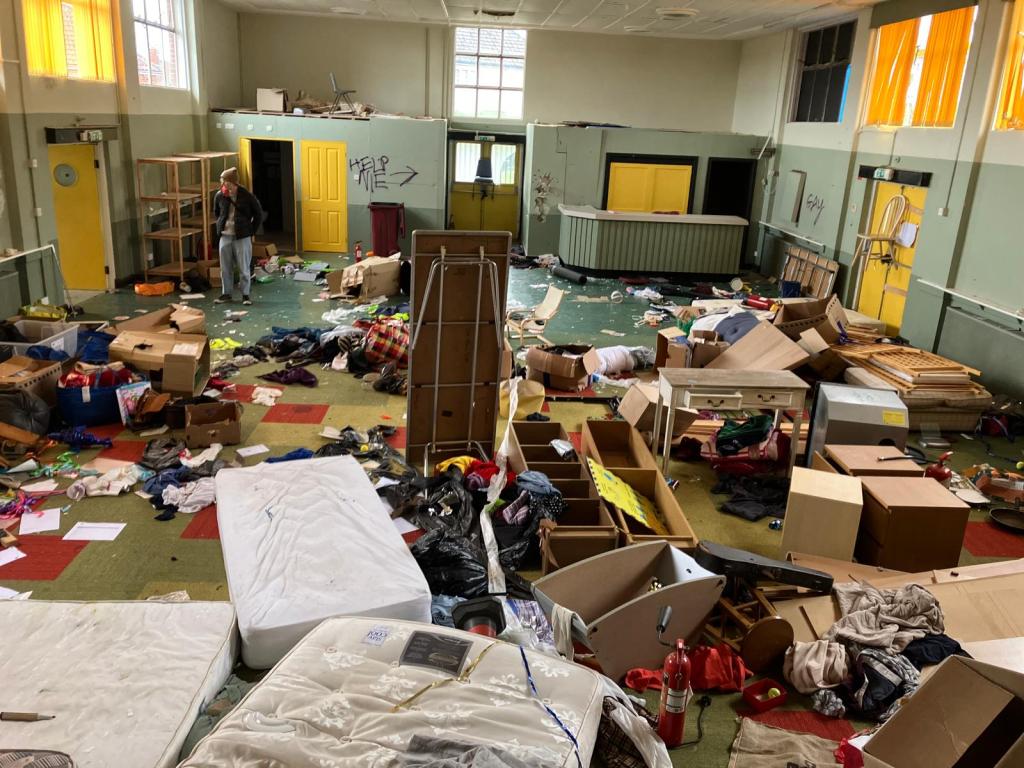
ABC: I feel very anxious about it, to be honest, because I do think that there are a lot of vulnerable people who are now worrying very deeply about what’s ahead of them. Just in the last couple of days I’ve been visiting a homeless centre, in the last week or so I’ve been thinking a bit about how this impacts on rural communities and there’s no doubt at all that we’re in for a very difficult time. And people will accept that, I think, if they feel that belt tightening is going on across the board, and it remains to be seen whether that will happen.
AP: Do you feel that it is? That this is happening in a context of fairness where everyone’s making their contribution?
ABC: I’m not completely convinced about that, I must say, because with the stories that we have of continuing large bonuses for the very wealthy it’s not the sort of thing that convinces people that that’s something they can all sign up to. No, I’m anxious there, and I think there’s a great deal for local communities and local churches to get stuck into now which is why the ‘other hand’ of government policy, the Big Society language, is so very important to get hold of and make work.
AP: So you like that part of it?
ABC: I like that part of it very much, and I think it actually corresponds to what churches are and have been doing for quite a while: giving capacity to local communities, helping them take charge of the circumstances of their own lives.
AP: In terms of some of the specifics, there’s news today that people who are on job seekers allowance on a long term basis will have to work unpaid if they’re going to carry on receiving it – is that fair?
ABC: I have a lot of worries about that, I really do, I don’t immediately think its fair, no. And I’m also worried about, to take a particular instance which came across my desk recently, young ex-offenders, often with a drug problem, coming out of prison. They need a period of adjustment, they need a period of care, they don’t need too much pressure to get work straight away. What’s going to happen to them? That’s a particular issue that’s been raised for me, and that’s just the tip of the iceberg here.
AP: It’s interesting to hear you say that you don’t think what’s been announced today is particularly fair, why not?
ABC: People who are struggling to find work and struggling to find a secure future are, I think, driven further into a sort of downward spiral of uncertainty, even despair when the pressure’s on in that way. And quite often it can make people who start feeling vulnerable feel even more vulnerable as time goes on, that’s the kind of unfairness that I feel. People often are in this starting place, not because they’re wicked or stupid or lazy, but because circumstances have been against them, they’ve failed to break through into something and to drive that spiral deeper, as I say, does seem a great problem.
AP: What about the idea of housing benefit changes where people might be forced to move from an area where their kids go to school, where they’ve got work, where their family live because housing benefit will no longer foot the bill for the expensive rent that they might have if they live in the wrong place?
ABC: This is quite a difficult one isn’t it, because there clearly are issues about how you save money on housing benefit in a realistic way, and I don’t doubt that these are very serious challenges. My worry there is that people’s housing is part of their sense of stability, part of a sense of having a secure future, and I’m also a bit worried about the way in which this could lead to a kind of social zoning: middle class areas get more middle class and other people are pushed out onto the edge, so those are concerns I’d like to see addressed.
AP: In our area specifically, people worry about manufacturing, and about how there’s less and less and less manufacturing, which is what the West Midlands has built its fortunes on – is that something that troubles you?
ABC: Well I spent ten years working in south-east Wales, and it was exactly the same set of issues there. Very serious questions about what was going to step in when heavy industry moved out. Heavy industry of the old style did something for a kind of stable society, whatever the cost to the environment and so on, and we’re all living with the effects of that instability. I keep coming back to this question of stability because people do need a background to their lives that they can rely on, they do need to feel that they don’t need to make it from scratch every time, and it helps family life, it helps community life if there is that element of background stability. When the old employers go away it’s really very difficult to see how to fill that gap. Again I think churches, community organisations can help give that stability by offering stable consistent friendship and practical support.



 Liam redux
Leave a reply to entdinglichung Cancel reply