
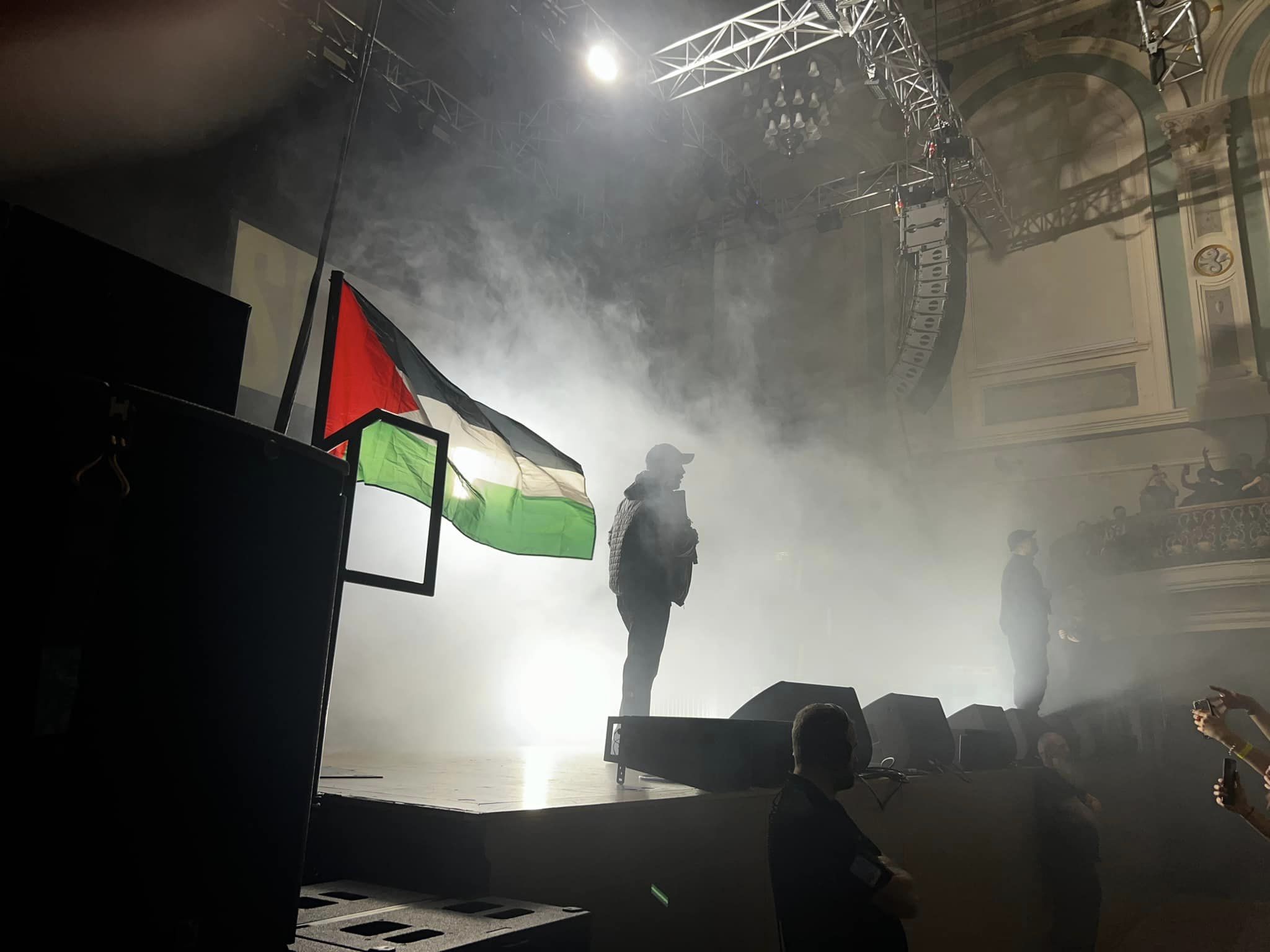
After seeing Kneecap for the first time in room above a London pub in February 2020 I suggested that while they were the most exciting new act I’d seen in a long time, they needed to make a few changes if they wanted to achieve mainstream success.
* Try and discourage the audience from chanting “I I IRA” before they come on stage.
* Change DJ Provie’s stage name to something like “DJ Seamie Óg on the decks”.
* Asking “are there any Fenian c&*nts out there?” cuts off that lucrative cross community funding.
* Repeatedly shouting “f&*k the Windsors, tiocfaidh ár lá” might alienate some key market demographics.
* Ditto getting the audience to shout “f&*k Fine Gael, f&*k Fianna Fail.
By heeding 0.0% of this advice, they have gone on to be one of the most talked groups of the past year or so. The BBC may not have broadcast their Glastonbury set but The Times gave them the sort of sympathetic profile normally reserved for Starmerite ultra-loyalists albeit calling them “the UK’s (sic) most controversial band” and describing their album as “this superb debut…social realist gem”.
“We’re just trying to build a youth culture around the language”
Oddly enough, some of the local press is rather begrudging about the success of these Belfast boys. The city’s loyalist newspaper offered this this as an example of bad things the group have said and done: “Tomorrow we team up with the anti-monarchy Twitter, Black Twitter Irish Twitter, Scousers Twitter and Celtic Twitter. United front against the king” This tweet was illustrated with a picture of a guillotine. Simply shocking! As apparently is their attempt to shape youth by singing about drugs and sex in Irish rather than the more traditional themes of lost love and misty mountains.
Some common threads link all their critics. The most obvious one is that they have never been to a Kneecap show. The fact that they have revolutionised an Irish language movement that was famously obsessed with the finer points of grammar hasn’t helped either. The critics have no understanding of and no sympathy with the radical, internationalist working class culture the group speaks for. It has deep roots in their part of the city.
At the sold-out Ulster Hall show in Belfast just before Christmas last year, the biggest cheer of the night from an audience waving tricolours and Palestinian flags was when the group said that everyone in the venue had more in common with working class people from the loyalist Shankhill Road and Sandy Row areas of the city than they had with “rich f**kers”. The group meant it and the audience meant it. This is something the professionally outraged choose not to understand.
They also don’t like the idea that a group of young musicians defy the political consensus by taking every opportunity to say that they don’t accept partition and refuse to be part of an official ideology which says Stormont and Leinster House are as good as it gets.
Like virtually everyone else in the north of Ireland, they have no desire to return to a futile armed struggle. But like almost everyone else in the area in which they grew up that period of the city’s history has shaped their personal and cultural identities. It’s given them an optimistic self-confidence about who they are and a rebellious attitude that few other contemporary musicians display.
Catch them live if you can. It’s probably the next best thing to seeing The Ramones in New York in 1976 as you can see from the video clip and they are part of a wave of groups redefining Irish music in the 21st century.
 Liam redux
Leave a comment