

The first reaction of anyone familiar with the history of Belfast on hearing a politician say “there can be no place for racism, hatred, discrimination and intimidation anywhere in our society” has to be “what do you know about the place?”
The history of Belfast is much more a history of pogroms and riots than it is the story of a boat sinking, though you would never guess that from the city’s marketing campaign and from what local politicians and NGO types have been saying about last weekend’s riots. Uniquely among the places that suffered outbursts of anti migrant and Islamophobic violence, Belfast has a folk memory and, much more importantly, an organisational and ideological continuity of groups committed to neo-fascist sectarian violence.
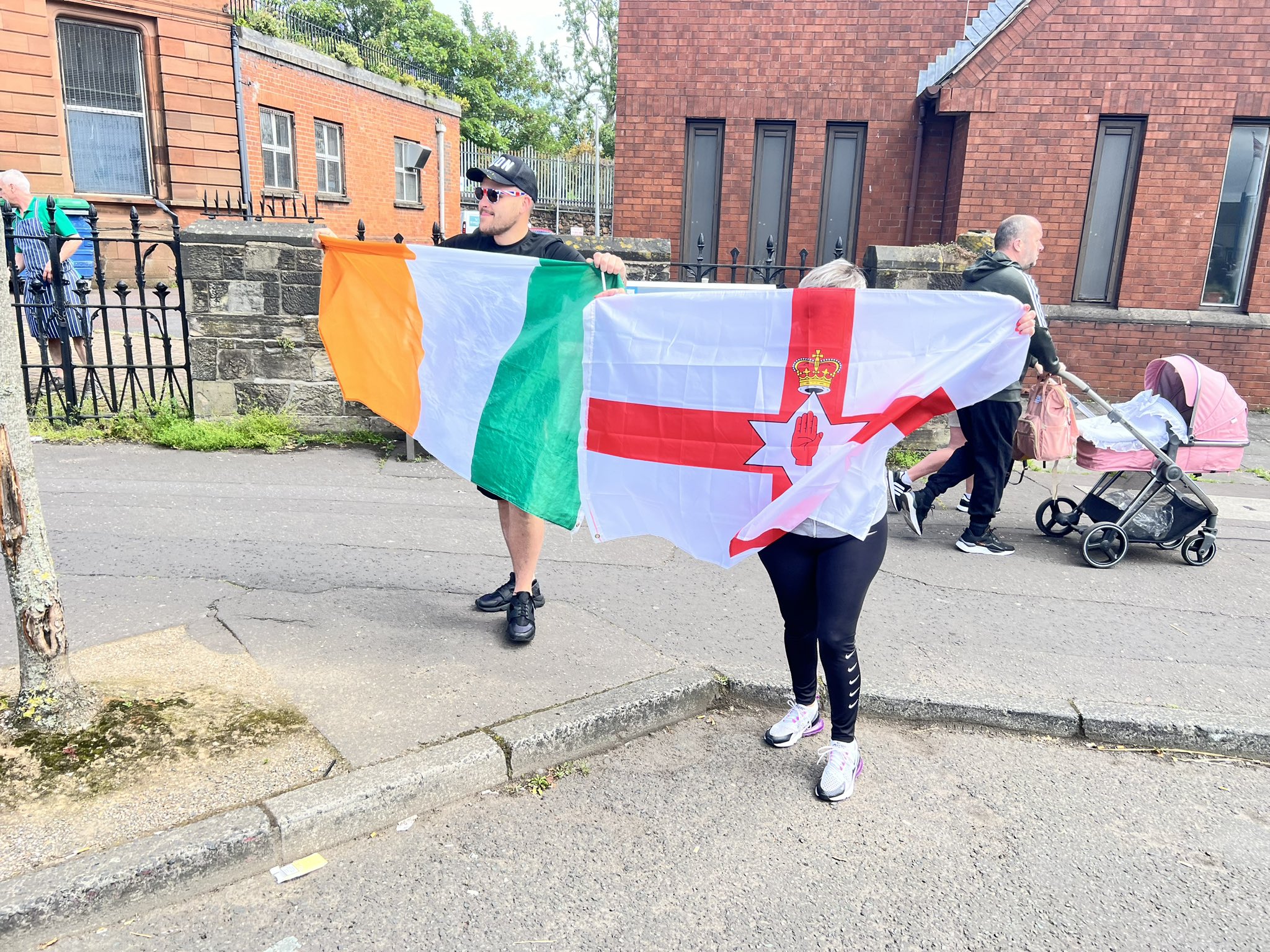
As far back as 1829 there were riots because violent Orange processions were banned. The Orange Order had been set up as a direct counter-revolutionary response to the United Irishmen, an organisation influenced by the French Revolution in much the same way that the Bolsheviks would inspire revolutionary movements in the 20th century. Whatever one’s views on the Orange Order, it has lasted much longer and been more influential than most revolutionary organisations, providing much of the ideology and organising space for almost two centuries of pogroms and sectarian violence in the north of Ireland.
But back to the history lesson.
In 1836 the Orange Order was again banned from marching because of the intensity of its supporters’ attacks on Catholics.
In 1841, the moderate nationalist leader Daniel O’Connell was driven out of the city by a mob of 6000 loyalists shouting the timeless slogans “No Pope” and “No Surrender”.
In 1857 British commissioners concluded that the purpose of violent Orange processions was “to remind one party of their triumph of their ancestors over those of the other and to inculcate feelings of Protestant superiority over their Roman Catholic neighbours”.
In 1886 an estimated fifty people were killed in sectarian violence incited by a preacher Ian Paisley would cite as an influence and who used to be commemorated with a statue in the city.
Skipping forward to the 1920s, 6000 Catholic dockers and leftwing Protestants (“rotten Prods”) were driven out of the shipyards and there was widespread rioting in the city.
During the 1970s there were significant population movements, mainly due to Catholics being forced out of mixed areas and, to a lesser extent, Protestants leaving predominantly Catholic areas. The former was also incentivised by house burnings and shootings, the latter much less so.
Fenian blood
Two things are new about the clashes last weekend. The first is that a small number of southern fascists made common ground with loyalist gangs. These gang members in July will have been singing songs about being up to their knees in Fenian blood and burning tricolours on their bonfires. However, they allowed the southerners who are active in attacks on migrant centres to take part in their pogrom and even fly the tricolour. Islamophobic violence has become an ecumenical matter.
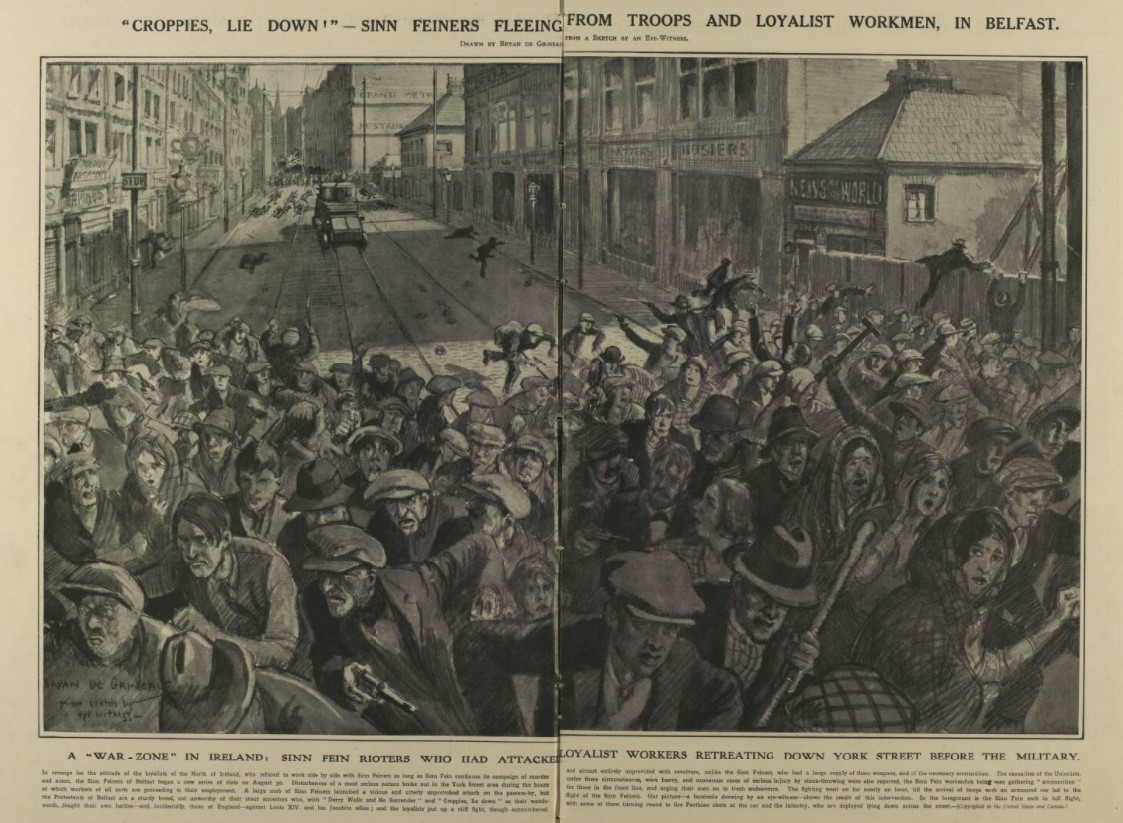
The southerners are the Irish expression of the new far right represented elsewhere by Meloni, Trump and Le Pen. At the moment, they are marginal but serious people and have set fire to a number of sites earmarked as accommodation for asylum seekers. It is wrong to dismiss them as keyboard warriors. But, as even far right loyalist agitators like Jamie Bryson have observed, they might engage in the occasional joint activity with the northern thugs, but they are unlikely to develop a shared political project beyond racist violence.
The Islamophobia is the second new element. Even the DUP is incorporating it, saying there are “genuine concerns” regarding immigration, which “needs to be controlled, as our public services are at breaking point”. Loyalists in the six counties have always had links with British fascist movements and Traditional Unionist Voice is a local adjunct of Reform. It is a dirty little secret everyone knows about that they have a tacit understanding with the Housing Executive, the body responsible for social housing, to permit a quota of migrants in the areas they dominate and the local press has reported on the protection rackets they run. It’s reasonable to speculate about the reason some migrant owned businesses were targeted for destruction. But the reason for the anti-migrant violence in Belfast was essentially the same as the reason for the anti-Catholic violence over the preceding two centuries. It’s about retaining control over loyalist areas and showing who’s in charge.
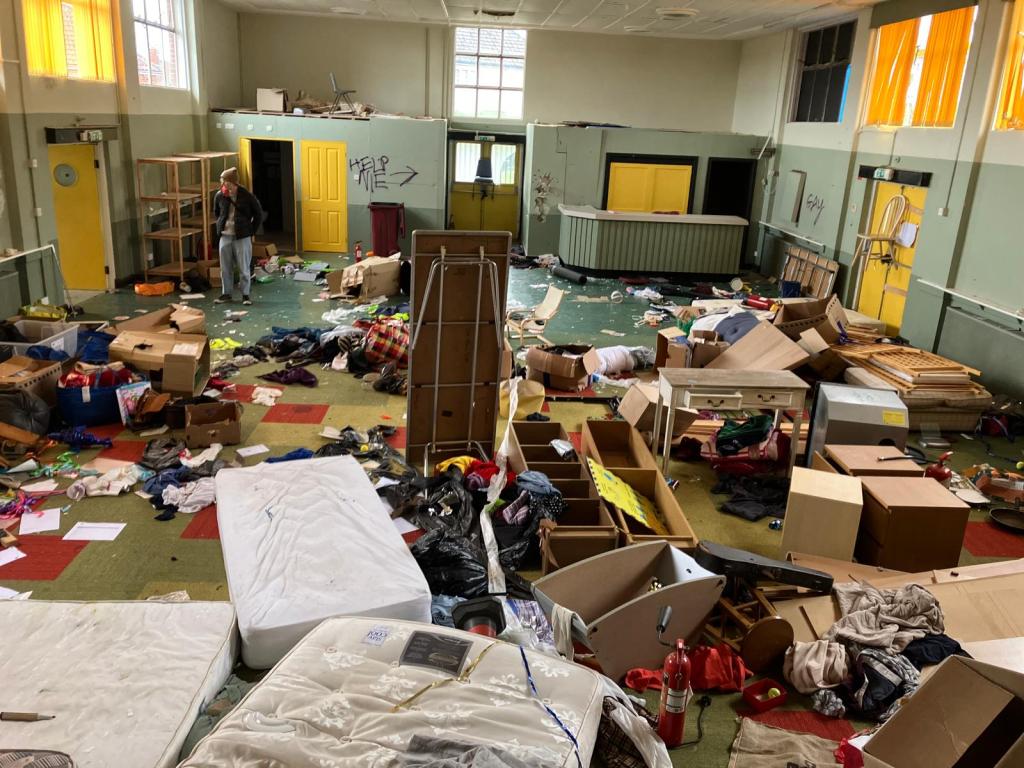
A word of warning for anyone taking comfort from the fact that there has been no comparable violence in Republican areas. The utterly degenerated Irish Republican Socialist Party has been running a campaign against a homeless shelter. You start by doing that and before too long you are walking alongside the UDA in Sandy Row carrying a Starry Plough trying to convince yourself you aren’t a fascist.


 Liam redux
Leave a reply to Phil Cancel reply