
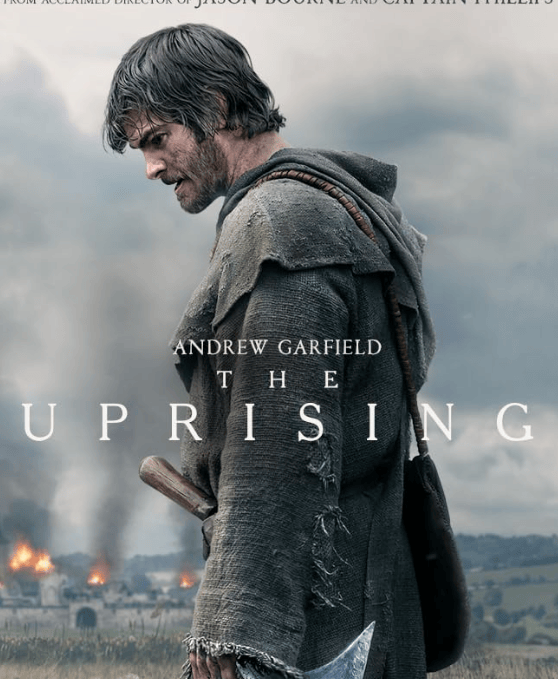
Would the peasantry of Essex, Kent, Cambridgeshire and other parts of southern England been able to organise a kingdom shaking rebellion if they were sorting out the details on interminable threads on a WhatsApp group? Probably not. That said they did manage to terrify their feudal rulers so they did something right.
The Uprising, a film directed by Paul Greengrass about the 1381 Peasants’ Revolt, is flawed but worth seeing. There are too many scenes of characters running frantically to the accompaniment of pounding music and the main protagonist Ploughman killing lots of soldiers with his billhook. The fantasy violence jars with the narrative and I would have much preferred a lot more screen time for medieval English religious practices rather than silly Tom Cruise style action sequences.
Ploughman explains his name by saying he is what he does. A modern version would be something like I am Tik Tok Influencer, son of Robert of Facebook
Nevertheless, it is a film about class war and Greengrass shoehorns in probably a few too many contemporary references. An early scene has the young king Richard and his council giving the eternal lament of the ruling class that they do not have enough money to defend the kingdom. As always, offered a choice between making the rich merchants pay or the poor common folk they plump for the latter.
Opening captions tell us that the Black Death had killed about half of England’s population, but there was also climate change. Temperatures globally dropped, thus impacting harvests and food supplies. This meant that the peasants were being taxed at punitive rates while their families and communities were still traumatised by the mass deaths.
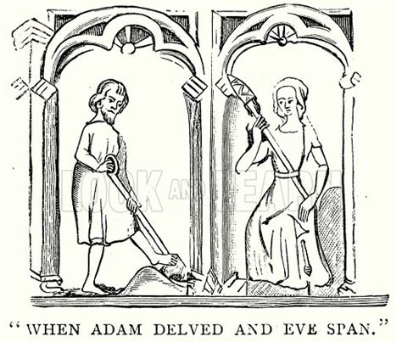
The precise mechanisms by which illiterate peasants communicated across hundreds of miles to coordinate an uprising are not explained. The most likely method was the radicalised village clergy who were living in the poverty and squalor of their flocks. Their best-known representative was Essex priest John Ball, famous for his proto-communist question, “when Adam delved and Eve span, who then was the gentleman?” In the film he is presented as a proto ultra-left. Just when Watt Tyler (who may have been a tiler before becoming a soldier) has negotiated a deal with the king which leaves everyone happy, Ball insists that the members of the king’s council be subjected to the harshest form of plebeian justice.
When the peasant army reaches London, it unites with the city’s poor. Various rich people are executed and parts of the masses become a rabble killing Flemish merchants because “they are stealing our jobs”. This is one of the several contemporary references. A nobleman refers to the peasants as “deplorables”; Tyler says that England is broken and its borders are not secure; Ploughman says there will be “no kings” and we will rule “ourselves alone”, the customary mistranslation of Sinn Féin. See if you can spot more.
If we ignore the final scene in which some of the surviving rebels nearly kill the king, a hateful figure who changes from a whiny God-botherer to cold-eyed mass killer, to set up a communist republican forest enclave, the film hews fairly closely to the actual sequence of events. The grinding misery of serfdom and the viciousness of the ruling class are well portrayed. Greengrass does a good job of showing how people of the time used religion as an analytical framework to explain their class politics on both sides. This was a strength and a weakness for the peasants. It allowed them to draw very radical conclusions but trapped them into accepting a king as the representative of their god on earth.
The Peasants’ Revolt was one of the great moments in English radical history. The Uprising does a decent job of explaining why it happened, the strategic debates among its members and just how vicious the ruling class is prepared to be when its back is to the wall.



Leave a Reply