
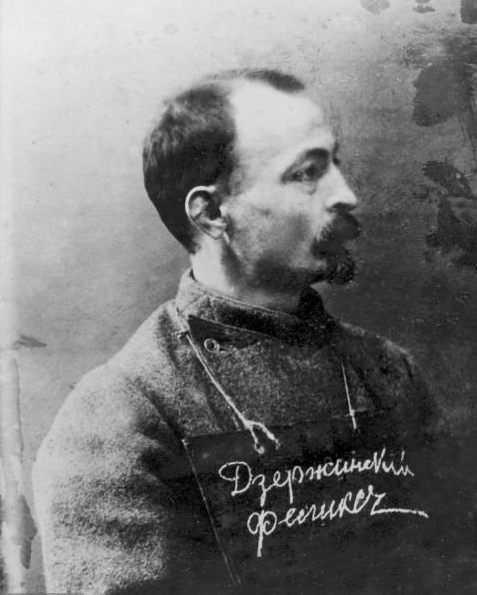
Felix Dzershinsky is the only former Bolshevik to have been honoured by the Putin dictatorship. Last week a tablet describing him as an “outstanding state figure and initiator of the industrialisation of the country” was unveiled in Moscow. The academy of the Federal Security Service (FSB), the KGB in old money, has been renamed in his honour as well. There used to be a statue of him outside the KGB headquarters, but the citizens of Moscow pulled it down when they rose against Stalinism in 1991, correctly seeing it as a symbol of repression and surveillance.
Putin’s decision to resurrect a partial, dishonest version of Dzerzhinsky is intended as a warning to Russians that no dissent will be tolerated and is an unambiguously intimidating and anti-democratic gesture.
It might even be that Lenin’s criticism of Dzerzhinsky helped. “It is of course necessary to hold Stalin and Dzerzhinsky responsible for all this really Great Russian nationalistic campaign.” Putin is a big fan of Russian nationalistic campaigns. However, the symbolism is one that is based on a deliberate twisting of what motivated the revolutionary who spent years in Tsarist prisons. We can be certain that the only thing that saved Dzerzhinsky from being murdered by Stalin along with other prominent revolutionaries was the fact that he died aged 48 in 1926.
Dzerzhinsky has not left behind the same literary legacy as other well-known Bolsheviks, a party he only joined in 1917, but what little is available in English gives some insight.
In 1908 he wrote from prison:
“Where lies the way out of the hell of present-day life, in which the wolfish law of exploitation, oppression and violence holds sway? The way out lies in the idea of a life which is based on harmony, a full life enjoyed by the whole of society, by all mankind; the way out is in the idea of socialism, the idea of solidarity of the working people.”
A decade later, as a leader in the fight against counter-revolution he wrote:
“You cannot understand a soldier of the revolution fighting so that there will be no more injustice on the earth. War is a horrible thing. The whole world of the rich has moved against us.”
The Saint of Terror
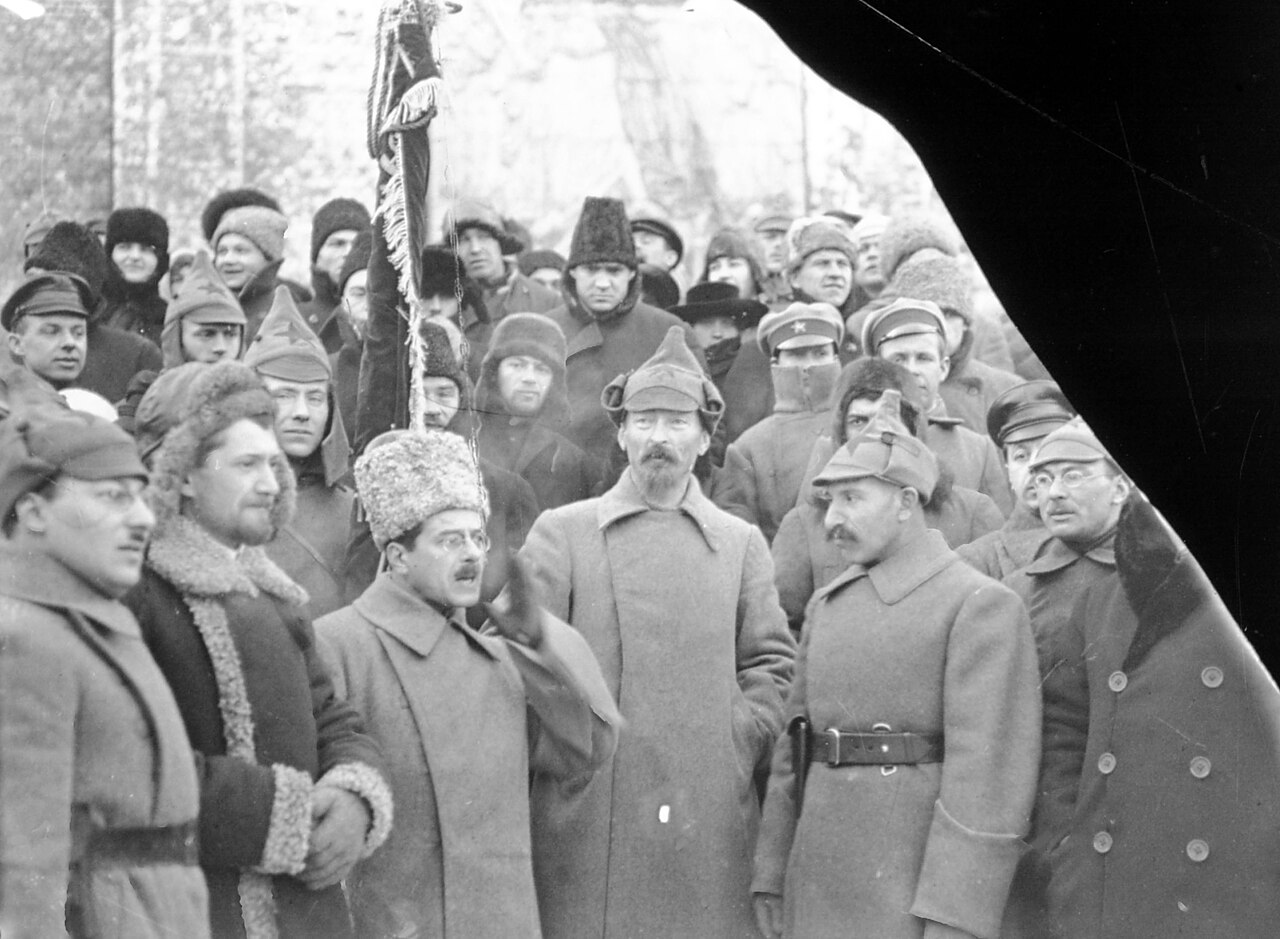
Dzershinksy is less remembered for his time as boss of the early Soviet railway system than his leadership of the All-Russian Extraordinary Commission, better known as the Cheka, before it was renamed the KGB. Its original purpose when it was established in 1917 was to defend the workers’ and peasants’ revolution from its enemies and it is estimated to have killed somewhere between 50 and 200 000 people.
Even accepting the higher figure, this is substantially less than the number of Russians and Ukrainians Putin has slaughtered; a fraction of the 1.9 million the Tsarist regime sent to their deaths in World War One; the 2 million murdered by the Americans in Asia and is probably less than the number of Palestinians killed by the Netanyahu regime.
This is not to downplay the violence of the Red Terror against the counter-revolution which the Cheka conducted. It involved the use of summary executions, torture and labour camps against opponents determined to defend the old order with equal or worse cruelty and with the support of European, Japanese and American imperialism. As Trotsky commented “civil war is no school of humanism”. Dzershinsky was equally clear about what he was doing: “We represent in ourselves organized terror—this must be said very clearly”
Dzershinsky was given the responsibility “because of the terrible strength and purity of his motives to be the head of the Extraordinary Revolutionary Committee —the Saint of Terror.” He had been born into a Polish noble family and turned his back on that world opting to join the revolutionary movement. He led a shoemakers’ strike and worked in an illegal printing press. A Polish police report says, “Dzerzhinsky continued to lead the Social Democratic party and at the same time he directed party work in Warsaw, led strikes, published appeals to workers.”
He was sent to Siberian prison camps on several occasions and was a frequent escaper. In 1912 he was imprisoned, receiving frequent beatings from the guards, and was only released when the revolution started
Dzershinsky sided with Stalin against Trotsky, Zinoviev and Kamenev after Lenin’s death. His own early death explains why he was still honoured in the Stalinist period and his association with the most brutal aspects of the revolution is why a version of him is useful for Putin.
It is probably futile to speculate what a man who died a century ago would do if he were alive today. But the idealism, humanism and self-sacrifice Felix Dzershinsky lived suggest that he would be one of Putin’s bitterest enemies.
“I am striving heart and soul so that there will be no injustice, crime, drunkenness, depravity, excessive luxury, brothels where people sell body or soul or both together; so that there will be no oppression, fratricidal wars, national strife…. I would like my love to envelop all mankind, to warm it and cleanse it of the dirt of modern life.”




Leave a Reply