
How combative should the new Respect be? If for example, a majority decides to support Ken Livingstone, should his positions mark the left limit or Respect’s public profile? One of his supporters, commenting on this site listed some of the reasons for supporting Livingstone.
“The pressure for more affordable housing, his opposition to racism, his tough stand against Islamophobia, his opposition to the war, to new nuclear weapons and nuclear power, his big public transport subsidy and proposal to tax 4×4s.”
 You can really say no to any of that, except for maybe the bit about taxing 4x4s. Torching them would be better. We can debate whether of not to do it with the owners still in them. But these positions fall down on a number of counts. The first is that they are easily containable with the New Labour framework, as Livingstone demonstrates. A lot of Lib-Dems wouldn’t find much to quibble with either.
The next hurdle is that they lack real content. A radical programme would prioritise the construction of council or social housing rather than limit itself to setting targets for developers and councils. It’s true that on anti-racist issues, other than justifying the execution of Brazilians he remains better than most prominent Labour figures. It’s relief to know that he’s against new nuclear weapons but why are the old ones so much better? As for the big public transport subsidy that seems to be paid by the people who travel on London’s abominable and extortionately priced transport system.
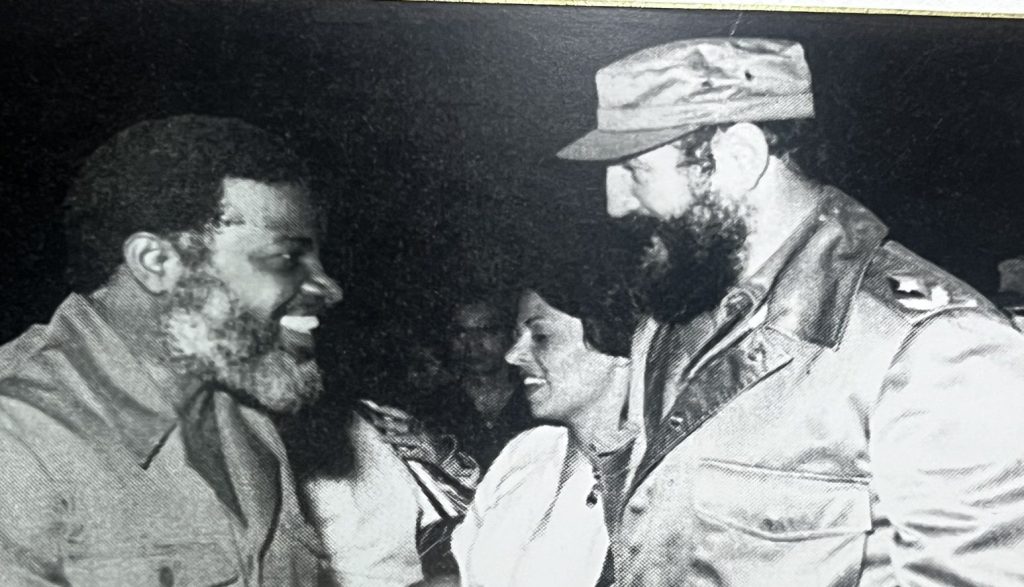
Livingstone is the bureaucrat’s favourite lefty. He can be relied on to express pretty decent opinions on Venezuela or the war but he has long since ceased to be a politician who actively takes the side of workers in struggle unlike for example John Mc Donnell. This is where Respect needs to be start getting its ideas straight about how it relates to figures like him. While it may be an unpleasant necessity to give someone like him a transfer vote in the mayoral election and completely justifiable to have him on platforms speaking against the war or in support of Cuba he is not the sort of figure who is likely to be part of a long term realignment of the British left.
A very similar problem crops up in the unions. Some trade union leaders have taken very good positions on a range of issues. Billy Hayes comes to mind. But if there were a group of Respect supporters active in the CWU they should be reaching out to union activists who organised against the deal rather than the sections of the leadership who supported it. Both of these camps include Labour members. One of the features of the new Respect will have to be that it is willing to have a public disagreement with union leaders who let down or sell out their members. It will need to combine this with organising to fight for leadership positions in unions as the class struggle pole of attraction.
We also need to be clear that it needs to develop a programme which is more far reaching than simply opposition to war and privatisation. It needs to have a clear class struggle, socialist content and this is not something that Labourism has traditionally burdened itself with. The one thing that Respect has consistently got right is its refusal to compromise with British imperialism. That’s a gain that has to be preserved. It’s also one that has to be expanded. The love affair with Britain’s imperial mission has always been one of Labourism’s most nauseating features. If Respect wants to be a class struggle, socialist party one of the elements of its political culture has to be the preservation of its rejection of imperialism and imperialist war.
One of the first jobs Respect’s new leadership gave itself was to open up a dialogue with other sections of the left. That will be a complicated process but the strategic vision behind it needs to be more radical than the politics of Labour’s soft left. The political space for it does not exist. We already have a soft Labour left, personified by Ken Livingstone. To be successful Respect’s public profile and political programme has to be that of a radical, socialist, ecological, class struggle party. We don’t have one of those yet.



 Liam redux
Leave a reply to babeuf Cancel reply