
 I’m away for a bit to a place where there are lots of forest fires so to make up for very intermittent writing I’d thought I’d go for a bit of gratuitous controversy.
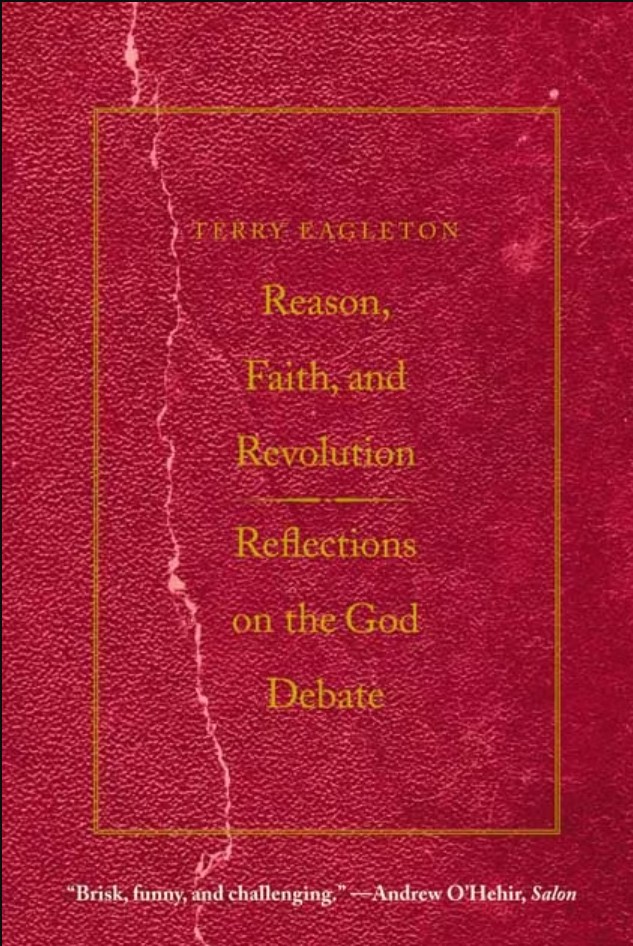
“Ditchkins” is Terry Eagleton’s coinage, an amalgam of the names of Richard Dawkins and Christopher Hitchens and he has great sport at their expense in his recent book Reason, Faith and Revolution: Reflections On The God Debate.
The God Delusion was a muscular and enjoyable statement of the case for godlessness at a time when unpleasant forms of religious belief were running the world. Yet even as you were reading you could not help but think that Dawkins hadn’t really worked out why so many people have held onto religious faith despite all the reasonable evidence to the contrary. In particular he was very weak at understanding that religion can be a political phenomenon too and that it does genuinely offer people a sense of community and comfort that they fail to find anywhere else in the world.
Early on Eagleton, who remains a Marxist and an atheist, offers an account of Christian faith that matches what lots of believers do. “It is a question of feeding the hungry, welcoming the immigrants, visiting the sick and protecting the poor, orphaned and widowed from the violence of the rich. Astonishingly, we are saved not by a special apparatus known as religion, but by the quality of our relations with one another.”
You will find echoes of Karl Kautsky’s account of the revolutionary content of primitive Christianity which he described in Foundations Of Christianity (available from Socialist Resistance books). It was a religion of slaves, the lumpenproletariat and it was offering them justice and fellowship. And as if proof were needed that Eagleton still anchors himself in a brand of revolutionary Marxism he asserts that the two greatest betrayals ever suffered by an ideologies were the Stalinist corruption of Marxism and what the Church did to faith. Kautsky also explored this idea of how a movement of the power and the dispossessed can become hierarchical and bureaucratised and any union in the country is daily testament to the living process.
All through the work Eagleton draws parallels between what Marxists do – or should do- and Christian faith. Marxism for him was partly a response to a Christianity which betrayed its origins and then went on to repeat the mistake.
Some of the best fun in the book comes when Eagleton opens his broadsides against liberalism and, even worse, secular liberal imperialism. After all the it was the liberal democracies which spent good portions of the 19th, all the 20th and the 21st stealing people’s land, dropping nuclear bombs, starting war and changing the climate to the massive detriment of the world’s poor. Liberals have a habit of acquiescing to this, though to be fair so do social democrats.
Over and over again he takes Hitchens and Dawkins to task for their determined ignorance of the theology they set out to criticise reminding the reader that you would not take too much note of someone’s opinion on the finer points of mammalian biology if they’d not read much more than The British Book of Birds. What distinguishes Eagleton is that he did what Marxists are supposed to do and familiarised himself with the subject he was critiquing and while it is not likely to spur the casual reader to start reading a lot of theology it is a helpful set of signposts if you feel inclined to explore the subject further.
If you have ever been at one of the Strangers Into Citizens demonstrations a lot of what Eagleton has to say makes perfect sense. Of course it’s right to have an understanding of the materialist arguments against religion but it would also enrich our thinking of what religion is for lots of ordinary people if we take on board the ideas in this book.





 Liam redux
Leave a reply to SOCIALIST UNITY » RELIGIOUS COURTS Cancel reply