
At some point in Germany in the 1970s there was a meeting at which the discussion was broadly along these lines:
Comrade Chairwoman Inge: How dare you call yourself revolutionary fighters for the proletariat!! You are nothing but a bunch of petit bourgeois cry babies and academic dilettantes! You are scum!!!
All: You are right Comrade Chairwoman Inge. What must we do?
Comrade Chairwoman Inge: Mao Tse-tung teaches us that we must go to the peasantry. We will follow his example and surround the cities of the filthy German bourgeoisie.
Comrade Dieter: Erm, Comrade Chairwoman Inge, we are in Bavaria which is one of the most prosperous parts of Europe. Where shall we find this peasantry?
Comrade Chairwoman Inge: You repulsive defeatist lackey of Yankee imperialism! Our peasants are to be found on Saturday nights in their lederhosen and dirndls at the local discos. We shall swim among them as the fish swim in the sea and learn to love their oompah muzik.
Comrade Ute: Yes, we will recruit our peasant armies at the discos and emulate the heroic Mao Tse-tung. With him as our guide and our own revolutionary zeal, victory is assured.
Comrade Chairwoman Inge: Excellent. The next item on the agenda is ensuring simultaneous orgasms.
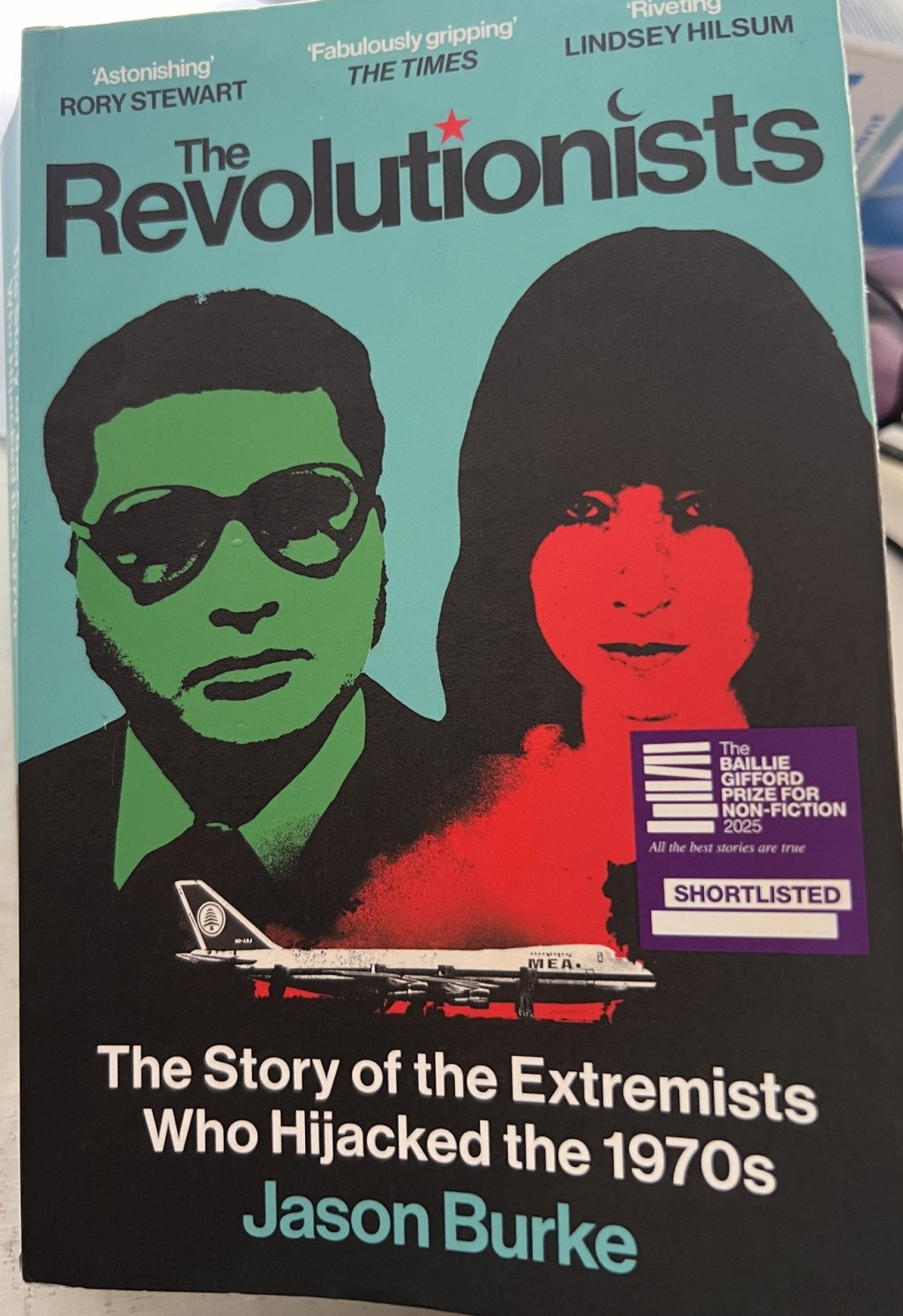
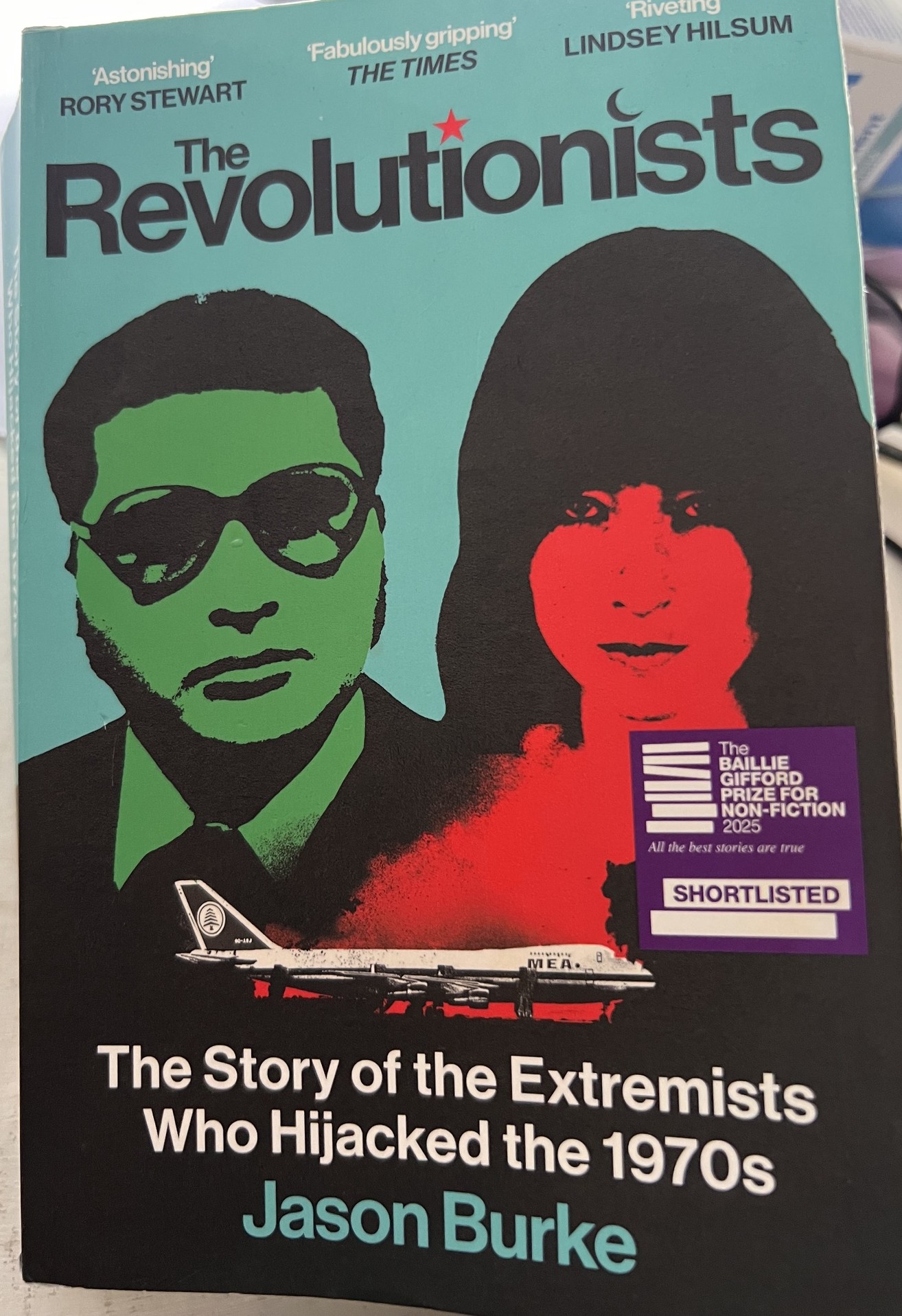
The Revolutionists: The Story of the Extremists Who Hijacked the 1970s by Jason Burke is a very readable gallop through a selection of the radical groups which used violence during the decade in pursuit of what was, in many cases, a vision of a socialist utopia or a secular democratic Palestine. You have probably noticed that none of them were successful. Many of them ended up dead or serving long prison sentences.
Burke defines his protagonists as extremists and they were certainly responsible for dozens, hundreds, and in some cases thousands of deaths. At this remove, it is hard to see a real justification for much of what they did. During the same period the Americans murdered two million people in Asia and the Israelis were already indiscriminately murdering large numbers of Palestinian and Lebanese civilians. By some oversight, Burke doesn’t label Nixon or Golda Meir as extremists.
The book does not deal with the Red Brigades which is a surprising omission. Also missing is any treatment of the IRA. This is less surprising as, unlike most of the other organisations which are described, it had a working class membership and extensive working class support. The Red Army Faction in Germany, the Japanese Red Army and even many of the Palestinian groups which kidnapped, hijacked and assassinated tended to be made up of young people from relatively privileged backgrounds who closely identified with the Vietnamese and other anti-colonial revolutions while rejecting their own upbringings and societies. The anti-colonial aspect of the Palestinian struggle sets it apart from what was happening in Japan and Europe, but the groups all had relationships with each other. The Palestinians had an ecumenical approach to cooperation, inviting Maoists, Marxist-Leninists and anyone else with a commitment to armed struggle to their training camps. If the book is to be believed, a group of members of the British International Socialists got into a fist fight with Maoists in one camp.
Carlos the Jackal and chip shops
While the German and Japanese groups in particular had women in significant leadership roles, this form of political activity was especially attractive to priapic, psychopathic men. Part of the culture was flouting bourgeois taboos about sexual relationships which led to intense discussion and, not infrequently, exploitation of women.
Carlos the Jackal, known to his radical Venezuelan parents as Illich Ramirez Sanchez, shot and shagged his way around the world ending up as a terrorist for hire for any regime willing to pay him. He seemed to have no ideology other than antisemitism and self-indulgence. He explained that in London he couldn’t eat in local cafes and chip shops because of his upbringing. For him it was caviar and fancy restaurants. Guevara would have despised him.

But for every Carlos or Andreas Baader, there were dozens or maybe hundreds of committed, self-sacrificing people who thought that the Chinese or Cuban experiences could be applied to Frankfurt or Dusseldorf. Ulrike Meinhoff, whom the German state tried to destroy psychologically and physical in a specially constructed torture chamber, set out the ideas of the Red Army Faction in a pamphlet called The Urban Guerilla Concept which you can read here. However, you are not allowed to read it if you are what she called one of the “intellectual windbags, the know-it-alls, and the shitting-in-their-pants brigade”. They either had not read or had discounted Trotsky’s ideas on a transitional programme. They wanted someone who would board a plane with hand grenades in her bra and two revolvers taped to her body. Airport security has tightened up since then.
One can summarise the trajectory of all the groups discussed in the book as like-minded individuals radicalised by injustice looking for short cuts. As with Leila Khaled, there is a brief moment of success and then a series of misjudgements, tactical victories, technical inadequacy and eventually overwhelming defeat by states which are much better at delivering surgical and wilfully indiscriminate violence. In some cases, individuals allowed sectarian and anti-Jewish prejudices to cause them to commit hideous crimes in the name of their struggle. In all the cases where they rely on Stalinist or Arab nationalist states they are played and traduced.
Ideologically and organisationally, many of the groups Burke discusses in compelling detail, and with slightly more sympathy than you might expect, have left little behind, and much of what remains is not positive.







Leave a Reply