
When Isaac Deutscher, author of the definitive biography of Trotsky, decided he was an atheist he put his hypothesis about the non-existence of God to the test. His method was to go to the grave of a Tzadik, a Jewish holy man, and eat non- kosher food on Yom Kippur. Nothing happened. He later joined the Polish Communist Party and led an anti-Stalinist faction. I have a very unedifying anecdote on similar lines about my break from Catholicism.
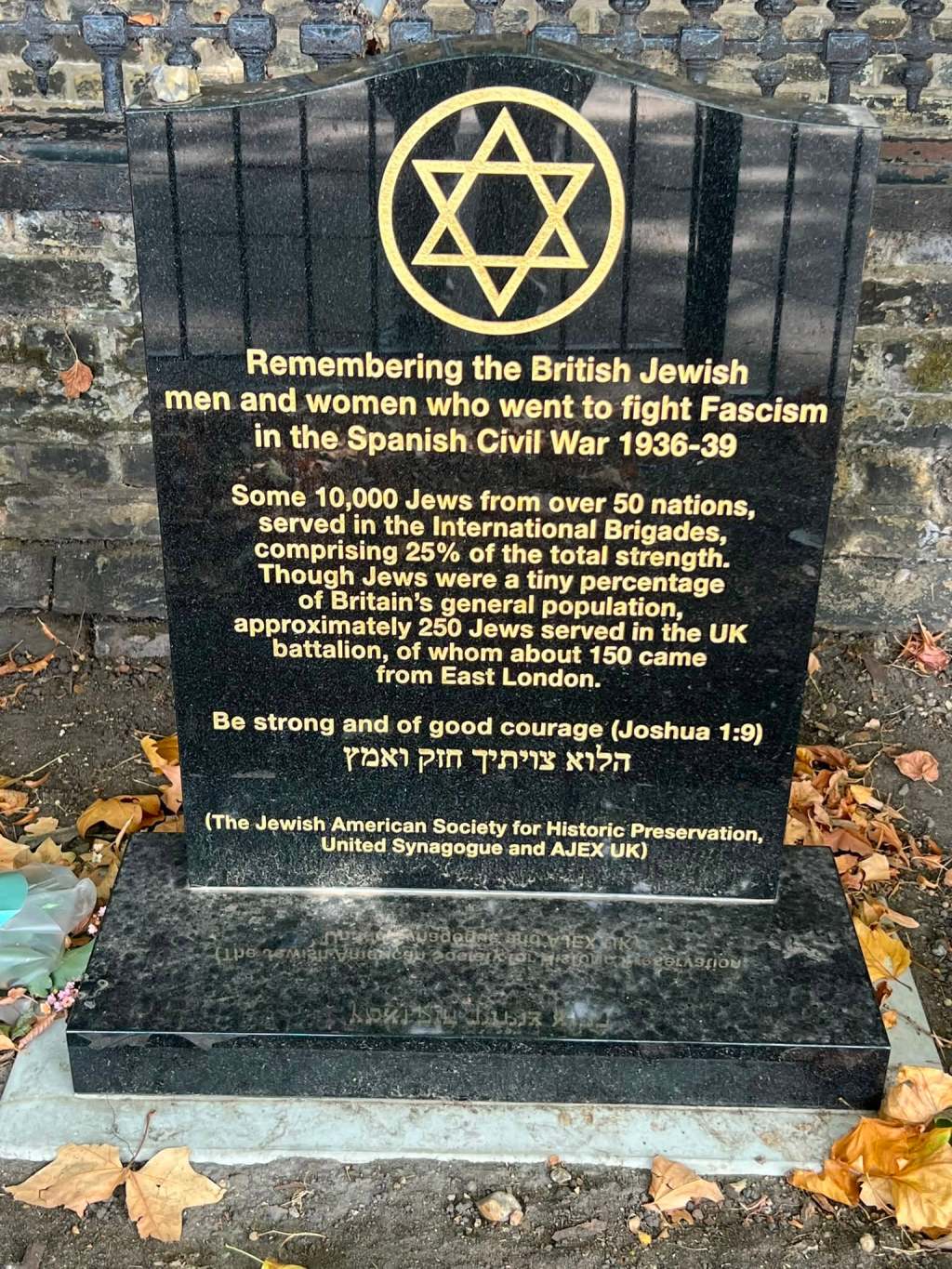
The history of the socialist movement is, in part, a history of its struggle against religion and reactionary religious ideas in the working class and there would have been very few believers in any European communist party. That includes those members of the British Communist Party, anarchists and other socialists who fought fascism in the Spanish Civil War and are commemorated on a recently erected memorial near Victoria Park in Hackney. It sits beside one to Captain Lionel Lee who was murdered in a Nazi death camp.
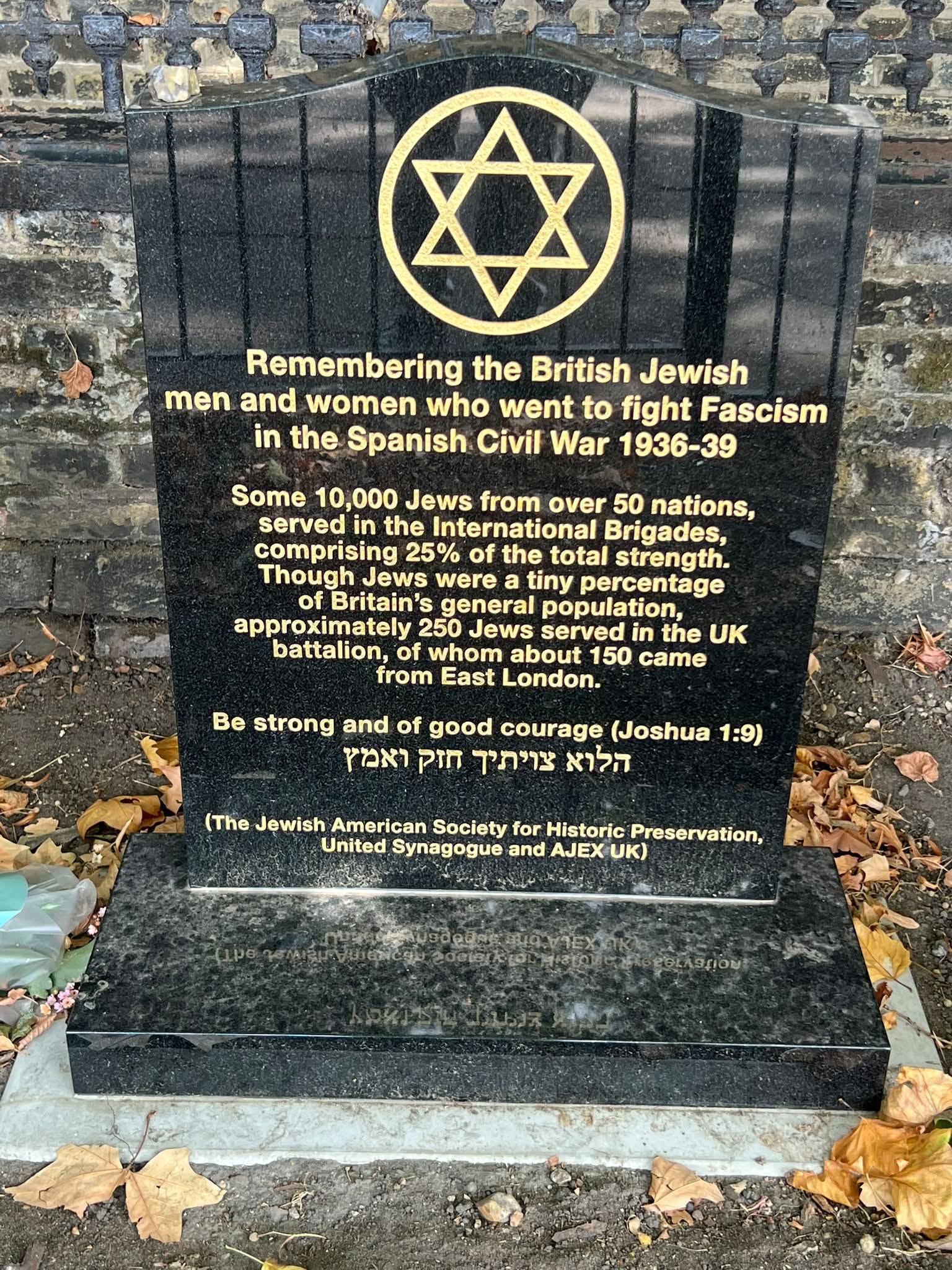
The stone was co-commissioned and funded by an organisation called the Jewish American Society for Historic Preservation. The Israeli flag on its website makes it clear that it is a Zionist organisation and it has articles exploring the ideas of Theodor Herzl, the Zionist ideologue whose fiercest opponents were Jewish Communists and socialists. Molly Crabapple’s recent book Here where we live is our country is an excellent account of a significant part of that tradition. The Zionist response to it has been universally hostile, a fact the author is proud of. She is part of the movement of younger American Jews who can recognise a genocide when they see one and take a stand against it.
As the memorial points out, an estimated 10 000 Jews fought fascism in Spain, comprising about 25% of the strength of the International Brigades. David Rosenberg estimates that they made up about 1% of the population in the fifty or so countries from which the fighters came. This gives some idea of how Jewish workers in capitalist countries were involved in parties which, in many cases notwithstanding their Stalinism, were revolutionary and internationalist.
Whatever else they were, these comrades were not Zionists and chose to join parties which expressly rejected Zionism’s colonising project and ethno-supremacism. David calculates that around half of the British Internationalists from East London were Jewish and that about eighteen of them died fighting for their understanding of a European revolution.
It is a positive thing that there is a permanent memorial to the comrades. However, by chance I came across it in the week the Israeli minister Itamar Ben-Gvir posted a video of Palestinians being marched into a concentration camp. It is futile to speculate what the individual members of the International Brigade might think about today’s political situation, but it is hard to believe that the Jewish socialists, anarchists and communists who rejected Ben Gvir’s ideology and his enthusiasm for Franco’s methods in the 1930s would embrace it today.






Leave a Reply