
The history of 19th and 20th century Marxist organisations is a bit like that of the early Christian sects. Much of what we know about them is from materials written by their opponents, their own writings generally not surviving. The overwhelming dominance of the healthy and unhealthy branches of the Bolshevik tradition has, to a large extent, erased from history a real knowledge of other currents which variously opposed and collaborated with them.
Thus, those of us who are acquainted with Trotsky and Luxemburg, have only a fragmentary and unflattering knowledge of the Jewish Bund. Trotsky wrote “The Bund’s nationalism is the ideology of a section of the Jewish intelligentsia, not of the proletariat.” Luxemburg agreed with this.
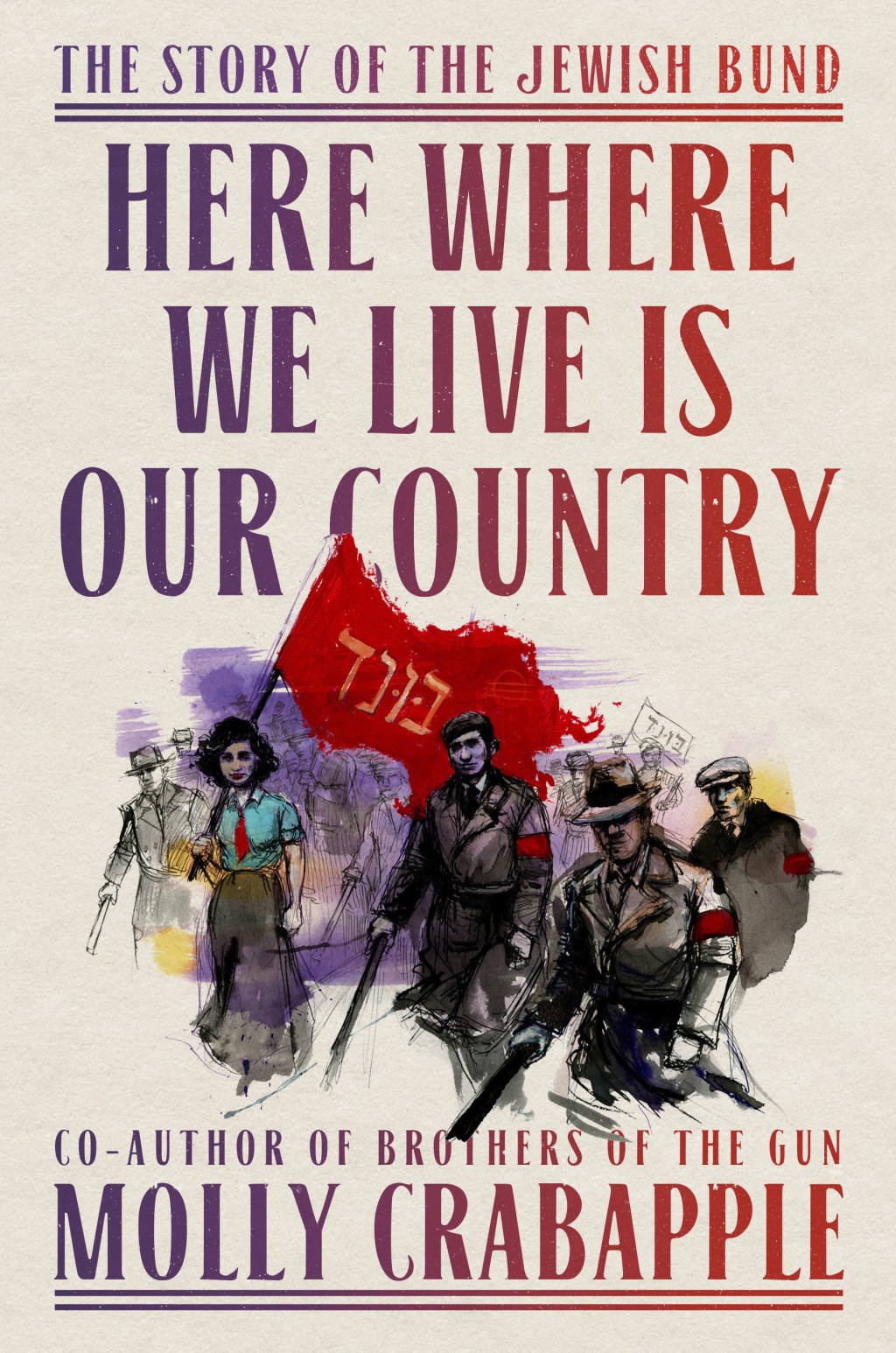
Molly Crabapple’s new book is a welcome and frequently moving contribution to recovering a history that antisemites, fascists, Zionists and Stalinists have worked hard to erase using every technique known to oppressors and reactionaries from slander to legislation to lying, prisons, exile and murder.
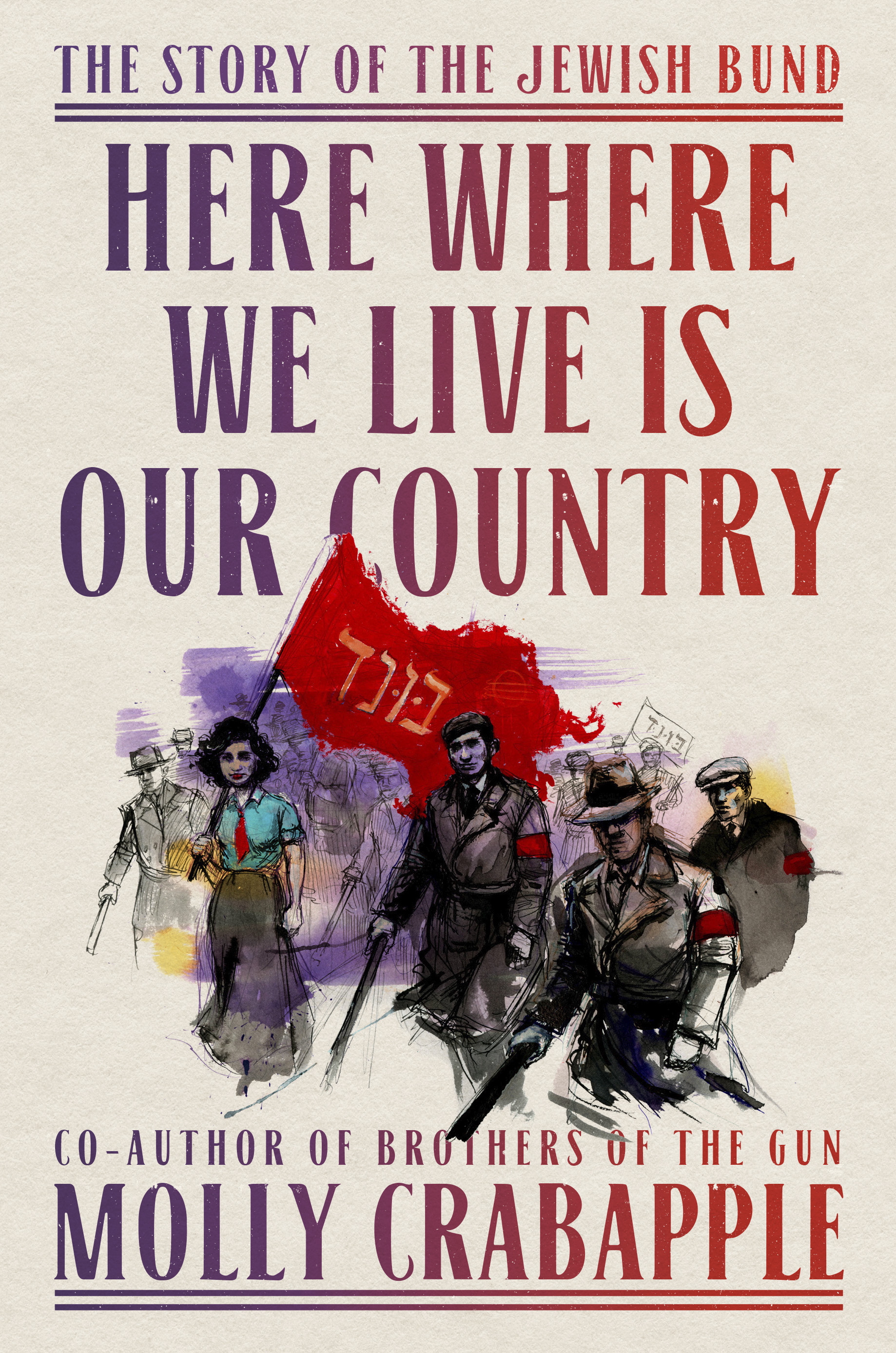
It is to her credit that some of the fiercest and most dishonest critics of the book have been Zionists and their propagandists. Her intellectual and family history is intertwined with that of an Eastern European Marxist organisation which had great success in organising the most oppressed section of Jews in Russia, Poland and parts of the former Tsarist empire. At the heart of its Marxism was the concept of do’ikayt which she renders as “Hereness”, the idea that you conducted the class struggle where you are with the working class which surrounds you. This was their secular, largely atheistic alternative to strands in European Judaism which wanted to live in insulated communities or adhered to what was then the marginal ideology of Zionism.
They were serious people, every bit as serious as the Bolsheviks, anarchists or Socialist Revolutionaries who were sent to prison in Siberia, executed or exiled. The major point of difference they had with other parties was summarised by Trotsky as: “The Bund is attempting to introduce into the party a principle which is alien to it — the principle of national representation.” They wanted sole organising rights among Jewish workers, something that was self-evidently unacceptable for a revolutionary organisation which sought leadership of the entire working class.
The Bund had real roots and broad organisations in Jewish communities in Eastern Europe. They led unions, ran schools, mutual aid groups and other elements of a self-organised working-class society. Histories of the Bolsheviks don’t tend to have too many references to fun, culture and music, but Crabapple portrays an organisation, or better to say a series of organisations, which tried to provide all these things.
Do not turn to the book if you want detail on the big debates of a conference in Warsaw in 1913. It is a more impressionistic work than that in which the lives members of the author’s family illustrate the idealism, courage and sacrifice of these dead comrades. They also help us see the intellectual and personal continuity today’s generations of anti-Zionist Jews have with the Bund.
In her final chapter Crabapple writes “Zionism is ethnonationalism. Like all ethnonationalisms, it required mass murder to clear the land to build its dream…the inheritors of Zion would liquidate their very own ghetto in Gaza beside the sea”. Like Marek Edelman’s, it is impossible to read her account of the destruction of the Warsaw Ghetto without instantly seeing just how closely it resembled the obliteration of the people of Gaza.
The almost complete annihilation of the Bund and the Jewish population of Europe was, in a grotesque way, a gift to European antisemites and Zionists. Those few Jews who survived the Ghetto and the Nazi occupation of Poland were immediately the victims of a new wave of antisemitic attacks, with only the Polish Socialist Party and some Communists defending them. This confirmed the Zionist message that Jews could not be safe in Europe and must kill Palestinians in order to colonise their land. However, as Bund leader Henryk Erlich had asked, in 1938 of a Zionist state’ “is it not a climate in which reaction and chauvinism ordinarily flourish?”
Here where we live is our country is an inspiring book. There is a debate to be had about single group political parties in multi-ethnic states, but the Bund represented much of what was best in the European Marxist tradition. It had a vibrant internal culture and sought to engage with the entire working class, thus proving itself a threat to all the reactionary, negative ideologies of the 20th and 21st century. We should be grateful to Molly Crabapple for helping set the record straight about these fallen comrades.



Leave a comment