

OK. The title is slightly misleading. Apple’s new eight-part series is set in a version of Brezhnev’s USSR in an adjacent reality in which the Soviets put the first woman on the moon and a man on Venus. It is one in which the Khruschev liberalisation did not happen and KGB officers could still shoot innocent people on the spot. In the old days it would have been denounced, with good cause as anti-Soviet propaganda
As with the Klingons in Star Trek, for all their technological sophistication no Soviet room is illuminated with anything brighter than a twenty watt bulb and all clothing is in shades of sludge. It’s a sister series to For All Mankind which is a fictionalised version of the American space programme in which the characters don’t spend their entire lives in semi-darkness like human moles. The distinction between the two isn’t subtle.
As for Mandel’s theory of bureaucracy and views on the Soviet economy, they are not directly mentioned but you can swot up on them and apply them yourself.
It isn’t just the clothes that are poor quality and dull. When people go to the market it resembles a medieval village during the Black Death, a reflection of the fact that the Soviet economy never managed to produce consumer goods of good quality or in sufficient quantity for its population. As for the export market, unless you had an AK47, some unread volumes of Lenin’s selected works or kitsch badges of the great man it is unlikely you ever bought anything Soviet made. Mandel attributed this to bureaucratic management focussing on quantity over quality and a planning system that prioritised large projects over meeting people’s needs. This point is not made in the series.
Lyudmilla Raskova, played by Anna Maxwell Martin, is one of the most impressively sinister characters we have seen on TV in recent years. She was hardened during the Great Patriotic War in which she is reputed to have killed over a hundred Nazis, so she’s not all bad. Talent spotted by the KGB, she is responsible for security in Star City which was the name of the real Soviet space headquarters. As with the German film The Lives of Others, her department employs dozens of women who are employed to transcribe the recordings captured by bugs in the dimly lit, sludge-coloured flats of the Soviet scientific elite.
Her nemesis, other than the lackeys of the imperialist bourgeoisie, is Rhys Ifans, The Chief Designer. This character is based on Sergei Korolev who headed the Soviet space programme and probably did not have a lovely, calming Welsh accent. He has pulled off the trick of getting the most prestigious job in Soviet science despite a spell in the gulag under Stalin and being able to offer a certain amount of protection to his staff.
Vent the retro boosters!
As with all these TV series, this one is padded out with tedious interludes about people’s love lives and their emotional turmoil. No one has ever watched a film or TV programme about space or the Soviet Union to see that stuff which is why we are grateful that capitalism has given us remote controls with fast forward buttons. The Stalinists never thought of those, probably on account of not having a participatory democracy of workers and consumers in the production process.
In real life, as in the series, the Soviet spacecraft were probably less sophisticated than a modern £400 washing machine. Much of the dramatic tension comes when machines malfunction and the crew and mission control staff struggle to save the craft. Hence dialogue along the lines of “vent the retro boosters on the rescue pod for 3.5 seconds.” You might want to check that is the correct procedure rather than take my word for it should you expect to ever be in that situation.
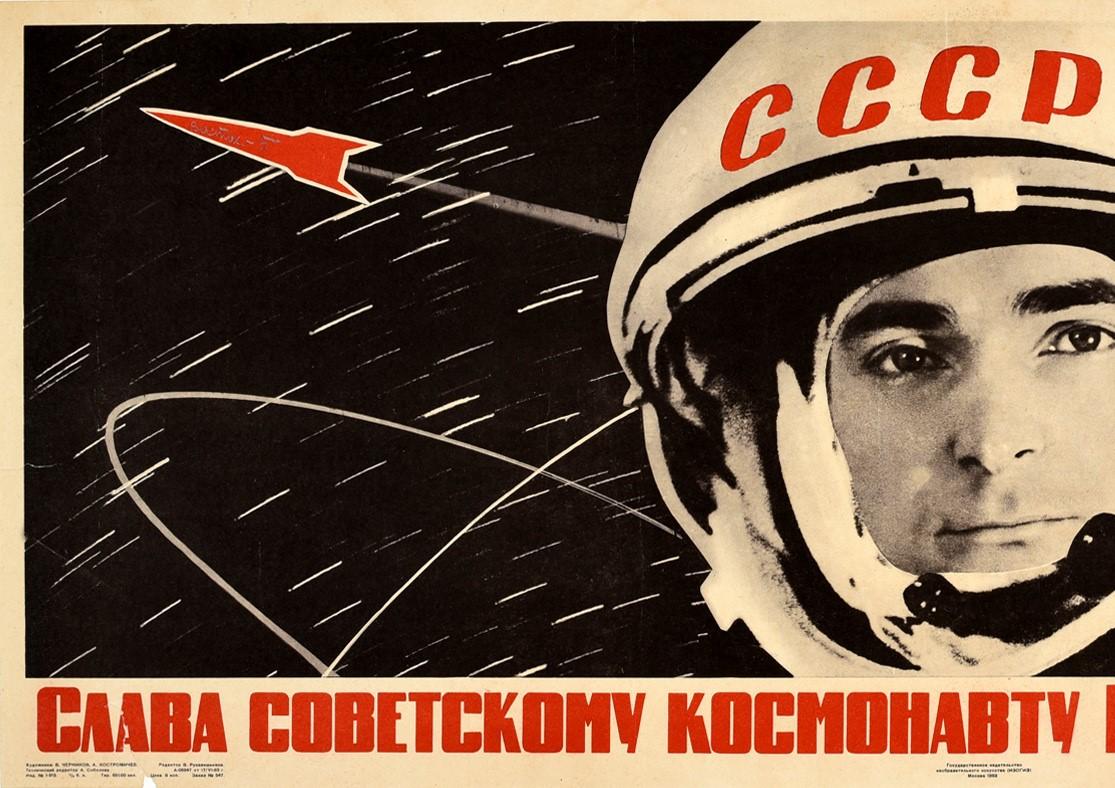
It is worth reflecting on what the Soviet Union achieved in the fifteen years after the end of World War Two. Having lost twenty million people and made the overwhelming contribution to defeating the Nazis, its bureaucratically planned economy was rebuilt. Mandel argued that it was transformed “from a relatively backward one into the second largest industrial power on earth, at least from the point of view of total absolute production figures.”
However, what the series shows very persuasively it was done with an internal security regime and terror of dissent that suffocated a population which understood what was being done to them. Everyone knew that disloyal remarks could get you in serious trouble and people, especially in the arts and sciences expected to be bugged and surveilled. It was this lack of freedom of expression, particularly in the arts, sciences and production that was the undoing of the bureaucratic Soviet experiment.
It deals with all that or you could just watch it for the espionage, spaceships and maybe even the romantic interest. Bear in mind, that as with all the streaming services 99% of what is on Apple is the visual equivalent of junk food. Pay for a month and set a reminder to cancel your subscription before you have to pay for a second month.




Leave a Reply